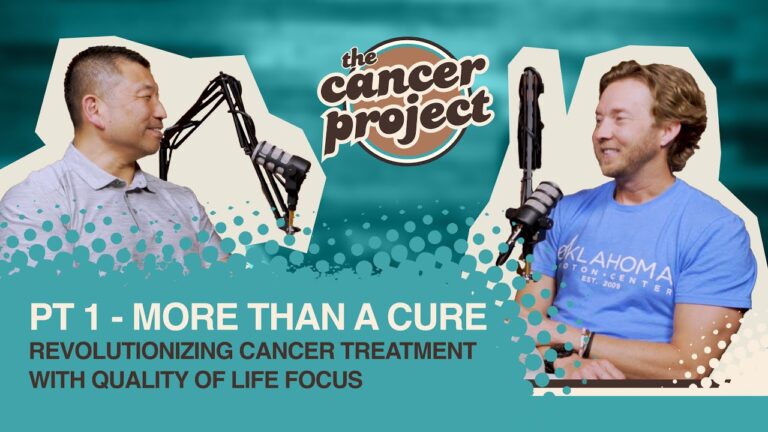
Brachytherapy, Prostate Cancer, & Interventional Oncology with Dr. Ajay Bhatnagar
Brachytherapy, Prostate Cancer, & Interventional Oncology with Dr. Ajay Bhatnagar
Episode 53
Episode Summary
With over twenty years of experience, Dr. Ajay Bhatnagar joins the podcast to discuss low dose rate brachytherapy. His practice uses the procedure to treat localized prostate cancer for patients travelling from across the country.
Dr. Bhatnagar shares where his interest in brachytherapy began, in medical school at the University of Pennsylvania, and explains how his practice delivers low dose rate brachytherapy under local anesthesia. Patients can drive themselves home afterward.
He walks through the advantages that setup creates: no operating room, no advanced anesthesia, reduced toxicity, and short recovery times. Those factors matter a great deal for older patients in particular.
Low dose rate brachytherapy places small radioactive seeds, roughly the size of a grain of rice, near the tumor. The seeds deliver a high concentration of radiation to cancerous cells while limiting exposure to healthy tissue, and can remain in the body permanently, eventually losing all radioactivity.
What You’ll Learn in This Episode
- What low dose rate brachytherapy is: Rice sized radioactive seeds placed near the tumor, and how they deliver dose.
- Where the interest began: Dr. Bhatnagar’s introduction to brachytherapy in medical school at the University of Pennsylvania.
- Local anesthesia, and driving home: How his practice performs the procedure without an operating room or advanced anesthesia.
- Toxicity and recovery: Why reduced toxicity and short recovery times matter for older patients.
- Seeds that stay: What happens to the implanted seeds over time as radioactivity declines.
- Who the procedure suits: The localized prostate cancer patients this approach is designed for.
- Interventional oncology: How the discipline fits alongside other prostate cancer treatment options.
One of the more technical conversations on the podcast, and a useful one for anyone weighing localized prostate cancer options.
Full Transcript
Read Full Transcript
Transcript generated from the episode’s audio. Speaker names are identified from the context of the conversation rather than from recorded speaker data, and automatic transcription may misspell names and terminology. Please refer to the video for the authoritative version.
David Raubach: Well, I want to thank you for joining us on today’s episode of the Cancer Project podcast. We’re really privileged to have Dr. Ajay Bhatnagar on with us. He is a radiation oncologist, but I want to make sure that I say this correctly, and actually an interventional oncologist, and he’s going to explain why he prefers interventional oncologists over radiation oncologists. And he is also a renowned expert on brachytherapy for prostate cancer. So we’re going to talk about that, and just what it’s like to be practicing as a doctor in 2026, and navigating the world of YouTube and Instagram and LinkedIn and TikTok, and how to meet patients where they’re at today as a doctor. So, Dr. Bhatnagar, thank you for joining us.
Dr. Ajay Bhatnagar: Thank you for having me. I feel really privileged, this — I got to watch some of your videos the last few weeks, and really impressive show. I must thank you on your really great podcast.
David Raubach: Well, so just maybe a brief introduction for you. I know you have a little bit of a unique story. You were born in England and then moved over here, ultimately went to medical school at the University of Pittsburgh. So just talk to us a little bit about your upbringing and how you ended up becoming a doctor.
Dr. Ajay Bhatnagar: Yeah, exactly. So I grew up in London, England, but we immigrated here to the states about age four or five, and I grew up mainly in the Philadelphia area most of my life. And I actually went to University of Pennsylvania to do my undergraduate degree in bioengineering. My dad was an engineer and he said that studying engineering as an undergraduate will help you gain the fundamentals and principles for anything you do in life, whether it’s business, law, or even medicine, but gaining those fundamental principles of engineering will really help you for the rest of your life. So I studied bioengineering. And I really did enjoy it, but it was hard. It wasn’t easy. And that’s actually one of the difficult things about going to medical school, when you want to sort of do an easier subject. Engineering is not one of them.
David Raubach: Right. Right.
Dr. Ajay Bhatnagar: But it really allowed me to gain a greater understanding of science, physics and engineering, which led to my interest in radiation oncology, because even at that time the bioengineering department had a pretty good relationship with the radiation oncology department there at the University of Pennsylvania. So I already knew about it. I mean, most med students, let alone college students, even know about radiation oncology. So it gave me a couple steps ahead. But then when I was at University of Pittsburgh Medical School as a third-year medical student, I got to see a prostate seed implant. I went to the OR with Dr. Russell Fuhrer, God rest his soul. And I fell in love right away. I was like, “Wow, this is exactly what I got to do.” And he was like, “All right, well, if you want to do this, this is what you need to do.” Boom, boom. This is not easy. You got to do research. You got to get, you know, you got to get this. This is all the things you want to do. But you still have to be a general radiation oncologist. I mean, this is just a small part, but I really enjoyed the prostate brachytherapy. I got to do a lot of that in my training in residency.
Dr. Ajay Bhatnagar: But then after Pittsburgh, I really wanted warmer — I wanted a new lifestyle and wanted to go out west. Most of my life was in the east. I really didn’t care for the weather out east, and I enjoyed the whole weather and atmosphere and the culture out there at that time in the early 2000s. It was still a very vastly growing city, Phoenix. And I also took up a hobby called golf, and that’s a great place to play golf.
David Raubach: It’s a good spot.
Dr. Ajay Bhatnagar: Yeah, that’s a good spot. And so in 2007, after I finished my training, I started practicing in a city called Casa Grande, in a general cancer center, radiation oncology, medical oncology center, and the urologist there — actually I owe him a lot of credit. He had done training where he was also very familiar with prostate brachytherapy and really encouraged me to do prostate brachytherapy, and you have to remember this is the time when IMRT started to explode.
David Raubach: Okay.
Dr. Ajay Bhatnagar: Right. And so this is when — really the death of brachytherapy at that time. But he was very adamant that we continue to offer this for our patients, you know, given that we were in central Arizona, in between Phoenix and Tucson, and people coming from all sorts of different distances, that this was a really important treatment to be able to offer to our community. And so, yeah, we always had a program to offer this treatment, and that led to me starting my own practice solely focusing on this, in 2021, 2022 about this. And if it wasn’t for him, if it wasn’t for him letting me be able to do that and keep these skills up in prostate brachytherapy, I would not be where I am today. So I really need to thank him, Dr. Biren Patel, actually.
David Raubach: And so tell us about the practice today, Prostate Cancer Institute of America. Just describe what that is and what your guys’ focus is.
Dr. Ajay Bhatnagar: Yes. So this is a practice solely focused, at this point, on low-dose-rate prostate brachytherapy, where we provide services in various communities throughout the country. I am based in Phoenix, Arizona, but we do have practices in various states. And so, you know, everyone talks about prostate brachytherapy and the payers are like, “Wait, how are you doing this? There’s really no money in this. How can you make money in prostate brachytherapy?” And that’s not exactly incorrect about that. But, you know, in business, it doesn’t take an MBA to figure out it’s not about how much money you make, it’s actually about how much money you keep, right? And so I was able to really understand and leverage the efficiencies of LDR brachytherapy that no other radiation modality has. I mean, it is purely a very efficient and cost-effective way.
Dr. Ajay Bhatnagar: So I don’t have a linear accelerator, right? I don’t have expensive staff. I don’t need a radiation therapist, a medical dosimetrist. I do have a part-time physicist who helps me on the side. But really, this is a very lean, mean operating machine. I don’t even have an office, actually. I sublease from my colleagues and do mainly consults from right here, my home, do virtual consults. And so, you know, that’s one of the benefits — patients are very comfortable with seeing patients virtually. I thought that would be an issue, with patients not feeling comfortable with me doing surgery and not seeing me in person, but they’re actually pretty used to that now with all sorts of distance. So most of my patients at this point I do not see in person until I see them at the time of their procedure. Even in Phoenix, even though I have an office in Phoenix, patients around this area still would rather see me virtually.
David Raubach: That’s interesting. Okay. And so one of the things that you’ve focused on — I think on your website you describe it as in-office brachytherapy, and this would be as opposed to doing the procedure at a hospital or a surgery center. So just talk about why you chose to do that, and why or how you still make it safe and effective and efficient for patients coming into the office versus going to a hospital.
Dr. Ajay Bhatnagar: Yeah. So let’s talk about in-office brachytherapy. So first of all, brachytherapy — this is low-dose-rate brachytherapy, where we’re using these radioactive seeds implanted in the prostate that’s slowly giving off radiation. So these seeds are permanently implanted in the prostate, slowly giving off radiation, and directly at the source. Okay? And so that requires basically a qualified radiation oncologist knowing the skill set of how to place these seeds. The main tool that we use is an ultrasound. So we have a rectal ultrasound that guides us, and we place needles through the perineum and place these seeds into the prostate. And so that can be done in the operating room. It’s typically done in the operating room.
Dr. Ajay Bhatnagar: But Dr. Kent Wallner, one of the godfathers, the OG of brachytherapy, that was in Seattle, the VA — he developed a technique where we could use only local anesthesia at his facility in the VA, that it was impossible to get OR time. So he had to figure out how he could treat these patients without going to the OR. So he developed a technique, what we call in-office brachytherapy, using local anesthesia alone, where we’re able to adequately take care of these patients in the office setting by using a local lidocaine block. It’s a pretty intense local lidocaine block, but yes, it can be done, and it does require a very good skill set. So I mean, doing brachytherapy in the OR setting when they’re asleep requires one level of skill, but then to be able to do this in the office is a completely another set of skill set, and you really need to be experienced. And that’s really the other issue now with prostate brachytherapy — there’s very few people trained in it, because it’s not easy as a radiation oncologist to be overseeing a big external beam radiation center and then having to do brachytherapy on the side.
Dr. Ajay Bhatnagar: I mean, when I was doing this on the side, once a month, my skill set was okay, decent, but now, doing brachytherapy every day, since I no longer have the responsibilities of overseeing an external beam machine, it’s infinitely that much better. And so, two years after starting this practice — from 2022 I started this practice, in 2024 I started doing in-office brachytherapy. Dr. Wallner came and trained me, and ever since I’ve been doing it really extensively. Patients, especially the older patients that don’t want to go under general anesthesia and yet don’t want to do hormones or don’t want to do external beam — it’s a great option. And so I commonly will ask patients how they tolerated the biopsy, and if they tolerated the biopsy pretty well, that this is very similar — if you do the right block and the right technique, it’s really not much different than the prostate biopsy.
David Raubach: Okay.
Dr. Ajay Bhatnagar: But it’s another level of skill set — I mean, most radiation oncologists can’t even do brachytherapy in the OR setting, right? So now to be able to do it in the office setting is almost unfathomable. I mean, right, it’s one of those things, if you’re doing maybe one every two weeks, you probably shouldn’t do that in the office. Most radiation oncologists are doing regularly one every two months, you know. And that’s really the big issue with this, and it’s — we haven’t treated it like a surgical subspecialty, and it really is. And so because this is a very operator-dependent procedure, and I think a lot of the outcomes is based on who the operator was, and so many people’s experiences, including doctors, urologists, patients, their perceptions are based on that operator. And so, yes, there can be bad outcomes when the operator is not as experienced or trained in doing this procedure. And so that’s one of the things I’ve been able to really break down, is that perception that brachytherapy is an old, antiquated, inferior technique, where actually, for the right patient, in the right hands, in my opinion, it’s actually the best treatment out there.
David Raubach: So talk a little bit about the right patient. So you mentioned, with the right provider — so you obviously have a lot of skill. Who are the right patients for brachytherapy?
Dr. Ajay Bhatnagar: So that’s a great question. The right patients, first of all, are patients with localized prostate cancer, low, intermediate risk, whether it’s favorable or unfavorable intermediate risk prostate cancer, that have a prostate size less than 60 grams. The cutoff used to be 80 grams, but I can tell you from my experience that even treating these guys with 70 grams, they’re miserable. And so I have a cutoff of 60 grams. And a good urinary function, because sometimes people can have a lot of obstructive urinary symptoms, still having a prostate size of 40 grams or 35 grams. And so addressing that before brachytherapy is really good, really important. And so I work very closely with urologists, addressing these symptoms, whether they need to do a TURP or UroLift or just medical management. We want to make sure that they have good urinary function before undergoing brachytherapy, because if we do that afterwards, assessing these obstructive symptoms, it’s way more difficult, and that’s when these urologists do not like me, you know. And so having a collaborative approach with them about these patients provides a great outcome for everyone.
David Raubach: So, Dr. Bhatnagar, you’ve mentioned LDR and HDR brachytherapy. And maybe for somebody that’s not familiar with some of these terms, would you just give us the layperson explanation of what all of that means?
Dr. Ajay Bhatnagar: HDR brachytherapy is a temporary seed implantation of the prostate, by actually a remote afterloader. And so here now we have to have the patient go to the operating room, have these catheters placed throughout the prostate, and then instead of placing seeds in there permanently, these catheters are connected to this remote afterloader, where there’s a high-dose source called Iridium-192, and that’s temporarily placed into the prostate where it’s being treated. So this can actually take several hours, because you have to go to the operating room, have the catheters placed, then you have to have a CT scan and do the treatment planning, and then you actually have to do the treatment delivery, because you’ll have like 10, 12 channels or even more, and the seed has to go in there and place and dwell each position. So it’s not uncommon to be anywhere up to four, even longer, six hours. And some patients are awake, some patients have brachy suites where they’re asleep. And that requires actually not just one, but actually two or three sessions if we’re actually doing definitive treatment. So if we do a boost, it’s only one treatment, but then it’s also two or three for monotherapy, basically.
Dr. Ajay Bhatnagar: Now, the advantage here with HDR brachytherapy is that the skill set of the doctor isn’t necessarily required, because now the remote afterloader is doing the work.
David Raubach: Okay. Okay.
Dr. Ajay Bhatnagar: And so, the treatment planning, right — so once we have the catheters in, the treatment planning techniques will again do the optimization of where the seeds need to be dwelled within those catheters, to give a good outcome of adequate dose with adequate sparing of the urethra and rectum. And so that’s one big advantage here — is that now, if you don’t have that skill set in LDR brachytherapy, you can still actually offer brachytherapy. However, it takes a lot longer, the outcomes actually are different, and it requires several sessions. And from a radiobiological point, it doesn’t make sense to me.
Dr. Ajay Bhatnagar: Here we have a slow-growing tumor. Prostate cancer, slowly dividing, slowly growing. So with a permanent seed implant, LDR, you have the seeds permanently implanted, slowly giving off radiation, being able to attack those cells in that sensitive cell cycle phase that’s going slowly, and be able to maximize cell kill. So with HDR, you just have a very rapid pulse burst of a slow-growing tumor. So that doesn’t really make sense. The only thing that makes sense is that we now are able to offer any brachytherapy for these patients when you don’t have that ability or skill set to do LDR brachytherapy, because also remember, HDR brachytherapy is not cheap. You need to get a vault. You need to have an afterloader, a physicist. You have — now you’re talking about millions of dollars of skill set.
Dr. Ajay Bhatnagar: I can do this in an operating room in a hospital. You cannot do HDR brachytherapy in a hospital — you need to have a vault, you need to have a shielded vault. Actually, what happens commonly — now more sophisticated places will have a brachy suite that has all that, but for some places, they’ll go upstairs, they’ll go to the OR, and they’ll have these catheters, and they’ll actually create a cushion that cuts out their buttocks area, so the catheters are laying in there, and then some places will even take an ambulance to go to the radiation oncology department, or they go downstairs to start that whole process. So, logistically, not very pleasant, doesn’t — radiologically it doesn’t make sense, but at least it’s something better than nothing. But as you can see, I’m highly biased, right — you can see, here I can do every 30 minutes, very conveniently, you go home the same day, one session in the OR, with minimal downtime. So, when I present it like that, I mean, what would you want to do?
David Raubach: Yeah, as a patient, I’m thinking, okay, give me the in-office LDR option.
Dr. Ajay Bhatnagar: So yeah, or I mean, some patients are afraid. Some, in-office I do like, but some patients — you know what, that biopsy was painful, I do not want to go through that, I need to be knocked out. I’m like, okay. So I commonly will give patients the option.
David Raubach: Yeah. Yeah.
Dr. Ajay Bhatnagar: I give patients the option, in office or OR, what would you like to do? There is one advantage of the OR, of doing that two-for-one special, but, you know, my older patients, they don’t want to — they’re afraid, they don’t want to be under, they want to wake up. And so, in-office, they are awake the entire time. And so that is definitely an advantage for patients that would not be a good candidate for general anesthesia.
David Raubach: So then what’s the recommendation if you get a patient that has a larger prostate, or maybe has some of these comorbidities that you’re talking about, or maybe has high-risk disease that’s even spread to the lymph nodes? How are you suggesting that that patient approach a treatment?
Dr. Ajay Bhatnagar: Okay. So first of all, for high-risk disease or very high-risk disease, I commonly will recommend combination brachytherapy and external beam to the pelvic lymph nodes. That treatment has a significantly higher disease-free survival rate than doing external beam alone. And very important, there was a recent randomized study done in Japan where they randomized these high-risk patients that got brachytherapy and external beam, and they randomized them to 30 months of ADT hormones versus six months of ADT, and there was no difference. So for patients that I see with high risk or very high-risk disease, I can tell them we can reduce their duration of ADT to only six months if they do combination treatment. I mean, I think that’s a game changer.
David Raubach: Well, a lot of times those are the worst side effects, right? It’s from the hormone therapy completely.
Dr. Ajay Bhatnagar: So, and so therefore, I have offered monotherapy — Dr. Jay Ciezki in Cleveland Clinic does a lot of monotherapy for high-risk disease using brachytherapy alone, and sometimes some patients that are older don’t want to do complete treatment. I can understand that. There’s even a lot of data for people, men over 80, that even the benefit of ADT regardless is limited. So, generally speaking, for high-risk patients I offer combination; for a certain subset that maybe are older, we could do brachytherapy alone, with good reported outcomes by the Cleveland Clinic.
Dr. Ajay Bhatnagar: In terms of your question about these patients with larger prostate or urinary symptoms — first, if they do have obstructive urinary symptoms, there’s a lot of BPH management options for them, whether it’s actually the classic TURP, or whether it’s a UroLift procedure, or Rezum, or Aquablation — all these urologists are very well tuned with these symptoms on how to manage them. So I definitely would want them to get that procedure before, and then six weeks later or 12 weeks later we can do the procedure. I mean, actually with Aquablation or even UroLift, we can do it even way quicker than 12 weeks — it’s usually more from the TURP, we wait several months for the prostate to size down. Obviously, ADT is a great way to shrink the prostate. But if you have low-risk disease and don’t want to deal with the symptoms of ADT, I can understand that.
Dr. Ajay Bhatnagar: So, there’s a new procedure — not actually new, it’s really growing, actually — the treatment called the prostate artery embolization, PAE, and that’s an outpatient procedure done by an interventional radiologist. And I’m seeing about a 50%, over 50%, reduction in prostate size with that. So if patients really want brachytherapy, they still can get that. But yes, if they don’t want to do that, I’ll refer them to another option. I don’t want the patients mad at me. I don’t want the urologist mad at me. So you got to do the right thing, especially community private practice. My reputation means a lot, to grow this business, and you got to do the right thing. That’s really important.
David Raubach: So I’m a patient. Let’s say I have low or low-intermediate risk disease, and imagine I’m in my 50s, healthy otherwise, and I’m saying, Dr. Bhatnagar, I’m trying to decide between surgery and brachytherapy. What are the pros and cons of each, or how would you answer that question for that patient trying to make a decision between those two treatments?
Dr. Ajay Bhatnagar: Yeah, so surgery is the standard treatment. It’s an excellent option. You know, being in your 50s, you seem very healthy, you’re probably going to recover well. You’re probably going to recover from the incontinence and the impotence, hopefully — that shouldn’t be an issue. I mean, but for those guys that are obese or diabetic, they can have issues. You don’t look like that. So, you look —
David Raubach: And by the way, I’m not in my 50s. I’m in my 40s, but I’m co-playing a patient in their 50s.
Dr. Ajay Bhatnagar: Hey, I’m in my 50s. Okay. So there you go — no judgment here. There’s no judgment, but just saying, assuming you were a healthy 50-year-old, surgery is going to be a good option. It’s not something that you do bad with. But no, if you were unhealthy, in terms of being obese or having diabetes, or some sort of severe medical comorbidity that would make you high risk, or sometimes men who have had hernias — hernia is a contraindication to surgery. So this brachytherapy is a nice alternative because I’m not a big fan of external beam radiation for young men, because there is a risk of secondary malignancies. You can get rectal or bladder cancer, 10, 20 years down the road, and 10, 20 years down the road from a man in his 50s is his 60s or 70s — that’s not insignificant. I mean, fine, that’s maybe not as relevant for a 75- or 80-year-old patient, but younger men, that’s an important topic. And brachytherapy has been shown, known, not to have an increased risk of secondary malignancies for prostate cancer, because the radiation is directly focused in the prostate, and therefore the volume of radiation is related to the risk of secondary malignancy. And with external beam radiation, there’s still dose around, the low doses throughout the pelvis — even with proton beam, right, there’s still entrance dose. And so there is a risk of that, and that’s the reason why I am pretty adamant about trying to avoid external beam radiation for younger men.
Dr. Ajay Bhatnagar: Now, for this man that’s healthy but is busy — he’s working, he’s very active, he doesn’t have time to be down at home, he doesn’t have time to deal with a catheter, he doesn’t want — he’s very proactive, wants to maintain working out, wants to maintain working — brachytherapy is a great option, because now we don’t have to deal with the significant downtime and potential toxicity of surgery. I mean, I can get patients working the next day. I have a great example for you. I had a gentleman in his 50s who was diagnosed with prostate cancer, intermediate risk, and was told that he needed to have surgery, but he owned a pool company, and the doctor said, well, you wouldn’t be able to work for your pool company cleaning pools. He’s like, well, I can’t — I have to run my business, I’ll go bankrupt, I’ll have to shut down. And the doctor’s like, well, I’m sorry, you’re not going to be able to do that for a few months. And so he was devastated. And he found out about me, came to me, we did the brachytherapy procedure, and he was going to work the next day.
Dr. Ajay Bhatnagar: So the advantages of the brachytherapy — there, we have a lot less downtime. Toxicity is mainly just urinary, short side effects, but the long-term side effects in terms of erectile dysfunction or urinary incontinence are really, really low. I mean, erectile dysfunction, in terms of erectile function preservation, brachytherapy has been shown, multiple data sets, that is the highest erectile function preservation rate compared to surgery or external beam radiation. And then in terms of urinary incontinence, that’s sort of unheard of with brachytherapy. I mean, one thing you can sort of see is a urethral stricture, as a long-term late effect, but with using a peripheral-loaded technique and real-time planning, using the advancements in brachytherapy that we have now, you don’t see that — and of course, patient selection. But I think, for patients that are wanting to avoid surgery for whatever reason, this becomes a good option. But for that young, healthy male, I don’t want to discredit surgery as an option too. I mean, let’s face it, that’s still the standard option.
David Raubach: Yeah, no, and I think that’s one of the challenges with prostate cancer, is that there are a lot of good options out there, so it’s almost like the decision itself becomes overwhelming, because you’re presented with —
Dr. Ajay Bhatnagar: Yeah. Go ahead.
David Raubach: You’re completely right. But no one — very few people are told about brachytherapy anymore.
David Raubach: And why do you think that is? I mean, walk us through, because you mentioned that you started your practice in the early 2000s. That was probably peak brachytherapy utilization. It was as many as — one in five prostate cancer patients were getting brachytherapy at that point, that dropped down to maybe one in 10, 10 years later. So walk us through why that happened. This is a great treatment. Why are more patients not getting brachytherapy?
Dr. Ajay Bhatnagar: Yes. So, like I tell everyone, the story of prostate brachytherapy represents exactly what’s wrong with our healthcare system today. Here you have the most conformal radiation treatment for men with localized prostate cancer. But since it’s the most cost effective, i.e. the least revenue generating, no one wants to offer it anymore, because of the more lucrative treatments available, mainly IMRT. So IMRT was developed around the early 2000s, and it was a great treatment — it still is a good treatment for prostate cancer. But IMRT is very cost intensive, there’s a lot of resources involved to develop an IMRT center, and at that time the business models developed, with urology-radiation oncology joint business models, to what we call the uro-rad model, where they had built IMRT centers throughout the country. And when you’re developing and building a $10 million facility, you know, you got to feed the beast.
David Raubach: Right. Right.
Dr. Ajay Bhatnagar: And so when you have to do that, I mean, brachytherapy got sacrificed. But then it got even worse. Right. Because then it got to be so long that now there’s no one even trained in it. So it’s now not that, and so even if people wanted to offer it now, they’re not even able to. And so, yeah, they may have done it 10 or 15 years ago, but that really means nothing. I mean, would you want a surgeon who did prostate surgery 10, 15 years ago to do your prostate surgery on you?
David Raubach: No.
Dr. Ajay Bhatnagar: So I mean, you know, and so therefore, if you can’t offer it anymore, then how are you going to be able to disclose — how are you going to tell patients about it? And so that’s the issue, is that now it’s not even more about the finances, it’s also being — having adequately trained doctors. And for the doctors, is there really any motivation to learn this anymore? They’re really busy in your external beam radiation center, having to do this and leave the clinic, which now is very difficult with a physician supervision rules.
Dr. Ajay Bhatnagar: And so, you know, I remember when I was in my last few years of where I was practicing in the general radiation oncology center, we had to hire locums for me to go to the OR for that day, and that was not easy, that was a pain. So now you’re saying, okay, I got to hire a locums doctor to go do a treatment that’s going to make less money than my IMRT, and this isn’t making sense for me here. Why should I be doing this? And let’s face it, radiation oncologists in general aren’t really surgically inclined. Okay, this is a surgical — and that’s the reason why I call myself an interventional oncologist. And so it does take a surgical skill set to do this, and it takes proper training, experience and constant cases. You can’t just do this over a weekend course.
Dr. Ajay Bhatnagar: Because now transperineal procedures are very important, because it’s not just brachytherapy — now we have rectal spacing. I do Barrigel spacer, rectal spacing. That’s a very important procedure. Transperineal prostate biopsies — I also do them. So these are all very important procedures that can be done by an interventional oncologist. Right? Having that skill set is very important. So I’m hoping that there may be some more desire to do this, because it’s not just LDR brachytherapy anymore — we also now have rectal spacing and transperineal prostate biopsies, which urologists don’t really want to do right now, even though the data shows that it’s a much safer treatment, and patients are much safer, and patients are looking for doctors who perform this.
David Raubach: So talk about the spacing. I do want to touch on that, because you brought that up, and that’s something that’s on your website. So talk about what the role of spacing is, what that procedure looks like. What should I be thinking about as a patient when you talk about rectal spacing?
Dr. Ajay Bhatnagar: Yeah, in this day and age, I think any patient getting radiation therapy should be considered for rectal spacing. Okay. Whether it’s external beam or brachytherapy, especially combination treatment. Okay. And this is a very quick procedure, again another transperineal procedure, where we go into this specific fat plane called the Denonvilliers’ fascia. It’s a fat plane between the prostate and the rectum, and basically we use Barrigel — it’s a hyaluronic acid. We use this material to lift the prostate off the rectum, and thereby sparing the rectum from any radiation damage. And so generally speaking, they like to have 1 to 2 centimeters of spacing to allow for the external beam dose levels to be fairly low to the rectum. But with brachytherapy, getting even just a 5-millimeter lift will allow me to have my seeds very posterior.
Dr. Ajay Bhatnagar: And so I do commonly perform rectal spacing for brachytherapy. Even though initial thoughts are like, well, why do you need rectal spacing when you’re doing brachytherapy — I mean, this is conformal — but remember, the rectum is literally right next to the prostate. I mean, that anterior wall of the rectum is adjacent to the posterior wall of the prostate. And so if I have the seeds that are literally right there at that posterior border, the wall of the rectum will get dose, and very high dose. And so by having Barrigel, or spacers, or even other rectal spacers, we allow the prostate to lift off the rectum, and thereby giving this space and sparing the rectum from getting damaged. And, you know, I do a lot of combination therapy. That was one of the criticisms of combination brachytherapy and external beam, that it was very highly toxic, but now with rectal spacing there’s minimal rectal toxicity with that.
Dr. Ajay Bhatnagar: And that was about — that was about a time, you know, about a decade ago is when this really started, and a decade ago is when that ASCENDE-RT trial came out, showing the benefits of combination brachytherapy and external beam for these high-risk patients, but there was an aversion or hesitation to do that because of the high risk of rectal toxicity. So the rectal spacing really allowed for me to start that process, and then that’s how I started doing rectal spacing, was in this high-risk subset that was getting combination treatment, but then it slowly added — okay, now we have hypofractionation external beam, so they warranted it too, and then I added brachy, and so then now I offer it for everyone. There’s no reason for me to not offer it for everyone. I do see the benefits for each subset of patients, but that’s how I started, in rectal spacing.
Dr. Ajay Bhatnagar: Yeah, I’m a big fan of it. And I believe that all patients should be able to have access, be offered it, before they undergo any sort of radiation for their prostate cancer.
David Raubach: Another thing that you can get, especially for proton beam, by the way.
Dr. Ajay Bhatnagar: Yeah, because proton beam can actually increase the rectal dose because of the beams shaping, and so they really benefit from rectal spacing.
David Raubach: And another thing that you get better at, the more you do.
Dr. Ajay Bhatnagar: Exactly. There’s good rectal spacing and there’s bad rectal spacing.
David Raubach: Completely agree.
Dr. Ajay Bhatnagar: And, I mean, you’re talking to a guy that does — I actually do it sometimes at the same time as brachytherapy. So if I’m in the OR, I’ll do the seeds and then I’ll do the Barrigel right at the same time. I call it the two-for-one special.
David Raubach: I call it the two-for-one special.
Dr. Ajay Bhatnagar: And patients like that. In-office brachytherapy, I can’t do that, because the payers won’t let me. They won’t pay for it. And so it’s very frustrating.
David Raubach: Yeah. Even in ASC settings.
Dr. Ajay Bhatnagar: Yeah, so it’s a little bit frustrating on that end. So I sometimes have to break it up into separate procedures, if they want in-office or want the surgery center. But in the hospital setting, I’m able to offer both at the same time, and patients really do appreciate that. But yes, my rectal spacing technique and skill set obviously has gotten a lot better in the last 10 years. And just doing it every day constantly, it allows you to keep your skill set. And as a radiation oncologist, I know what we want, right, I know where we need a space. And it does seem like the apex is very important, to have adequate spacing there. We don’t necessarily need to have 2 centimeters of spacing in the seminal vesicle region, right? So we want it to be symmetric, and so, compared to a urologist, having a radiation oncology perspective allows me to give the spacing of what is really needed for them. And so, yeah, I do think there is an advantage of a radiation oncologist doing spacing, because we know what we want. However, the skill set still lies primarily with urologists, because I think, from what I understand, urologists are still the main providers — or the doctors, I hate the word “provider” — actually the main doctors offering rectal spacing, from what I know.
David Raubach: So, one of the things I want to shift gears a little bit — one of the things that you mentioned before we got on the call is that maybe 60 or 70% of your patients are actually self-referred to your practice. And I do think, so, touch on how important it is for patients to seek a second opinion or be their own advocate when they’re trying to decide what treatment is best for them. And then also, how have you navigated this paradigm of having to be on social media and go directly to patients and talk to patients?
Dr. Ajay Bhatnagar: Yeah. So, patients with low or intermediate risk prostate cancer have time. There’s no urgency. Okay. And they need to understand that, and that’s really important. Okay. And sometimes they just put that pressure on themselves. It’s not that the doctor said that, but they just have it in themselves. They have that C-word, and they need to get it out. Okay? And that’s usually the first person they see. And then sometimes, for many patients, they may regret it, because they didn’t take the time and effort to learn about all their options. And as we mentioned, right now mainly there are the two options of surgery and radiation, but there are other options too. But it is important for patients to be aware of all the options. And so sometimes, when they see a radiation oncologist that only offers external beam, brachytherapy is commonly not discussed. And so I have learned, in the last few — let’s face it, social media has become the ultimate source of information for people, whatever it is, and it has become important for physicians to get on to social media to help combat all the misinformation out there.
Dr. Ajay Bhatnagar: Okay. And so for me, I wanted to use it to help educate everyone. First of all, getting a second opinion is not a bad thing. It’s actually really good. But the men, they almost look at it like cheating on their wives, or cheating on — they look at it that way. They do not — they feel very loyal to their doctor. They don’t want to upset them. They don’t want, you know, they feel guilty, but they shouldn’t feel that way. I mean, any doctor, where the patient actually tells them, “Hey, I want to get a second,” they should honor that. They should be happy about that. I have patients commonly will get a third, fourth, and I say, “Go do that, please.” And I think that’s a sign of a good doctor. But they inherently will have that sense of guilt or apprehension. And so, I do think the social media allows them to learn and get more information without having to actually cheat, right — go to see another doctor, because they just learn.
Dr. Ajay Bhatnagar: And so I have started a social media campaign on the short-form videos, using Instagram and TikTok, and that just piques their interest. But what I have found to be really important is the long-form content on YouTube. And I think people really learn, and especially this age demographic — the older men, I think they’re much more attuned to going onto YouTube than TikTok. And I started a YouTube channel about prostate cancer and brachytherapy. But one is just dedicated on the importance of a second opinion and having time. They need to really understand that there is no emergency with intermediate or lower risk prostate cancer. So they should take the time to be able to be comfortable and confident in the decision they made. No one should feel rushed in going into the decision. That’s really important. And I think this type of information that’s available out there to help support that really helps them a lot, because, yes, they really feel guilty, and I respect them for that. I mean, they’ve just been going through a relationship with their urologist, they may have just put all these needles up their rectum for the prostate biopsy.
David Raubach: A lot of trust. Yeah.
Dr. Ajay Bhatnagar: So there’s a lot of trust there. I get that. But there are many options out there that they should be aware of. And so, as long as they have been informed of all the options that were available to them, now they can make the right decision. That’s great. But I’m telling you, that’s not the situation right now.
David Raubach: Yeah. So how — well, I remember, you know, 10 years ago, 15 years ago, as Google was becoming more prevalent, a lot of doctors would tell patients, like, don’t get on Google, don’t go to Dr. Google, you’re not going to know how to navigate, you’re not going to know what’s real, what’s not real. I think today we’re kind of past that, right — like, we just know that half of America spends time on social media every day, and a lot of those people are going to social media for medical advice, and there’s a lot of medical advice out there. So I don’t think it’s reasonable to say just avoid it to a patient, like, just listen to me and don’t get online, because they’re going to want to go online. And so how do you kind of walk that fine line and talk to patients about, hey, it’s okay to go online and look for information, but here’s how to be thoughtful in how you do that.
Dr. Ajay Bhatnagar: You definitely want to support them getting information. Okay. Yeah, and whether getting information is whether they’re seeking a second opinion from doctors, they have friends, family members that had prostate cancer, and of course, yes, the great world of the internet. I actually like this website called prostatecancerfree.org. It actually goes through all the different risk categories and all the different treatments and compares the outcomes. So I commonly will give them that website. Of course they’re going to Google and go on their own and do that. But I don’t think we want to scold them for doing that, because that only looks bad upon you, and there is now more good information.
Dr. Ajay Bhatnagar: Okay. Yes, there’s bad information too. I mean, yesterday I was going through one of my comments of my latest video, that’s actually getting quite a bit of views. And this man was telling — his PSA is 40, and he definitely does not believe he needs a prostate biopsy, and he had other replies supporting that, other men would say, yes, we don’t need to do — and then, ivermectin, they can just take ivermectin. And so all this misinformation has to be combed with correct, balanced information from medical professionals. And that’s the reason why — it’s not just me, I encourage all my colleagues to get on there, so that way there, if there’s more information from trusted medical professionals, of more adequate, correct information, then than the misinformation that’s out there, then at least these men will be able to get informed correctly, or at least be able to look through and be able to be a judge on themselves, to say, okay, that doesn’t look right, all these guys here, and this information from this doctor, and he’s a trusted doctor, that doesn’t make sense.
Dr. Ajay Bhatnagar: So we really need to use this importantly, because the influencers are gaining on us, and that’s leading to bad outcomes for patients, and that’s what’s sad, you know. It’s really sad. And so I think I saw a TikTok yesterday where this breast medical oncologist talked about her patient, who was diagnosed with an early-stage breast cancer, and the patient though went through a chat group, and was told to take ivermectin, and she took ivermectin, and, guess what, her cancer continued to grow, and eventually she died of metastatic breast cancer. Right? So I was applauding that oncologist to display and to talk about this, and she said, yeah, that patient never went back to that chat group about this progression of disease, showing the effects, or the lack of effects.
Dr. Ajay Bhatnagar: And so, you know, it’s very important for us to do this, but yes, it’s a problem, because we’re busy as doctors. I mean, when you already have a very busy practice, to be able to dedicate time to this, it’s not easy. And so I can understand why there’s an aversion for doctors — if they’re already so busy, why do I need to do this? And yeah, I can — and also they may not be interested in getting on camera and talking and speaking. But, you know, hopefully the younger generation will see the importance and see the need for doing this, and getting correct information out there. It is really important. And so while we are very busy with our practice, this is very important for me. Luckily, starting a new practice, I needed to do something, and I also had the time — I mean, starting out, I had the time to be able to invest in this. But I can tell you, even now, four years in, it’s a sacrifice to be able to offer this. I have gotten efficient now, I have this at my own house, right, and set —
David Raubach: Yeah. Yeah.
Dr. Ajay Bhatnagar: And be able to speak quicker, and just have fun, you know, and have fun with it. It’s just, like with anything, the more you do, the better you get at it, right? And so you can’t just do a TikTok, one video a month, and be good — just like you can’t do one brachytherapy and be good at it. So you just have to get comfortable, and, you know, be vulnerable, and get uncomfortable. That’s — I mean, that’s really important. It’s actually really important in life, you know. I think for me, I was probably too comfortable for many years in my life. And now, when I started this practice myself, yeah, I got uncomfortable. And you know, you got to enjoy getting uncomfortable. And so, yeah, I’m — I can tell you, I’m having the time of my life doing this. I’m so happy about it. It’s led to a lot of professional satisfaction, personal satisfaction, patients are really reaching out to me, and, you know, really appreciative of what I’m trying to do, because, yeah, I could have just kept going and doing what I’ve been doing, and probably made more money, but I really — you know, this is the reason why I went into radiation oncology, was that I saw it dying away, and not only that, people, even my own colleagues, were talking negatively upon it, and I was like, wait, this is not right? This is just not right. I have to do something about it.
Dr. Ajay Bhatnagar: And that’s actually why I’ve actually started a foundation. Okay. And so I started the Prostate Cancer Institute of America Foundation, to help generate funds for not only patient awareness, but also physician education and training. I’d actually love to start a fellowship one day, with transperineal procedures, not just brachytherapy, but transperineal prostate biopsy, rectal spacing, LDR brachytherapy, so we can train other radiation oncologists to become interventional oncologists, right. Because, you know, I can’t have this die with me, you know, this needs to go on. And just like with Dr. Wallner, he’s the one that developed in-office brachytherapy. And I told him, you know, hey, I’m interested in learning, I need your leg — I want your legacy to continue. And yeah, he was nice enough to come down, even though he doesn’t really do prostate brachytherapy anymore. He’s moved on to more cardiac brachytherapy at the University of Washington. When he came down that day, he had a little bit of an itch, I saw it, I saw it, you know, maybe I should get back, jump back now.
Dr. Ajay Bhatnagar: It’s hard, you know, he’s had so many years, you know, and so do you really want to subject patients to that, you know, and that’s the issue now. How do you get started back in? I don’t see how, without proper, adequate training, and I think that’s a big deficit, and that’s the reason for this foundation. I really would love to start a training program for this to grow, because — you know, you were talking about, do I see brachytherapy coming back? Not really. I mean, we — you know, there’s that new — I don’t know if you’re familiar with that new radiation oncology bill out there, called the ROCR, the Radiation Oncology Case Rate program, right — they have brachytherapy outside of that. And so there is a theory that this will increase that, because, you know, if you have a prostate cancer patient, they’ll get external beam through the ROCR, but then brachytherapy can be billed fee-for-service outside of that. So therefore there could be some motivation to want to do brachytherapy. But if you’re not trained in it, how are you going to be able to do it, right? I mean, I think that’s the biggest issue right now. So it’s not even about the motivation or interest, which may or may not be there. It’s just the ability. And because this treatment is highly operator dependent, and so, you know, you don’t want to subject this patient to a bad outcome.
Dr. Ajay Bhatnagar: I mean, I don’t know if you’re familiar, but the — around the early 2000s, another reason why brachytherapy died in those early 2000s was the Philadelphia VA incident. I don’t know if you’re familiar with that.
David Raubach: No, no. Yeah, tell me about that.
Dr. Ajay Bhatnagar: So, at that time, the University of Pennsylvania radiation oncologists were servicing the Philadelphia VA. And the Philadelphia VA reported that there were over 50 patients that had prostate cancer that had seeds placed in the bladder or tissues outside of the prostate.
David Raubach: Right. Okay.
Dr. Ajay Bhatnagar: And it became a federal investigation. It became a really big deal. In fact, Dr. Steve Hahn, who was the chairman of Penn, he had to testify before Congress at that time and explain. And so that right there became justification for them to stop doing brachytherapy. But for me, that’s just proof to show that you need to know what you’re doing. Okay? Right? Bad things can happen. But if you do know what you’re doing, I mean, the outcomes are excellent. I mean, the PSA drops with brachytherapy are so much lower, really, really low. And the outcomes, I mean, there is short-term urinary toxicity, but after that, I actually like to use Palladium-103, that has a shorter half-life, 17 days, versus Iodine, which is 60 days, and that was the more traditionally used one.
David Raubach: And I meant to ask you about that, because you do have two different types of seeds listed on your website — three, actually.
Dr. Ajay Bhatnagar: Oh, there’s three, okay.
David Raubach: Yeah, there’s Cesium-131, there’s Palladium-103, and Iodine-125. So expand on that, because if I’m a patient, do I have to come in and pick one of those, or do you recommend one, or how do you make that choice?
Dr. Ajay Bhatnagar: So, there’s Iodine-125, which is a traditional one that has a half-life of 60 days. There’s Palladium-103, that has a half-life of 17 days, and that’s my favorite. And then there’s Cesium-131, that has a half-life of eight days. Okay? And so with I-125, half-life of 60 days, the side effects tend to linger a lot longer. Okay? So if you have a half-life of 60 days, and three half-lives — okay, that’s basically a 90% reduction, or dissipation, you know — so after 60, so after 180 days, 90% of the radiation has been delivered, and so that’s when the symptoms sort of subside, and so that’s 180 days after the treatment, so that’s six months. And so patients have to live with the side effects for six months, versus if they use Palladium, that has a half-life of 17 days, and so then three half-lives would be 51 days. So basically two months. So in two months, 90% has been delivered. Whereas, you know, with Iodine, it’s not even one half-life that’s been delivered. So therefore, that half-life advantage allows for a lot more tolerated treatment.
David Raubach: So then why not use the — yeah, the eight-day half-life?
Dr. Ajay Bhatnagar: The energy is higher, and it can be a bit more intense. The symptoms are a lot more intense.
David Raubach: Got it. So that 11 days that you’re buying isn’t worth that increased toxicity.
Dr. Ajay Bhatnagar: I mean, because they’re really toxic. I mean, I know some of them were using — I guess the reported results, I guess I saw that they used steroids, a Medrol dose pack, for everyone. So I guess for those patients, for the data that shows that the toxicity wasn’t as intense, it was because they used Medrol dose packs. And I don’t use Medrol dose packs for all my patients — maybe if they have a larger prostate and want to reduce the swelling, but not for everyone. And so therefore, in my opinion, I’d rather have them just have a slightly longer duration of symptoms, but much less intense.
Dr. Ajay Bhatnagar: Okay. And so that’s the reason why I used Cesium-131 for a long time. And but then I noticed that, and even actually my urologist was like, hey, these patients are being really — you know, what’s going on here? And so then we went to Palladium, and I have found that Palladium has been a really nice balance. And, you know, there’s actually some data to show that maybe Palladium has a better outcome than Iodine. It’s just retrospective.
David Raubach: Interesting.
Dr. Ajay Bhatnagar: But, you know, just for that half-life reason, it really becomes a lot more patient friendly.
David Raubach: So you’ve used the word outcomes a few times. So I would love it if you talked about that, because if I’m a patient and I’m coming in and I am coming to talk to you, Dr. Bhatnagar, my first question is, I want this cancer gone, right? I want it cured, which I know that’s not necessarily always the right word to use, but how do you talk to patients about outcomes, and feel free to kind of bifurcate it however you want.
Dr. Ajay Bhatnagar: Ah yeah, you know, so outcomes, that’s actually excellent point. And so, you know, we have what we call our cure rates, and then we also have quality of life outcomes. Okay. So when we talk about the cure rates, you know, prostate cancer, you know, the overall survival is not necessarily the best parameter for prostate cancer, because we know you live so long, you may die of something else. So the disease-free survival is very important. Okay. How long? Okay. And with brachytherapy, with for lower and intermediate risk prostate cancer, you can have over a 97% cure rate. Okay. With 97% disease free, a 10-year disease-free survival, right, for low and intermediate risk, without using ADT, by the way — that’s another important point. For my intermediate risk patients I do not offer ADT with brachytherapy, unlike for patients with external beam, that commonly will get a short course of six months. And so that’s another big advantage for brachytherapy for the intermediate risk category, where they can just get brachytherapy alone. And so even with just brachytherapy alone, you can see over 97% disease-free survival at 10 years, and that’s hard to beat.
Dr. Ajay Bhatnagar: Okay. Then the quality of life, okay, the erectile function preservation rate, at when you use brachytherapy, is 76%. Okay. Versus 55% with external beam, 34% with surgery. Okay. And this is data — this is concrete data that I can show you with evidence. These aren’t just numbers that I make up. But I can tell you, in terms of erectile function preservation rate, in my hands, it’s all about what the level of function you come in with. If you’re coming in with good function, you’re going to come out with good function. If you’re coming in with bad function, this is not going to make it better. Okay.
David Raubach: Right. Right. Right.
Dr. Ajay Bhatnagar: But the guys with borderline function, the guys with borderline function, I think, you know, those are the guys that we need to work on. Those guys we need to optimize. And so giving them, like, maybe a low dose of Cialis, you know, during their, you know, those first two half-lives, could be — keeping that blood flow open can further improve their preservation rate, and it also helps with their urinary symptoms too, by the way. Okay. So, yeah, so it can serve two purposes. So those, so, so you know, we have a very in-depth discussion, and so if these guys are — yeah, you know, they, yeah, it’s, I think, you know, that I see a decline in the quality, and, you know, I’ve already been starting to use these medicines. So yeah, we will have them on that during the first two half-lives, first one month, and to maximize that preservation rate. But the guys that come in with good function, yeah, they come out with good function. And that’s something that I’m very confident about, because, you know, just with the dosimetry of brachytherapy, you know, the dose to the penile bulb or nerves is negligible, and that’s the reason why we could have such great outcomes.
David Raubach: And talk about maybe how —
Dr. Ajay Bhatnagar: Yeah.
David Raubach: Talk about how maybe focal therapy, or focal brachytherapy, how is that different than regular brachytherapy? And then maybe talk about how you’ve incorporated this real-time AI planning into your process as well.
Dr. Ajay Bhatnagar: Yeah. No, great questions. So focal therapy in general for prostate cancer is where only the cancerous portion of the prostate is treated, thereby sparing the remaining prostate, and thereby preserving quality of life. That’s the whole function of this. Okay. There are different ways to offer focal therapy. Commonly urologists have to do — they’ll do a high-frequency ultrasound ablation just to that focal area. But brachytherapy is actually a great way to offer focal therapy, where I place just the seeds right in that area of involvement, because now we have advanced detection methods, MRI, MRI-PSMA, where we now can actually know exactly where the prostate cancer is in these early stages, and be able to just address that area.
Dr. Ajay Bhatnagar: And so now with brachytherapy, focal brachytherapy, we can now use advanced techniques with MRI fusion, PSMA fusion, in my brachytherapy planning software, to be able to know exactly where we’re treating, exactly where to place the seeds. Fine, we place a nice margin on it, but still we don’t have to treat the entire prostate. And for some patients, that’s a big benefit, because remember, we went back to my size criteria, you know, about being 60 grams — I commonly will treat these patients with 80, 90, 100-gram prostates with focal therapy, because that allows them to not have to shrink down their prostate and deal with the miserable side effects of treating the whole gland, especially if they only have one focus there. So for these patients that are not wanting to do active surveillance, but not wanting to do a full treatment, it’s a nice compromise. However, I must say, we need to follow these patients closely, because there’s a risk of them recurring in the untreated regions. Okay? And so I have had patients recur outside the untreated region, and then I went back to do repeat focal brachytherapy in that side. So it does make them eligible to do that.
Dr. Ajay Bhatnagar: And again, we were talking about the advanced planning techniques — we can now, the brachytherapy software now allows us to fuse the images of the MRI and PSMA, to make sure we can actually know where we’re placing the seeds. And then with real-time planning, what we can do now is that we can acquire the image of the ultrasound right in the OR, and put it into the laptop, and then create a plan — it’s basically an IMRT plan for brachytherapy, it’s like a dose optimization module, where we basically put a constraint, we delineate the region of interest, the prostate, and we give it a target dose, and then we delineate the regions of avoidance, like the urethra and the rectum, and we put priorities on them. And so it has a cost function analysis, and comes out with the number of seeds and the placement of the seeds, of what needs to be done in order to achieve your goal there. So very, very much like IMRT, an external beam, so we can do that with brachytherapy.
Dr. Ajay Bhatnagar: So I mean, a big criticism of real-time planning is that it takes too long to do, it takes you hours. I mean, with that optimization module, the software does it in seconds. And so really, real-time planning just takes me a few minutes, again, for someone that’s doing this constantly, you know. I mean, it doesn’t add any significant time that makes it not worthy of doing, because using a pre-plan based on a pre-operative image isn’t — you know, things change. If they’re on hormones, the prostate can change in size, and, like, even the way the ultrasound is placed in the prostate may be positioned differently than the pre-implant image that you use. So, you know, you really need to make sure that these seeds are far from the urethra, to minimize the symptoms. Okay? And so that’s why the peripheral-loaded technique is really helpful with that, and that can be done in a real-time fashion, because a lot of patients will tell me, or doctors will tell me, “Hey, this guy had a TURP, he’s now contraindicated.” I’m like, “No, actually, these guys, patients with TURP, are actually great candidates for brachytherapy, because they now have good function. I can just now, with real-time planning, make sure the seeds are placed outside the defect.”
Dr. Ajay Bhatnagar: You know, and but with a pre-plan, you’re just going in there blindly. Yeah, is there a possibility that those seeds are in the defect? That could happen. But with real-time planning, we can make sure that these seeds are outside of that defect and allow for a great outcome. So, you know, that was a common relative contraindication before the real-time planning era.
Dr. Ajay Bhatnagar: You know, actually, I did write a book a couple years ago called —
David Raubach: I saw that. Yeah.
Dr. Ajay Bhatnagar: Yeah. Modern LDR Brachytherapy: A Practical Guide — you can get it on Amazon.
David Raubach: Yes.
Dr. Ajay Bhatnagar: And it’s actually not just a practical guide for you — a practical guide for anyone, even patients. I have patients getting it. I mean, yeah, I mean, it’s free on Kindle. But it goes through the data, because what’s interesting is that even though the utilization has died, the data most recently has become even more robust, right. Like I was telling you about that trial for, you know, the ADT for six months versus 30 months for the high risk, but that was just a year and a half ago. There was an RTOG study about the intermediate-risk patients getting combination external beam and brachytherapy versus brachytherapy alone, and that showed that brachytherapy alone had better outcomes than combination treatment for intermediate risk. So that’s why brachytherapy alone is reasonable for intermediate risk. The ASCENDE-RT trial showing the combination having a significantly improved disease-free survival rate versus external beam alone. And again, there was a criticism about there was no benefit of overall survival. But when has overall survival been a parameter for evaluating prostate cancer? I mean, that doesn’t make any sense. They’re just trying to justify doing what they do, you know, because, you know, it’s hard, you know, I mean, when you don’t have this tool in your toolbox, it’s really hard to offer it, right. And that’s — and basically just because you’re a radiation oncologist doesn’t mean that’s your tool. I mean, you have to be adequately trained and adequately doing it proficiently to be to really call it your toolbox.
Dr. Ajay Bhatnagar: And that’s where, um, what I have been able to trying to, with social media, educate everyone. And even urologists, I can tell you, I work collaboratively with urologists, because, you know, they do have an ability to be involved with the procedure, placing the needles, transperineal placement. So for urologists that are interested in working with me, I commonly would be collaborative with them, and even if I’m not, I’ll talk — if they have patients that have obstructive symptoms, I want to make sure that they’re involved in their process of care, because it’s really important, and actually the patients really like that. They really like that. So, you know, it’s important.
David Raubach: So I want to be respectful of your time. I really appreciate you coming on today. My last question for you, Dr. Bhatnagar, and you’re a wealth of information, people should absolutely check out your YouTube channel and some of your other social media platforms. But what should people know about you as a physician that you haven’t already talked about?
Dr. Ajay Bhatnagar: Ah, man.
David Raubach: Well, maybe something personal, because I sense a lot of kind of passion for you and really care about the industry and about patients and about where things are headed in this country. So just kind of summarize that, and tell us a little bit about you as a person and as a physician.
Dr. Ajay Bhatnagar: Yeah, I feel really grateful of where I am today. To be able to do what I’m doing, and it wouldn’t be possible without the family and friends support I have. This, in a few weeks, it’s going to be marked my two-year anniversary of my father passing away from head and neck cancer. And I know he’s up there really proud of what I’m doing, because, and so all this inspiration, and I feel is all because of where my background, my family, my wife, kids, and I feel blessed to be able to do this and to have — I’m having so much fun. But I do really feel grateful, and gratitude, to allow patients to give me that opportunity to take care of them, which, and my family that supported me throughout this whole time to do this. So I am, I feel really blessed, to be where I am today. And I want them to know that this would not have been possible without, you know, the parents that I have, my wife that I have, and, you know, this just was not a one-person thing.
Dr. Ajay Bhatnagar: And I hope they see that I genuinely want the best for everyone. And I think that comes out very clearly, because of the passion that I have. I mean, it all starts, you know, when I was in med school, and I saw this treatment, and even in college, even before that in college, and my dad telling me to study engineering, it all comes forward of what I’m doing here. And so, I want to make sure that people know that this is all accumulation of everything that’s happened in my life. And you know, with this being my father’s two-year anniversary coming up, I want to make sure that he knows, and he’s up there, he’s proud, and I want to make him proud.
David Raubach: Yeah, that’s amazing. Thank you, Dr. Bhatnagar. And I can feel your passion coming through the camera here. So, I really appreciate your time today, and I would love to have you on again. I don’t feel like we even covered everything. So, we’ll have to schedule another time, part two, at some point. And again, thank you so much for your time.
Dr. Ajay Bhatnagar: Good. And part three.
David Raubach: Yeah, let’s keep it going. I mean, there’s lots of topics to cover.
Dr. Ajay Bhatnagar: Hey, no, I really appreciate what you guys are doing. Like I said, we need to get more information out there. I saw that your last episode with the lady, with the pregnant female with breast cancer. I mean, it was an amazing, inspirational story. You keep doing what you’re doing, too. And, with the amount of, you know, of, I don’t want to say good, whatever, good information out there, or accurate information, we’re going to be able to combat all that misinformation, and that’s really important, right?
David Raubach: Yeah, well, thank you so much, and we’ll talk to you again soon.
David Raubach: The Cancer Project podcast is made possible by the Oklahoma Proton Center, a state-of-the-art cancer center where precision in treatment meets real compassion in care. We’re grateful for their support and for you for spending this time with us. If you’d like to learn more about the Oklahoma Proton Center, you can visit their website at the link below. And if something you heard today resonated, we’d love for you to stick with us. You can subscribe to the podcast and follow along on our socials linked below for more conversations like this. Honest stories, thoughtful perspectives, and the kind of support people don’t always know where to find, but do truly need. At the end of the day, this podcast isn’t just about cancer. It’s about what it means to be human inside of it and how we keep living, connecting, and moving forward together. We hope you leave each episode feeling a little bit more informed, a little bit more supported, and a lot less alone.
Keep Exploring
Join us at The Cancer Project
Get weekly stories, research updates, and ways to get involved.
This website does not provide medical advice. Content on The Cancer Project is for general information only and is not a substitute for professional diagnosis or treatment. Always talk with your doctor or care team about your health. Not all content is controlled by The Cancer Project or represents its views. Stories, research, and perspectives also come from patients, caregivers, podcast guests, and outside organizations.