Cancer Prevention & Early Detection: Expert Insights from a Radiation Oncologist
Cancer Prevention & Early Detection: Expert Insights from a Radiation Oncologist
← All EpisodesEpisode Summary
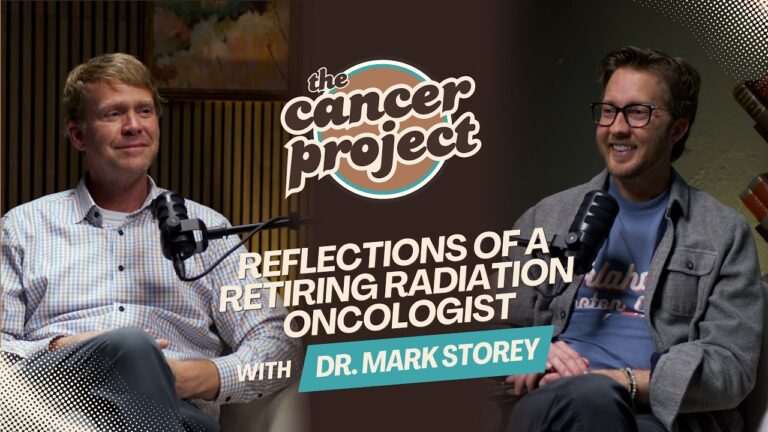
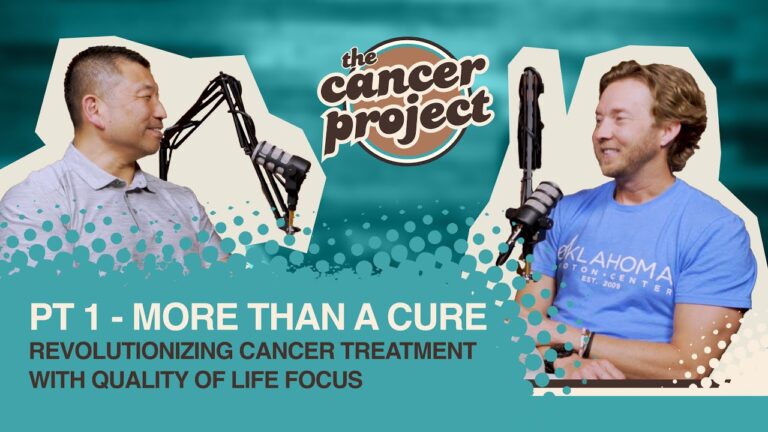
In the debut episode of The Cancer Project, host David Raubach sits down with Dr. Mark Story, a radiation oncologist at the Oklahoma Proton Center in Oklahoma City. Dr. Story brings more than two decades of clinical experience to the conversation, having trained at MD Anderson Cancer Center and spent 18 years practicing in Arkansas before relocating to Oklahoma to help rebuild and expand the state’s proton therapy program. Beyond his clinical work, Dr. Story is a prolific writer on Substack, where he regularly publishes accessible explainers on oncology, cancer screening, treatment advances, and prevention, making him one of the more publicly engaged physician voices in the cancer space today.
A significant portion of the episode is devoted to demystifying radiation oncology for a general audience. Dr. Story explains that radiation functions as a local treatment, more closely related to surgery than chemotherapy, with the goal of delivering a precise, lethal dose to tumor tissue while sparing as much surrounding healthy tissue as possible. He walks through the key distinction between photon-based (traditional) radiation and proton therapy: protons stop at a defined depth inside the body, dramatically reducing the amount of radiation that passes through to healthy tissue on the other side. His striking statistic, that for prostate cancer, traditional radiation requires four units of energy to deliver one to the target, while protons require only 2.2, makes the physics immediately tangible. He also breaks down the rationale for fractionation, explaining that spreading treatment across multiple sessions allows healthy cells to repair between doses while cancer cells, whose DNA repair mechanisms are compromised, continue accumulating damage.
The conversation shifts to one of the most discussed trends in cancer medicine: the rising incidence of cancers, particularly colorectal cancer, in younger adults. Dr. Story acknowledges the trend as real and concerning, noting that patients in their late 20s and 30s are being diagnosed with cancers that screening guidelines don’t even recommend testing for until age 45. He’s candid that the medical community doesn’t yet have a definitive answer for why this is happening, pointing to diet, obesity, and environmental exposures, including microplastics and other carcinogens, as plausible contributing factors. His practical advice for younger patients with a family history: educate yourself on warning signs and don’t delay seeing a physician if something changes.
Dr. Story closes the episode with two areas of genuine insight. First, his “big three” for reducing lifetime cancer risk: stop smoking (quitting before age 40 largely erases its ten-year mortality penalty), maintain a healthy weight through sound nutrition, and exercise regularly. He’s measured but optimistic about GLP-1 medications, predicting their net impact on cancer and cardiovascular disease rates will be positive. Second, he addresses patients who arrive with information from social media and online sources. His approach: listen first, understand where a patient is coming from, and engage respectfully, because patients who feel dismissed don’t stop pursuing outside treatments, they just stop disclosing them, which creates real safety risks.
What You’ll Learn in This Episode
- Proton vs. Photon Radiation: Traditional photon radiation cannot be controlled for depth, meaning energy continues beyond the tumor into healthy tissue. Proton therapy stops at a defined depth, requiring roughly half the total energy output to deliver the same therapeutic dose, a meaningful difference in cumulative radiation exposure to the patient.
- Radiation as a Local Treatment: Radiation oncology occupies a middle ground in cancer care. It is a local treatment like surgery, but can cover larger areas than a scalpel can reach, making it especially useful for treating microscopic disease that may have spread beyond a visible tumor mass.
- The Logic Behind Fractionation: Spreading radiation across multiple sessions exploits a biological difference between healthy and cancerous cells. Normal cells repair radiation-induced DNA damage between sessions; cancer cells, with their broken repair mechanisms, cannot, so cumulative damage in the tumor grows with each treatment day.
- Shrinking Treatment Schedules: Advances in imaging precision and treatment planning are enabling shorter courses of radiation. Prostate cancer, once treated over nine weeks, can now be completed in five to six weeks for most patients, with some candidates offered as few as five sessions, without sacrificing efficacy.
- Rising Cancer in Young Adults: Colorectal cancer rates among people in their 20s and 30s are increasing at a pace that outstrips current screening guidelines, which don’t recommend routine colonoscopy until age 45. The underlying cause remains unclear, but obesity, diet, and environmental toxin exposure are leading candidates.
- The Big Three for Prevention: Dr. Story’s top three modifiable cancer risk factors: smoking (quitting before age 40 substantially reverses its mortality impact), unhealthy weight, and physical inactivity. He emphasizes that the data on smoking cessation is “amazingly powerful.”
- GLP-1 Medications and Cancer Risk: While not a substitute for genuine lifestyle change, GLP-1 drugs represent a meaningful tool for addressing obesity at scale. Dr. Story expects their downstream effects on cancer incidence and cardiovascular disease to outweigh their side effect profile.
- The Role of Imaging Precision: Modern radiation planning has moved from sketching tumor boundaries on X-ray film using two-finger margins to sub-millimeter targeting guided by CT imaging and real-time motion tracking. This precision is what makes shorter, higher-dose treatment schedules safe.
- Listening as Clinical Practice: The most underrated skill in oncology may be the willingness to hear patients out, including when they arrive with alternative medicine plans. Patients who feel dismissed don’t abandon those approaches; they simply stop disclosing them, which creates genuine safety risks.
What makes this opening episode so valuable is Dr. Story’s rare combination of technical depth and plain-spoken honesty. He doesn’t traffic in false hope or oversimplified reassurance. He explains the science at a level any patient can follow, acknowledges what medicine still doesn’t know, and consistently returns to what patients can actually control. Whether you’re newly diagnosed, supporting a loved one through treatment, or simply trying to understand what a radiation oncologist actually does, this conversation is an exceptionally grounded place to start.
Full Transcript
Read Full Transcript
Transcript generated from the episode’s audio. Speaker names are identified from the context of the conversation rather than from recorded speaker data, and automatic transcription may misspell names and terminology. Please refer to the video for the authoritative version.
David Raubach: Welcome our viewing audience here. I’m really excited. We have Dr. Mark Storey, radiation oncologist at the Oklahoma Proton Center here with us today. And one of the things that I love about Dr. Storey is he is a prolific writer on Substack. If you want to know anything and everything related to oncology, cancer screening, cancer treatment, he probably has published something on Substack or has something that’s coming up. And so we’re going to kind of hit on a variety of topics here today. The approach that patients should take as they get diagnosed with cancer, his background as an oncologist, what are some things that have changed over the last 20 years during his career. And so we’re really excited to talk to Dr. Storey today. So, Mark, welcome.
Dr. Mark Storey: Hey, great to be here. This is gonna be fun.
David Raubach: Yeah. Is this your first ever podcast?
Dr. Mark Storey: Second, I think.
David Raubach: Second podcast. Okay. All right. So, you’re an expert then.
Dr. Mark Storey: Yeah.
David Raubach: So I understand that you had a little bit of a, before we get started, you had a little bit of an adventure today. You were kind of a savior for some kids that wrecked a golf cart.
Dr. Mark Storey: Well, at least I tried to help them is yeah, golf carts these days go fast. Kids were driving around a roundabout and the cart flipped and we were, my wife and I were walking with try to get out and walk and exercise, and cart flipped, heard it crash, ran over, tried to help, basically calm people down. Thankfully the two kids were fine. I say that they both probably went to the ER. One probably broke a foot, one probably needed stitches in a hand, but realistically they weren’t really hurt from the accident. So, it was an adventure.
David Raubach: They were lucky a doctor was in the area.
Dr. Mark Storey: They were lucky that they weren’t hurt.
David Raubach: Yeah. Right. Right. Right.
Dr. Mark Storey: As a radiation oncologist, I don’t know that radiation was the they needed.
David Raubach: That’s what they needed. Yeah. Well, you know, it’s good that you’re looking out for the community and, public service announcement, be careful with golf carts. Even golf carts can have accidents.
Dr. Mark Storey: Absolutely.
David Raubach: So, tell us a little bit about your background. How did you become a doctor? Was that something that you always wanted to do? What kind of led into that career path?
Dr. Mark Storey: I wish I had a great story. I mean, it was kind of stumbled into it. I was always good in math and science. My dad was a car dealer, so I grew up in a business environment. But was good in math and science, went to Vanderbilt, did engineering to avoid a foreign language because I don’t like foreign languages. And so did engineering, was able to substitute like a programming language, as odd as that is, for a foreign language, so I didn’t have to take French or Spanish. I took COBOL or Pascal.
David Raubach: Right. So hard a harder language.
Dr. Mark Storey: Yeah. Exactly. So, I messed up there, and then just never got sidetracked and then went to med school and then stumbled upon radiation oncology. I had a great one-day outing to a radiation oncology facility and there was a physician there who was just laidback, strolled in, kind of talked to us about what he did. And in the big scheme of things, as you’re aware, it’s the most technically advanced field in medicine. We have huge capital requirements. The machines that we use are super fancy. They allow us to put the radiation exactly where we want to. They allow us to miss places right next to that. And, it’s all driven by computers. It’s all driven by software. I spend a significant portion of the day in like almost like a video game environment.
David Raubach: Yeah.
Dr. Mark Storey: Drawing where I want the radiation to go, circling the things that I don’t want to get treated, and then working with a team of people to try and come up with the best plan as to how to get that person’s cancer treated. So it’s just kind of something I gravitated into. Ended up going to MD Anderson, blessed to have trained there, trained there from ’97 to ’01. And then I’m from Arkansas. So I’m reasonably good at keeping things simple.
David Raubach: Yeah.
Dr. Mark Storey: And simplifying some of the complexities because I do think in cancer when you get there, it’s like a roller coaster. You get so much information that a lot of it is trying to slow things down and get across a few big points to the patient so that they can feel a little bit at ease. And, so I think that’s an important part of the job. But, went to Anderson, went back home to Arkansas, practiced there for 18 years, and then kind of decided in about 2017, I think, when we first kind of met, thought protons were going to be the next step forward, the next use of technology to try and help us put more of the radiation where we wanted to and spare more tissues. And so, yeah, six and a half years ago, kind of had the midlife crisis and packed up from a successful venture in Arkansas to come here and work on the restructuring and getting the Oklahoma Proton Center back to treating a lot of people here in Oklahoma and taking good care of those people. And it’s been a wonderful experience the last six and a half years now.
David Raubach: So, tell me, you made a comment that I want to touch on. Yeah. You said that protons is part of this effort to get more radiation to the tumor and less radiation to healthy tissue. And I think that’s a little bit of the way to describe the whole premise behind radiation oncology. Maybe expound on that a little bit. Like when you explain what you do as a radiation oncologist to the average person, you meet somebody at church or at the bar and you say, “I’m a radiation oncologist.” How do you explain what it is that you do?
Dr. Mark Storey: You know, again, I think the goal is pretty simple. The goal is to kind of replace surgery in a lot of cases. Sometimes we help support surgery with a local treatment, but a lot of times these days, we’re actually replacing surgery. And the goal is to put a lot of radiation into the cancer and put as little as you can other places. And the difference between traditional radiation and protons is that protons go into a depth and they stop. And that allows you to use less radiation. My the best math number I know is if for prostate cancer, it’s pretty common, pretty consistent. So the numbers are pretty reproducible. With traditional radiation, four units leave the machine and end up in you to get one to the target. With protons, 2.2 units leave the machine, end up in you to get one to target. So, it’s almost twice as good at eliminating radiation other places.
Dr. Mark Storey: And so, that’s, I mean, that’s really why we designed it back in the day, why these machines are out there. But they come with a lot of complexity. They come with a lot of capital costs. So, they’re not everywhere. But I do think as we continue to move forward, the goal is kind of get cure rates really high, which I think we’re doing better and better at, but as cure rates go up, then the next goal is to get the side effects down. And I think protons are going to help us over the next decade and two to be able to push limits, treat the cancer at a higher dose, get rid of it more often while decreasing the side effects from that.
David Raubach: So, talk to me a little bit about how radiation fits into the whole field of oncology, because I think a lot of patients, they get diagnosed, it’s a little bit overwhelming. It’s something new that they haven’t experienced before, and maybe they have to go meet with a medical oncologist and a surgical oncologist and a radiation oncologist. So talk a little bit about the interplay with some of these different treatments and some of these different doctors, and how it kind of all fits together to do what you talked about, which is get rid of the cancer, extend life, and minimize side effects.
Dr. Mark Storey: Yeah. I think so first, I think even backing up one step, far one step more, when you get the diagnosis of a cancer it’s, that’s a life-altering experience. I mean that kind of throws everybody off the rails. And then radiation has been bad forever.
David Raubach: Right. Right.
Dr. Mark Storey: I mean, no one wants radiation. It’s, there was an old 60 Minutes or 2020 analogy to where like surgery, they like picked it up and put it in the bucket, and I forget what radiation. Radiation was like kicking the bucket across the stage.
David Raubach: Yeah.
Dr. Mark Storey: I mean, radiation has always been the bad answer. And so I think we’ve had an uphill climb to fight that. But radiation in simple terms is kind of used as a local treatment. Chemotherapy, they give to you and it flows throughout the whole body and treats everything everywhere. So if your disease is spread to many places, we really have to rely on chemotherapy. We use surgery for local spots and then we use radiation to be able to cover.
Dr. Mark Storey: Now we can substitute, and we call it like radio surgery, as a way to use radiation to substitute for surgery, but traditionally a lot of times we used it if we thought the cancer could have little fingers that leaked out other places. And with surgery, when you go in, you can see the main mass, but you can’t always see the microscopic little fingers. And so radiation allowed us to more easily treat a bigger area than surgery.
Dr. Mark Storey: So for example, in the brain, surgery is required for most cases, there’s always exceptions, but generally you do surgery first, they remove the mass, and then you worry about cancer being in the inch around that brain tissue. And it’s a good example because you can’t just go in and take out more and more brain just because you think it might have something bad with it. But with radiation, we can give a moderate amount of radiation to that area, hopefully sterilize those cells, keep the cancer from coming back, and kind of use it as an additional local treatment. So, radiation’s kind of closer to surgery than it is to chemotherapy. It’s a local treatment, but we use them kind of, oh, in different patterns for different cases.
David Raubach: And what are the different types of radiation? You talked about protons, and protons are different than other types of radiation. So what are the, when a patient is recommended radiation, what should they be thinking about is, well, these might be my options for how to get radiation.
Dr. Mark Storey: Well, I think we, you know, we try to make it overwhelming.
David Raubach: Yeah. Right. Right. Yeah.
Dr. Mark Storey: So we have protons, and then you change one letter a little bit and you make it photons. Photons is the traditional treatment. These days honestly it’s really good. I mean I treat still a lot of people with photons. I’ve treated people over the course of my career for 20 years with photons. It’s a really good treatment, very computerized, but the beam, you can’t control the depth. And so when you can’t control the depth, you end up giving a little bit more, like we talked about before. But that’s photon radiation. And then we have all of these, like everything else in the world today, we have all these acronyms to where you call it like IMRT. And again we do the same thing with protons and we call it IMPT. We have electrons, which are other kinds of particles, but they’re used mainly for skin cancers.
Dr. Mark Storey: So again it’s a complex landscape, and I think when you come in for the consult, that’s why a lot of times the consults, we still spend 40 minutes or an hour talking with patients, trying to answer questions, trying to give them an opportunity to kind of hear things for a second or third time so that they can get some grounding, because again the whole process is overwhelming. And I think we’re blessed in radiation oncology to have a slower pace, right? Most things in medicine these days, you come in and it’s almost like you’re on a treadmill for the procedure. Things are moving fast, and you’re lucky if you can slow down and kind of ask some questions.
Dr. Mark Storey: And I think radiation oncology, for the history of my career, has always been essentially the number one rated, like from the patient perspective, patient satisfaction surveys. It was that way in MD Anderson. It was that way when I moved to Arkansas. It’s that way at the proton center. Especially that way at the proton center. But again I think, you know, we’re lucky, it’s a slower pace. We get to answer questions and you get familiar with the environment and people know who you are when you walk through the door, and the treatments take some time a lot of times.
Dr. Mark Storey: So like a course of treatment used to be much longer, probably the average used to be six or seven weeks of treatment. These days it’s as short as three or five. Still most commonly it’s probably four or five weeks of treatment. And in a way that sounds intimidating and that sounds scary, but I think at the same time it gets back to some level of routine. You figure out the process. You have opportunity to ask questions. Generally speaking, patients are doing well. They’re not sick. They’re just coming in for a 30 minute visit. Most of them are incredibly brave and do incredibly well throughout the treatment course, and I think oftentimes they leave thinking that the time there was not the negative they thought it was going to be at the start.
David Raubach: So this is a question that I’ve always had. Why do we spread out the radiation over multiple days or multiple weeks? Like if I’m a patient I would say, well, Dr. Storey, I have this prescriptive dose of radiation. Just give it to me all at once. We can get rid of the cancer that way, right? So, why do we spread that out? Why do we fractionate?
Dr. Mark Storey: I think we’re moving there. And I think in my lifetime, more and more cancers will be treated with a single shot. But the problem is back in the day, we didn’t have the technology that we have even today. And we needed to spread it out to be safe. Okay? You weren’t as precise in hitting the target. You didn’t as precisely know where the cancer cells were. So, you needed to treat an extra area. Like back when I started, literally you drew the cancer on an old X-ray and you took two fingers, as scary as this is. Okay. You took two fingers and you drew your block around the edge of the two fingers plus the cancer. So, the cancer’s here and you drew a block around it using your two fingers. That was the magic.
David Raubach: Sounds very sophisticated.
Dr. Mark Storey: Very sophisticated. Now, we are down to literally, like, trying to do CT scans just for comparison, watching the cancer move and then adding two millimeters, tenth of an inch.
David Raubach: So, which is like the width of a human hair.
Dr. Mark Storey: Not quite that precise, but we’re down, we are very precise in hitting the target, missing the things we need to miss. And so with that, so back in the day, we had to spread it out. And my simple analogy is the cancer cells are broken, the radiation damages DNA, and so we cause damage, let’s say on Monday, treating everything, the healthy cells are healthy, they recover, they recover significantly better than the cancer cells.
Dr. Mark Storey: The cancer cells are broken, so their recovery processes don’t work as well, and so on Tuesday when they show up there’s damage still in the cancer cell and the healthy cells have healed up, and so you repeat that process, and at the end of the six weeks there’s a whole lot more damage in the cancer cells than there are in the normal cells. Okay? So that’s why we spread it out.
Dr. Mark Storey: I do think in the big scheme of things, we’ll figure out ways to give more and more and more in a single dose exactly to where the cancer is and be able to shorten them, like we have. One good example is for prostate, we used to treat to 44 treatments. So that’s nearly nine weeks, and these days most people are getting treatment in under six weeks, and then a larger and larger number are offered the opportunity to have five, based on some categories. So again I think we’re moving that direction.
Dr. Mark Storey: But the important part is when we move to that direction, you don’t just move to that direction for convenience. I don’t think that makes as much sense. If side effects are exactly equal, saving times makes a little bit of sense. But the more important part is to make sure the cure rate stays high, right? We got to, I mean I think the first goal is get rid of the cancer, get everybody to where we’re curing 92-plus% of people. And then once you get to that level, then you can start trying to mess with side effects reduction.
David Raubach: So, one of the things, shifting gears just a little bit, one of the things that I’ve read a few articles about that you kind of see on social media, and some of the data that the American Cancer Society has put out recently, is that we’re seeing cancers that normally used to primarily present in an older population show up in a younger population. Is that something that you have observed in your practice, or is that what’s your kind of…
Dr. Mark Storey: I think it’s real. Like it’s hard for me to say that I’ve noticed it for certain in my own practice, but I do think it’s real. I don’t have a good answer for why. Like the most common example that you see right now is colorectal cancers showing up in younger and younger people, a lot in their 30s. We don’t even recommend screening until about 45. I haven’t looked at the recommendations recently, but about 45 is when you typically will do a colonoscopy. But I mean we’re finding them in 30 year olds, 28 year olds. I mean, like, wow, very young patients.
David Raubach: And so which is really not something that you would have heard of 30 years ago, or…
Dr. Mark Storey: No, I don’t think so. I think something’s different, and I’m not sure whether it’s diet. I’m not sure whether it’s general. I mean, I think that’s why there has been a renewed look at, what are we doing in healthcare? What are our main goals? How do we work on diet for the general population? I think obesity is part of it, but not all of it. I just don’t have good answers, and I don’t, even if you read the studies, they’ll document really well the rise, right, in the incidents in young people. And in young patients it’s almost impossible to change that with screening because it’s still really uncommon, and it’s hard to find uncommon stuff. So the answer is not for people in their 20s to go get a colonoscopy. That doesn’t make any sense either, right? We’ve got to figure out the underlying problem. But even in those studies, and I’ve read several of them this year, they don’t have an answer. Maybe it’s diet, maybe it’s stuff in the, I don’t know.
David Raubach: So the, so we, so I guess the kind of the long and short of it is we know that there’s a an increase in the incidence rate in the younger population, but we don’t know why, right? I have heard you touch on a couple of things which is diet, obesity, some other things that I’ve heard is exposure to toxins or carcinogens in the environment. You’re starting to see some studies looking at the correlation between microplastics and potentially DNA damage leading to cancer incidents. So all of that leads me to think there actually could be ways to prevent cancer. Is that a, I mean, is that a fair statement? Like if we need to be working on, I mean, that, you know, the only thing I, like you see all that and then you see the opposite comments kind of saying, like, well, physicians just want this because that’s what they want to take care of, that’s where all their revenue.
Dr. Mark Storey: I think those are silly as well. We need to be doing everything that we can to prevent it. I think it’s a difficult puzzle to figure out, but I do think there’s a renewed interest in the country to try and figure out, with more of a level playing field, where it’s coming from and why it’s happening. And I think that’s beneficial. And I think going back to the young cases, probably the best thing you can do if you’re young and worried about a family history would be just be to read up on simple symptoms for the diseases that you’re most worried about that might run in your family, and be aware. And if you see something, go to a physician and be evaluated and see if there’s additional tests that need to be done, what you need to do.
David Raubach: So you have kids that are what, in their early 20s, late teens.
Dr. Mark Storey: Exactly. They comes 20s.
David Raubach: Okay. Well, that makes you old.
Dr. Mark Storey: Yeah. Exactly. Exact. Yeah.
David Raubach: So they come to you and they say, “Dad, we want to reduce our life. We want the playbook to reduce our lifetime chance of getting cancer.” What are the three things that you’re telling them? Kids, you, this is what you should do.
Dr. Mark Storey: So this week, so I read smoking. Smoking is an amazingly powerful. It is, if you smoke, the data says, and I can’t believe it because I just read it this week again, 10 years off your life.
David Raubach: Wow.
Dr. Mark Storey: So if the average American lives to 78 and you smoke, it’s essentially 68. But if you stop before you’re about 30 or 40, essentially all of that returns. Okay? If you stop when you’re 55, 60, not near as much of it returns. So, kids, put down the Marlboro Lights as you’re watching this episode.
David Raubach: Yeah. Yeah. Absolutely.
Dr. Mark Storey: And, you know, I think for a moment, like, again, this, and this is where I think people have a hard time going online and then figuring out, like, what’s real, what’s right.
David Raubach: Yeah.
Dr. Mark Storey: Seven years ago or so, eight, maybe time flies. I’m like you said, I’m old, right? Probably nine or 10 years ago, I was recommending to my cancer patients to switch to vaping. Okay. Cuz that was what medicine thought we should do, right? Now I don’t think that’s right. You’re better off. You just got to stop. I mean, just stop it. You got to figure out.
David Raubach: Yeah.
Dr. Mark Storey: I mean, if you’re presented, I mean, even once you’re diagnosed, the most powerful thing that is in your control is if you smoke, stop smoking. Okay. I think second behind that is diet. Okay. Maintaining a healthy weight. I think it’s incredibly important. I think it’s been underemphasized. It hadn’t been discussed enough, but I think maintaining appropriate healthy weight, and the next thing is probably exercise.
David Raubach: Yep. So, smoking, diet, exercise, probably the big three. I think, and I’d love to get your thoughts on this. I think what I’ve heard in my research on TikTok, you know, where you get all good information these days, is that it’s not just about a healthy weight, because there’s things that you can do to maintain a healthy weight, like for example doing Ozempic or one of the GRP1 drugs, but it’s also, there’s a diet component too. It’s maintaining a healthy weight by making the right nutritional decisions.
Dr. Mark Storey: Yeah, I think the ideal answer is controlling calories and exercise. I think that’s the perfect answer. I think, but, hon, I think Ozempic and some of the GLP ones. Is it GLP?
David Raubach: Yeah, not GRP.
Dr. Mark Storey: Okay.
David Raubach: Yeah. I’m just a podcast. You’re the doctor. So, but that’s not my wheelhouse.
Dr. Mark Storey: The, I think they’re going to be good for society. I think obesity is such a problem that I think they’re going to have side effects. I think they’re going to have toxicity, but I think the toxicity will be outweighed by the benefits of less cardiovascular disease. Okay.
David Raubach: Well, that’s an interesting, less probably cancer diagnosis down the road. And so I think they’re going to be a win on some level.
Dr. Mark Storey: I think they’re far from ideal. Like you said, I think ideal is, and that’s what, you know, I think America’s tough place right now. I mean like saving money is really hard. It takes a thousand, 10,000 good daily decisions all of the time to be able to save money, right? Same thing for weight. It takes 10,000, I mean you can’t make it one good decision, right? It is a daily routine that takes years and decades to really drive home, I think, the benefits.
Dr. Mark Storey: And that’s, they’re incredibly difficult, and so is smoking. I mean, like I almost feel bad, like it’s easy to tell somebody to stop smoking, right? It’s really difficult to do. They are addictive. It’s a hard transition. But I think those things are important. I think the weight loss concept is really interesting because we do think about the association between obesity and like cardiovascular disease, but it is, it’s fascinating to know that there’s actually this link between cancer incidents and obesity as well. So really the point with that is obesity can lead to all kinds of problems down the road.
David Raubach: So, going back to getting information on TikTok, I know that that’s probably something that’s changed for you as an oncologist from when you first started practicing to today, where there’s a lot more access to just this broad scope of information. I mean, and so I’m sure that I can imagine patients are coming in and talking to you and say, “Well, doctor, I saw this or I read this or I heard about this.” How do you manage through that, and what would be your recommendations for patients about how to approach them maybe doing their own research versus what you’re talking to them about, about treatment regimens? How are you kind of managing through that phenomenon?
Dr. Mark Storey: Like I don’t, I try to listen probably as my first, like, I think, like, I see the patient, they walk in and you see them walk in and you know what they’ve got and you know the primary thing that you’re supposed to deal with. But you haven’t lived with them, and you, they know their body. Even if they don’t have like a medical background education, they know what they’re going through. They’ve generally looked online and come up with some pretty reasonable thoughts. And so I think first step is to listen, try and figure out where they’re coming from, see what their concerns are, and see, then if you think they’re on the right track or if they’re lost down some bad part of TikTok, right? You know, there are bad parts of TikTok. I think I don’t actually have an account.
Dr. Mark Storey: So, but yeah, there are, there’s bad information on the internet, but I think in general it’s been good. I think you got to trust patients to be involved in their care. You got to trust them to help you. You’re on the same team. You both want the same thing. You want it to be as smooth and as good of an outcome as you can ever get. You want them to have the least side effects. You want them to roll through treatment and look back and be like, “Yeah.” So, you need to be on their team, listen to them.
Dr. Mark Storey: I think, if you listen, I, they’ll talk to you a lot more. I mean, I probably have three patients that I can think of off top of my head who tell me they’re on alternative medicine, okay, treatments, who then go to, if you were to name the top five total comprehensive cancer centers in the US, they go to those centers and they don’t tell their physicians there that they’re doing the things, right? Because they think they’re just going to get told to stop it and get out of the room. I think the better way to approach it is to listen, talk to them. Sometimes it’s pretty reasonable. Sometimes I think they’re off course, but I think you need to listen to them, have the conversation, figure out where they’re coming from, and see if that makes a lot of sense. And I’ve got some people who are doing some alternative treatments, and I think it’s been good.
David Raubach: Mhm.
Dr. Mark Storey: It’s helped them. And I think other times it makes no sense. And so if you don’t listen to the patient, you can’t get their side of the story. And if you don’t get their side of the story, you never even hear about it. And so, you know, they’re going to these cancer centers around the US and then not telling them, and they don’t even know that they’re getting these treatments.
David Raubach: So I love that, and I think that’s part of what we’ve tried to do at the Oklahoma Proton Center is create this safe space where you as a patient can come in and talk about anything that you’ve heard about or read or want to try or are trying, and we want to have that conversation with you. And then, as you mentioned, you’re not afraid to say keep doing some of those alternative treatments. So you mentioned that you have a couple patients where you think maybe there’s some alternative approaches that have helped them. What’s an example of that?
Dr. Mark Storey: Well I kind of group it into two things. Right. So just to be clear, there is the initial diagnosis. We’ve got really good standard of care treatments that have a really good chance of curing you that we know improve survival, to jump from there into a post on X and decide that you’re going to do these three or four steps instead of proven treatment, right, is almost never the right decision.
Dr. Mark Storey: There are other cases to where you’ve been through five standard treatments and for whatever reason they haven’t worked, or it’s five years later now and it’s back and you’ve just failed the fifth line of treatment and we’re running out of options. Those are two very different scenarios. I think, so that’s kind of how I group it. And then I don’t have a crystal ball, I think, on whether or not some of these fenbendazole and things like that, ivermectin, whether or not they’re, they’ll, they’re helpful, harmful, they generally don’t interfere with radiation of any kind, whether it’s traditional radiation or protons, they don’t interact, so I don’t worry about them too much. I think medical oncologists who are giving chemotherapy worry about them more.
Dr. Mark Storey: So I’ve allowed it to kind of continue regardless. I think diet changes, I don’t think we know enough right now. I think we should be farther along in our science of what good diet is. Okay. And just as a society, that hasn’t been where we’ve focused for the last 30 years, right? We like quick pill fixes. And I think we’ve leaned too much on that and too far away from what we put in our body. And I think on some basic level, controlling what you put in your body makes a whole lot of sense. And I think it can benefit people.
David Raubach: So, let’s go down the rabbit trail of ivermectin and fenbendazole, because that’s certainly a hot topic, and the second most popular podcast in the country, behind this one, Joe Rogan has talked about it a few times. So, what, how would you, somebody comes to you and says, “Dr. Storey, I’m thinking I’m going to do an over-the-counter fenbendazole or ivermectin treatment regimen.” What do you say? And why do you say what you say?
Dr. Mark Storey: I guess I’d look back and figure out what the cancer is, what the game plan is, what our standard treatment is, and why they’re looking in that direction. You know, I think if it’s chemo, then they really need to run that question. I mean, I’m open to listening. If it’s a chemotherapy needed diagnosis, then they’ll need to run that through their medical oncologist to make sure that the drug interactions aren’t potentially harmful. If it’s just radiation alone, most of them come in and say, “Well, I’m taking this and I’m going to keep taking it.”
David Raubach: Yeah.
Dr. Mark Storey: And I’m like, “Okay.” And generally it’s been well tolerated. I’ve had a few people stop it for various reasons along the way, not really as a combination from the protons and the drugs, but just for side effects from the drugs. Again, I don’t have, my main priority there is to emphasize that, so in prostate, a lot of the guys would cure 95, 96% of the time, there’s little need for extra risk, and taking extra things adds some additional risk.
Dr. Mark Storey: Again, that’s completely different than somebody who has failed five treatments and is now looking at a treatment that the doctor looks at them and says it might work a third of the time, right? Those are two very different scenarios. We really need to make sure and prioritize really good treatment. When we have good frontline, second line treatments that we know work, that we know improve survival, we can’t substitute those things in. I think in all cases, you can still work on dietary improvements, and even there I don’t have a crystal ball.
Dr. Mark Storey: I think less processed foods, more things that you can identify. I’ve moved towards a little bit more protein. I think in the US we generally don’t get enough protein. So I think fruits and vegetables, things that you point to and you say that’s a pecan, right? That’s a green bean. Those are healthier for you than the things that you didn’t want to eat as a kid that your parents told you to eat. Turns out they might be good for you. There might have been a reason that they were telling you those were wrong all the time.
David Raubach: Yeah.
David Raubach: So, just shifting gears a little bit. So we’ve talked a little bit about cancer prevention and some different treatments and alternative treatments. So, before we wrap up today, I do want to talk about cancer screening. And one of the big stories obviously recently is the diagnosis of President Joe Biden of prostate cancer. And one of the things that kind of shocked everybody, I think, a little bit, was the fact that he hadn’t been screened for prostate cancer, or he hadn’t done a PSA test, so the prostate specific antigen test for prostate cancer, I think, in over 10 years.
David Raubach: I think he got diagnosed this year, and the spokesperson for the president said his last PSA test was 2014. So, how did you, as a radiation oncologist, take that story? What were you thinking as these facts started to come out about his diagnosis, and kind of what you were reading about his screening and where he ended up being at with the diagnosis?
Dr. Mark Storey: It was kind of, it’s been a crazy couple of weeks. I mean, this is an area to where I spend a lot of time. If you go on the Substack, I write way too much on PSA out to the Dr. Mark Storey Substack. Check it out. Lots of good information there.
David Raubach: Yeah.
Dr. Mark Storey: And it tries to read, it’s probably not quite like a technical journal. It’s probably one step down from there. Still got a lot of obvious like references, and it’s very detailed, but it’s one step down from reading like a journal article. And I try to integrate some stories into it. So this was crazy. I mean again, I keep a database. I’ve probably got 2500 PSAs in a database that I keep and I update daily. This has been my wheelhouse of what I’ve done. There was one tremendous misinformation all over the news on almost every expert who I saw talking day one. I mean, there were some good points by some people, but in general, the best thing to do was just be quiet for a couple of days, let things calm down.
David Raubach: So, this is right. So, this is when the story first came out. He’s been diagnosed metastatic, but we didn’t have all the details.
Dr. Mark Storey: Yeah, we still have very few details, but just to kind of give you some stats. So the preventative cancer screening recommendations in the US have been all over the map. Back in the day we used to screen everybody. Prostate cancer deaths, once we developed PSA. PSA rolled out, I think, FDA approved in 1994, became widely used for screening in the early 90s, from the ’90s till about 2010, year over year deaths in men from prostate cancer, every age category, every year, pretty much tracked lower. Okay, per 100,000 men, fewer and fewer men died.
Dr. Mark Storey: The thinking was, though, at the time, that we were treating too many men with these early prostate cancers and they’re all doing so well that we don’t need to screen all these people. So there was a pendulum that swings, right? We’re doing everybody now, we’re not going to do anybody. And in 2012 they decided to not screen anyone. That was the recommendation in the US at that time. Let me remember the stats. The death rate in, oh, the presentation rate for men to present with, like, Joe Biden did, with metastatic disease, was one in 14 men over 75 diagnosed with prostate cancer. So we stopped screening in 2012. 2018, I believe, we reversed part of it and said younger than 70 we can screen. The older men were still not going to screen. Today, the number for men over 75 has gone from one in 14 men diagnosed with metastatic disease to one in five men.
David Raubach: Wow.
Dr. Mark Storey: So, the screening recommendations to not screen people are clearly wrong.
David Raubach: Right.
Dr. Mark Storey: The death trend was lower, it went flat, and as many people now pass away per 100,000 men from prostate cancer now as they did in 2012 when they reversed those screening recommendations. The number of men diagnosed with metastatic cancer has risen, and then we’ve kind of made an arbitrary cutoff, and the cutoff they’ve decided on is 70. Again, I, so I disagree with the screening recommendations. I think people should be screened. I don’t think the problem is with PSA. The problem is too many downstream decisions based on a PSA without good conversations about risk and benefits.
Dr. Mark Storey: Yeah, so the rate in men over 75 has gone from 1 in 14 to one in five. We’ve made this arbitrary cut at age 70, saying, well, these are so old, not my words, but I guess this is the thoughts of the screening recommendation, that those men have other competing risk that shouldn’t then put them through a PSA and a potential biopsy to figure out what’s going on. The problem is those men are showing up with increasingly more metastatic disease, like the president. So the comments that you saw on the news where it’s incredibly uncommon, it’s not incredibly uncommon, it’s one in five.
David Raubach: In his age group.
Dr. Mark Storey: Yeah. The risk of a 75 year old showing up with metastatic prostate cancer compared to a 50 year old in the US is about 400-fold.
David Raubach: Wow. Basically, no one who is young gets caught with metastatic prostate cancer.
David Raubach: And you would say the reason for that is that there’s more regular screening at a younger age.
Dr. Mark Storey: Yeah, we’re more, there’s probably two or three things. One, prostate cancer is more common as you get older. Okay. Two, there’s some evidence that maybe even it’s more aggressive when you are older. Maybe because you’re not in as good a shape, your immune system’s not as strong. I don’t have great answers. And then, three, I think part is screening. You know, you’re obviously trying to find them in younger men quicker.
Dr. Mark Storey: But I think, in totality, there is no doubt that the screening moves away from screening in 2012 were wrong, and the partial unwind is probably not enough. And unfortunately, Joe Biden, my hope is that that case will become a realization of the data to where we reassess screening recommendations and reinstitute them in men. Honestly, I’m not sure a long time. I think y’all just have educated decisions. I think the problem with our current medicine, or the current protocol for prostate cancer, is not the PSA, it’s what do you do with an elevated PSA? Do you move forward with the biopsy? Do you not move forward with the biopsy?
Dr. Mark Storey: But again, trend lines, back when we decided to unwind it, prostate screening prior to 2012, if you got diagnosed with low risk prostate cancer, about 15% of men were observed almost. So eight and a half out of 10 got treated for prostate cancer with low risk disease. Today, 25% of men with low risk disease get treated. We, instead of treating the vast majority of patients, we now watch the vast majority of patients.
David Raubach: And that’s a term that you might hear is active surveillance.
Dr. Mark Storey: Yep.
David Raubach: And so really the idea there is you have prostate cancer, but it’s very early stage. We’ve taken the biopsy, let’s say, we’ve looked at genetic biomarkers and we’ve determined this is not an aggressive cancer at this point, so it doesn’t require immediate treatment.
Dr. Mark Storey: Yeah. So, I think, like you touched on a couple of things, like, again, 2010 we didn’t have many options. We didn’t have any good way to image the prostate routinely. So we couldn’t look and see, look for the cancer. Today, we have PSA. You can look at not one PSA, but you can look at a pattern of PSAs. And to me, there’s way too little emphasis on the pattern of PSAs. A PSA that goes 3 to 3.2 to 3.4 is different than a PSA that goes from 1 to 3 and a half to 7. Those are different scenarios.
Dr. Mark Storey: But we have PSA pattern, we have MRI, and then if we decide to do a biopsy, you can stick the needle where you think the cancer is on the MRI. And so that’s helped us to get better information about the cancer, find the highest risk disease in the prostate. So we have, and then you talked about genetic genomic tests, to where in the old days pathologists looked under the microscope and said this cancer is a Gleason, and they gave it a Gleason score. There are some cards. They literally look at three different cards and they say, if I had to guess, I’d say this one looks like a three, right? And then if I had to say the second number, I’d say, well, it looks like card four. And that’s literally what they do. They have three cards, three, four, and five. They pick which one it looks the most like. And then you add those two together.
David Raubach: Add those two together, right?
Dr. Mark Storey: So for Biden, he either had a four plus a five or a five plus a four, right? And that just means, like, which one’s more common, which one the pathologist looked in the microscope and said, well, if I had to, my first guess would be, and it’s not really a guess if you’re a pathologist, my first idea would be five, based on these criteria in the pictures. But now we can look at the DNA in that cancer and give a numeric outcome, like, we think your estimated risk of this showing up in the bones in 10 years is 9.7%.
David Raubach: Or 1% or 30%.
Dr. Mark Storey: And so we have a tremendous wealth of information that can help us steer those patients appropriately. And so when you think about it, you know, the president was having at least annual blood draws, right, for something, cholesterol, right, looking at A1C, looking at basic info.
David Raubach: Had to have, right?
Dr. Mark Storey: I hope.
David Raubach: Yeah.
Dr. Mark Storey: And then they just run extra tests in the lab and you get information back.
David Raubach: Well, that’s how simple it is. So I’ll stop you right there because I don’t think we’ve touched on this. Maybe explain, for those that don’t know, what a, we keep…
Dr. Mark Storey: Oh, yeah.
David Raubach: Saying PSA test.
Dr. Mark Storey: PSA is just a blood draw, right? So, when you’re in for the blood draw and they pull out four different vials, and one’s got a purple top and one’s got a green top and one’s got a red top, they may add a white top, the white top’s the PSA, and they run it through a test, and it’s about a hundred bucks, right? But I think it gives really good information, and again I think the data says it clearly helps prevent these bad case scenarios to where we find it once the prostate cancer’s out of the prostate and the bones.
Dr. Mark Storey: If your PSA is less than 10, the odds of it being some other place is incredibly low. Not zero, nothing in medicine is zero, but it’s very low. So low that, like, if you showed up, we probably wouldn’t even get tests to look for it other places. You would just say, well, it’s here. How do you know your PSA is low? And you move on.
David Raubach: So, to kind of tie a ribbon on all that.
Dr. Mark Storey: Yeah.
David Raubach: Your recommendation is if you’re over the age of 70, you’re healthy, you probably have a number of years in front of you, there’s no reason not to go ahead at your annual physical, when you’re getting a blood draw anyways, to say, can we also measure my PSA?
Dr. Mark Storey: I will do it. I tend to be conservative. I tend to underdo probably medical recommendations in general. That’s a no-brainer to me.
David Raubach: Okay. I don’t want to put words in your mouth.
Dr. Mark Storey: No. Sounded like, my simple rule is kind of, and like none of the guidelines really do this very well, but my simple rule is, and again this is not in the guidelines, this is not formal medical recommendation, but it works pretty darn good, take your age, divide it by 10. If your PSA is higher than that number, probably you need to have it looked at. Okay. It’s that’s a little generous for young people. If you’ve got a family history and you’re 50, realistically, your PSA ought to be down closer to one. Okay. But rarely will that formula miss something really bad. The worst case scenario is your PSA is three and you’re 50 and you decide to come back and you follow it and it moves to three and a half, and you decide to follow it and it moves to 4.2, and then you can get your MRI and talk to your urologist at each of those visits and decide when the two of you think you ought to move forward, based on family history and what’s been going on. Okay. But I think it gives you options in time, and it’s super easy.
David Raubach: Well, when we talk about cancer prevention, there’s preventing cancer from ever presenting, but there’s also preventing cancer from spreading or metastasizing. So there’s kind of two components to cancer prevention.
Dr. Mark Storey: Yep.
David Raubach: And screening plays into that second aspect of cancer prevention, preventing the cancer from presenting more advanced.
Dr. Mark Storey: That’s correct.
David Raubach: So, my last question for you today, and this has been fantastic, such good information, is what are you most excited about as an oncologist, as you look forward over the next few years, five years, 10 years, when you think about where the field’s headed? What’s something that you’re really looking forward to?
Dr. Mark Storey: Oh, I just think probably most globally is just the continued use of better and better technology, to do better, see better outcomes, be able to do the things we talked about, put more cancer, I mean, put more dose into the cancer, get rid of it more often, decrease side effects, potentially shorten the treatments up. And I think protons are going to be an important part of that.
David Raubach: Mhm.
Dr. Mark Storey: I think in the last few years we’ve seen great data on this, it’s going to be complex, but like craniospinal treatment for adults with metastatic cancer in the spine. We’ve seen great data for protons improving outcomes in lung cancer. We’ve seen great data for protons improving outcomes in esophageal cancer. And I think in the next year we’re going to see it in head and neck cancer. So I think it’s just the use of technology, and then it’s going to be a ride while AI comes along and helps integrate some of these things even more quickly.
David Raubach: Speeds up the progress, hopefully.
Dr. Mark Storey: Yeah.
David Raubach: And that’s a tool that we’re using, and that you’re very in tune with what’s happening and how that kind of interplays with oncology, and how we can use it to our benefit as we treat patients.
Dr. Mark Storey: Yeah. Again, I think that goes back to our field being the most technology-driven, and I think probably we have one of the larger avenues to integrate it into our field to improve outcomes, make things more efficient, quicker, yeah, better.
David Raubach: Well, that’s great. Thank you, Dr. Storey, for your time. If anybody would like to talk with Dr. Storey and has more questions, they can get a hold of you at the Oklahoma Proton Center. We’ve got a website, okcproton.com. You can find the phone number on that website. And I will say I’ve worked with a lot of oncologists. Dr. Storey is absolutely one of the best when it comes to staying out in front of advances in medicine, advancement in treatment techniques, ways to use different types of radiation.
David Raubach: But the other thing that I love about you, and I see this on a regular basis and we get feedback from our patients, is that you have great patient care, and I think you mentioned that earlier, that part of your approach is listening to patients when they come in, and we see that and we get that feedback in the patient surveys at the facility. And so that’s, you got to have both to be a really good doctor. Know the medicine, know the technology, but also really care about the patient, and we have that with you. So, again, thank you so much for being with us today.
Dr. Mark Storey: Absolutely. Yeah. Thank you very much. Very kind words. Thank you. Thanks.
Keep Exploring
Join us at The Cancer Project
Get weekly stories, research updates, and ways to get involved.