More Than a Cure Part 1: Revolutionizing Cancer Treatment with Quality of Life Focus
More Than a Cure Part 1: Revolutionizing Cancer Treatment with Quality of Life Focus
← All EpisodesEpisode Summary
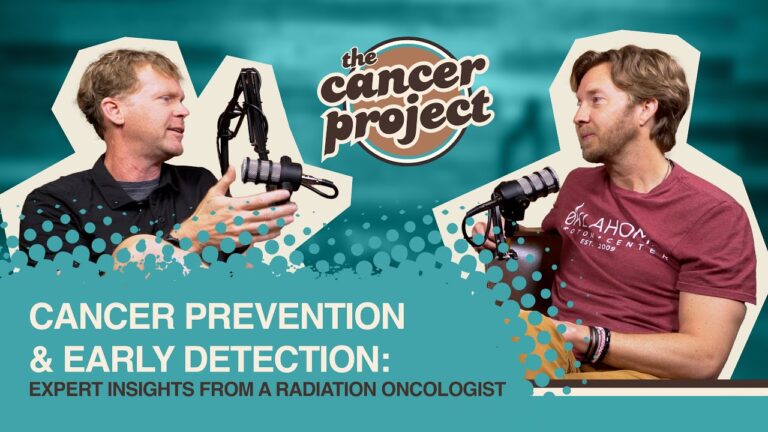
In this episode of The Cancer Project, David Raubach sits down with Dr. John Chang, Medical Director of the Oklahoma Proton Center and one of the most respected radiation oncologists in the country. Dr. Chang traces his path from growing up in Chicago after being born in Korea, through his undergraduate and medical training at Northwestern, to his residency in Oklahoma and fellowship at MD Anderson Cancer Center. After sixteen distinguished years at OU Medical Center, where exceptional mentors shaped his clinical philosophy, Dr. Chang joined forces with David Raubach to lead the Oklahoma Proton Center, a move he describes as a professional reinvention and a genuine alignment with the future of cancer care.
At the heart of the conversation is a deceptively simple question: when we talk about cancer treatment, why isn’t quality of life treated with the same urgency as tumor control? Dr. Chang argues that patients are not one-dimensional. They are spouses, parents, grandparents, athletes, and workers who want to emerge from treatment still recognizably themselves. Proton therapy addresses this directly. Because protons deposit their energy in a precise, controlled burst and then stop, rather than continuing through the body like conventional X-rays, oncologists can deliver the same tumoricidal dose while dramatically reducing radiation exposure to the healthy tissues surrounding the target.
Dr. Chang walks through several disease sites where the quality-of-life case for proton therapy is particularly compelling. For head and neck cancers, conventional radiation routinely produces dry mouth, swallowing difficulties, and permanent taste changes; proton therapy has demonstrated convincing reductions in each of these burdens. For women with left-sided breast cancer, the heart sits directly in the radiation field during standard treatment, and decades of long-term data confirm that excess cardiac dose shortens lives; the ongoing RADCOMP trial is quantifying just how much proton therapy can reduce that risk. The most emotionally compelling case, however, may be pediatric oncology: children treated with radiation may live seventy or eighty years beyond their diagnosis, making the stakes of long-term toxicity, cognitive deficits, growth delays, secondary malignancies, extraordinarily high.
The conversation turns to the complex question of clinical evidence. Dr. Chang engages directly with the common criticism that prospective randomized trial data for proton therapy is limited or mixed: the comparison arm in many trials, conventional photon radiation, has itself improved substantially over the past decade through techniques like IMRT, raising the performance bar that proton therapy must clear. Patient selection also matters enormously: a tumor abutting the spinal cord, heart, or brain demands a fundamentally different risk calculus than one in a less sensitive location. Dr. Chang is candid that not every patient benefits equally from proton therapy, and that honest patient selection is both an ethical and a scientific imperative.
Looking ahead, Dr. Chang shares enthusiasm for two converging frontiers: adaptive proton therapy, the ability to replan a patient’s radiation delivery on a daily basis as the tumor changes, and the intersection of proton therapy with immunotherapy, particularly the abscopal effect, in which irradiating one tumor site triggers systemic immune responses that affect distant, untreated lesions. He also reflects on the broader access problem: proton centers have historically been concentrated in large academic medical centers, leaving rural patients effectively locked out. The Oklahoma Proton Center, he argues, is proving that a community-based proton facility can be both clinically excellent and financially sustainable.
What You’ll Learn in This Episode
- Quality of Life as a Co-Equal Goal: Dr. Chang frames cancer treatment as having two equally important objectives: eliminating the tumor and preserving the patient’s ability to live a full, recognizable life after treatment ends.
- Bragg Peak Physics: Protons release their energy in a precise, concentrated burst at a targeted depth and stop, unlike X-rays, which continue depositing radiation through and beyond the tumor into healthy tissue on the other side.
- Head and Neck Cancers: Conventional radiation for oral, pharyngeal, and laryngeal cancers frequently causes permanent dry mouth (xerostomia), difficulty swallowing (dysphagia), and taste loss, side effects that proton therapy has demonstrated the ability to significantly reduce.
- Cardiac Risk in Breast Cancer: Women with left-sided breast cancer face direct radiation exposure to the heart under standard treatment. Decades of data confirm excess cardiac dose increases long-term mortality. The RADCOMP trial is actively measuring how much proton therapy reduces this risk.
- Pediatric Oncology: Children are uniquely vulnerable to radiation toxicity because of developing organs, growing brains, and a lifetime ahead. Proton therapy’s evidence base is strongest in pediatric patients, where it reduces risks of cognitive impairment, growth delays, and secondary cancers.
- Organs at Risk (OARs): In radiation planning, OARs are the healthy structures most vulnerable to radiation damage. Proton therapy’s sharp dose fall-off immediately beyond the tumor is especially valuable when a critical structure, heart, spinal cord, brain, lies in close proximity to the target.
- Patient Selection is Critical: Not every cancer patient benefits equally from proton therapy. Tumor anatomy, specifically what critical structures surround it, is the primary factor determining who will see the greatest quality-of-life advantage from protons over conventional radiation.
- Adaptive Proton Therapy: Emerging technology allows radiation plans to be recalculated and updated daily to account for tumor shrinkage, anatomical shifts, and changes in body composition during a treatment course, maximizing precision and minimizing unnecessary dose throughout.
- Abscopal Effect and Immunotherapy: Early research suggests radiation can stimulate systemic immune responses, shrinking tumors beyond the irradiated site. Proton therapy’s precision may be particularly well-suited to potentiate this effect alongside immunotherapy agents.
- Access and Community-Based Care: Proton therapy has historically been confined to large academic centers in major cities. The Oklahoma Proton Center is demonstrating that a financially sustainable, high-quality proton program can be built in a community setting, improving access for patients in underserved areas.
This conversation with Dr. John Chang offers a rare inside view of what modern radiation oncology looks like when quality of life is elevated to the same standing as tumor control. His clinical depth, his candor about the limits and genuine promise of the evidence base, and his commitment to making proton therapy accessible beyond elite academic centers make this an essential listen for anyone touched by cancer. Part 2 of this conversation continues the exploration of where proton therapy is headed and what it means for the future of cancer care.
Full Transcript
Read Full Transcript
Transcript generated from the episode’s audio. Speaker names are identified from the context of the conversation rather than from recorded speaker data, and automatic transcription may misspell names and terminology. Please refer to the video for the authoritative version.
David Raubach: We are really excited today to host Dr. John Chang, medical director of the Oklahoma Proton Center on the Cancer Project podcast. Fun fact about Dr. John Chang, he’s known as one of the best radiation oncologists in the country, but he’s as well known for, and maybe more so, for his skills on the pickle ball court.
Dr. John Chang: No.
David Raubach: So, tell us a little bit, about I mean, this is kind of a new passion for you, pickle ball? Or maybe it’s not, maybe you’ve been playing pickle ball for a long time?
Dr. John Chang: No, I haven’t. It’s just another way to try to stay in shape and and trying to play a sport that, it’s my, me and my family are very competitive so we just like to do things and compete in any avenues, and sports are one of the things. My oldest plays hockey so I play a little hockey. My younger one plays water polo. I can’t swim with a lick so I’m not a water polo player. So and then, you know, we try to play all sports. So, so pickle ball is just kind of a way to kind of stay in shape. I feel like, even though, as I get older, I can still kind of play that. It doesn’t require a ton of moving around.
David Raubach: So, so I remember, so, so, Dr. Chang and I have known each other for a number of years. And you spent a good part of your career in Chicago, which we’ll talk about in a little bit, and then did a year in Vanderbilt. And then when we took over the Proton Center in Oklahoma City, we targeted you for lack of a better word to come and really lead the revitalization of that facility. And there was a lot of ideas that we had about upgrading equipment and opening new protocols and expanding the types of patients that we treated. And I remember we hired you and then shortly after you got to Oklahoma City, I think you had to get a hip replaced.
Dr. John Chang: Yeah, that’s right.
David Raubach: Is that accurate?
Dr. John Chang: Yeah.
David Raubach: So, I what happened?
Dr. John Chang: Well, so I started playing hockey in my 30s and being that I did not keep my flexibility up as a kid to be able to play hockey in my 30s, I really must have destroyed the hip joint. So, actually in Chicago, I had my right hip replaced. And by the time I got here, I realized that the right hip was probably the worst, but the left hip was just as bad. And so once the right hip was fixed, the left hip basically, you know, became so painful that it was hard to walk. So, So, pretty quickly I realized I had to have my hip replaced. And so I did that here, so now I’m bionic and, yeah, yeah. So, so yeah. So, it’s been tremendous and been able to recover from that and I’m back to playing hockey and my wife comments how, you know, how ridiculously stupid I am for—
David Raubach: I thought you were going to say ridiculously agile, or—
Dr. John Chang: Yeah.
David Raubach: More athletic than you were before.
Dr. John Chang: Yeah. It’s like why do you still, like, traumatize yourself like that?
David Raubach: And you play goalie?
Dr. John Chang: Yes.
David Raubach: Yeah. What, have you always played goalie?
Dr. John Chang: No, I mean obviously when I first started out I just tried to learn how to skate and and do those things and just playing like a normal player. And then my oldest was at that time about seven or eight years old and he wanted to play goalie. So I started trying to figure out how to play goalie to try to help teach him, you know, but he basically far exceeded me and ended up playing hockey at Michigan. So, so he basically, as all kids do, exceed their parents in almost everything. So, So, now he actually is, you know, working as a software developer in New York, but he also is one of the head assistant coaches at Columbia University.
David Raubach: Oh, really? Okay. Yeah, that’s fantastic. And so tell us a little bit about your family. I think you have two sons and then you’re from Chicago, you grew up in Chicago. So what are your sons doing now?
Dr. John Chang: So my oldest is in New York City. He is a software developer for Baxter. He actually is working remotely. So it’s not that he has to be in New York to work at Baxter, but I just saw an opportunity to be in New York, and lives in the Westchester area. The younger one actually just moved to Boston and he took a job at Siemens, and so he’s working there, and they do have a facility in kind of the suburbs of Boston. So they’re now both on the east coast. So I actually grew up in Michigan, in the Midwest, and I went out to University of Pennsylvania for my training, and when I was on the East Coast, I realized we weren’t kind of East Coast people. So we came back to the Midwest, but we liked, we enjoyed the kind of the big city aspect of being out in Philly. So when we came back to the Midwest, we came back to the big city in the Midwest, Chicago. So, we’ve been in Chicago for 25 years and and so we still make our home in Chicago.
Dr. John Chang: As you know, I keep flying, in community basically, back and forth from Chicago to Oklahoma City. So I go home on Fridays, come back on Sundays, and it’s really kind of worked out very well. My wife now in Chicago, she used to show dogs all the time, we had grand champion bulldogs, and then she kind of retired from that and now enjoys her second love, which is jewelry. So she works in a jewelry store for one of her friends and loves shiny things, and so that’s very compatible with what she wants to do right now.
David Raubach: So So your wife shows Bulldogs, you play hockey and pickle ball.
Dr. John Chang: Yeah.
David Raubach: Both very competitive. Would you say that your wife is more competitive than you or are you more competitive than she is?
Dr. John Chang: No, I think our—
David Raubach: Or is it about the same?
Dr. John Chang: It’s about the same. I mean, we strive to win at everything. So, no. And it’s all about just trying to do your best at everything, right? That’s kind of been the our philosophy. Our kids are the same way. They’re very driven and it’s all about trying to do your best and to try to make the best of every situation.
David Raubach: What? So, tell me a little bit about the the dog showing process. I think you’ve done some pretty big shows.
Dr. John Chang: Yeah.
David Raubach: What is that process like? Like, what do you have to do to get to the point where you have a champion bulldog?
Dr. John Chang: Right. So, so the way it kind of worked out, it was kind of serendipitous because we wanted, we we’ve had dogs for over 20 years before we started showing dogs and we always wanted kind of on the bigger size dogs. And so we had Mastiffs, we had boxers, and then it just got to the point where my wife said, “You know what? These dogs are just way too big. Let’s get a a smaller dog but with a big dog mentality because, you know, really small dogs are a little yippy and and a little hyper.” So So a bulldog is kind of like a big dog and short legs. So, So, we just got one as a pet and then, so as we were, you know, kind of keeping in touch with the breeder, they bred show dogs. And then, so in the end when it was about time for my youngest to finish high school, the breeder came up to us and said, hey, you know, since you know John’s working all the time, said to my wife, if John’s working all the time and you know your kids are going to be gone to college and and away, let’s get you another career path and have you show dogs.
Dr. John Chang: So, So, we got our first show dog from our breeder, of our original pet bulldog, and that’s how it kind of started, and our first bulldog went all the way to grand championship. He was fifth in the state, or in the country actually, and then we went to Westminster with him as well, and then we started having his offspring become champions, and we have we had one of his daughters who then became third in the country and also was shown at Westminster as well. So, so it really kind of fed into my wife’s competitive nature to show dogs and win. But eventually, she it just became a little cumbersome, and and so, you know, she kind of decided that she did her time with that, and now she’s showing jewelry now.
David Raubach: And what is the life of a retired dog champion look like?
Dr. John Chang: It’s awesome.
David Raubach: Be nice. Yeah, yeah. We could all hope to get there someday.
Dr. John Chang: Yeah. Eat, go to the bathroom, go to sleep. I mean, that’s driven around the country.
David Raubach: And so I want to shift gears a little bit. I think you have a really fascinating background with your family that kind of led into you deciding to become a doctor. So tell us a little bit about your parents. I know you were born overseas, and just what it was like growing up for you, Dr. Chang.
Dr. John Chang: Yeah. So, it was really a very inspiring story, as I was growing up, as I heard more about it, you know, as I started to understand where their background was. So, so both my parents came from mainland China, and so they were kind of in the central part of China, and during the revolution, when the communists were taking over, my mom basically escaped from China to Taiwan with her whole family. But my dad, actually, interesting enough, he was about 14 when that was happening, and his father told him, “You really need to leave. This is not going to be good,” did when the communists take over. And So he basically ran away from home, joined the nationalist army, which then got basically ousted from China, and they all ended up in Taiwan. So that’s how my parents ended up in Taiwan and met there. And so it was very inspiring, mainly from my dad’s perspective, in that he basically raised himself from age 14. He was raised by the army, essentially. But what he told me was that his first thing that he wanted to do is he wanted to educate himself to the point where he could eventually go to America.
Dr. John Chang: And so what he did was, he actually, he bought, when he finally got enough money, he actually, his first purchase was a Chinese American dictionary, and he would rip pages out of it, and as he was marching he would actually memorize. And just to fathom somebody doing that at age 14, 15 years old, is just amazing, right? So so to me it was like I could never even live up to that, no matter what I did. Right. So I always strove to do my best, because of what he did to get himself to where we could come to America, and, you know, he brought us over. We immigrated legally, and and then, you know, we became citizens, and, you know, that was to me very inspiring. And then, you know, it has actually inspired my kids, hearing that story, to kind of work hard in their own respect.
David Raubach: So, and so when did you come over from Taiwan to America?
Dr. John Chang: I was five. So, So, as he came over initially, to actually, he got his degree in Taiwan at military college, and then he came over and did his master’s degree in Michigan, and then he brought us over after he was graduating with his master’s degree. And then, you know, we kind of started our life in actually downtown Detroit. So it was kind of hard at the very beginning. And, you know, he worked two jobs, my mom worked two jobs. Like, he was a bus boy and delivering pizzas in downtown Detroit.
David Raubach: So with a master’s degree.
Dr. John Chang: Yeah. With a master’s degree. And we lived in some of the harshest parts of Detroit. Got our cars and apartment broken into multiple times. So, you know, we really had to kind of work our way up. And, you know, again, that was, it just kind of helped our drive with—
David Raubach: Well, and I think I’ve heard you say this before, that upbringing, and what you saw with your parents, and then even what you talked about growing up in Detroit, there’s a little bit of this mindset of nothing can phase you, we’re going to overcome any challenge. And you’ve applied that to your approach to cancer care.
Dr. John Chang: Mhm.
David Raubach: You are, when I see you interact with patients, you’re you always take a very optimistic approach with patients, which is, no matter how bad the diagnosis is, we are going to do everything we can to try to tackle this. And I think that optimism from you, which partly stems from your upbringing, manifests itself to your interaction with patients. So, I don’t know if you would agree with that assessment of kind of how you approach medicine, but I’ve observed that with the way that you interact with patients.
Dr. John Chang: Yeah. I mean, I think it’s a mindset that, for me, I always look at the possibility of helping them. And sometimes I talk to them, I’m not going to sugarcoat anything, I’m going to tell them what the reality is, but I’m also going to tell them that if there’s any chance, we’re going to go for it. And if they’re in the same mind frame, or same mindset and goal driven like that, then I’m happy to help them get there, right? I’m also happy to help them try to be as comfortable as possible. I mean, that’s the other goal, too, is that sometimes we can’t achieve cure for every situation, but my mindset is, okay, if that’s not the case, then let’s improve your quality of life for the time that you have.
Dr. John Chang: And so that’s also one of the things that I think is also very important as well. So those are the kind of, you know, avenues I try to take, and and I think a positive mindset always helps, you know, in addition to the science and all that, but I think, you know, that helps patients to focus on what’s important and not regress. And then, when they have that mindset, they’re more apt to try to stay nutritionally fit, try to stay active. Those are the type of things that do help the mind and body.
David Raubach: So tell me a little bit, because you mentioned a couple of key words there, which is cure and quality of life. And I remember, again, when we first started working at the center in Oklahoma City six years ago, you came up with this slogan, or I guess you told me that you maybe heard it from a mentor in UPenn: more than a cure, quality of life.
Dr. John Chang: Right.
David Raubach: And I still use that today to describe our approach at the Oklahoma Proton Center, which is, we’re not just focused on curing your cancer, we also want to ensure that you maintain this quality of life during and after treatment. So talk to me a little bit about where that came from and what that really means.
Dr. John Chang: Right. So that when I was in my training at the University of Pennsylvania, one of kind of the key founding members of radiation oncology, especially for kids, was Dr. D’Angio, and I had the, just the huge honor of being one of his mentees, as he was kind of an emeritus professor at University of Pennsylvania. So he always talked about the fact that, as he was coming up through his training and through everything that he was doing, that he realized that, you know what, it’s not all about just striving for every last bit of, you know, chance at cure. It’s also about preserving quality of life, especially for kids, because, you know, especially because he was a pediatric radiation oncologist, that he wanted to make sure that he could provide quality of life not only right now but also in the future, and in kids, you your impact on them at that very moment will translate into the rest of their lives.
Dr. John Chang: So his one key statement to that he imparted to me was, cure is not enough, quality of life is just as important. So that has been the drive of, you know, what I want to do on a day-to-day basis. And so, you know, using technology and delivering treatment that not only has the best chance of cure but also minimal impact on the rest of the body has been key to what I strive for. Mhm.
David Raubach: So, and I think that’s amazing, and I think it’s, it really speaks to the approach that we should take in the oncology community today, especially with all of the tools and resources that we have at our disposal. I want to step back a little bit and tie in with your time at UPenn. Tell me why you wanted to be a doctor, and then maybe tell me why you settled on radiation oncology.
Dr. John Chang: Yeah. So that backtracks all the way into kind of my teens, when I was kind of trying to figure out what direction I was going to take with things, right? It’s still early, but one of the most impactful things was that my grandfather, on my mom’s side, he developed lymphoma. And when he got lymphoma, they were in the Houston area, and of course they went to MD Anderson, right? So I was in Michigan with my family, but I would come down to visit my grandfather. And you know, he would be going through all these treatments. And one of the worst things was that he had such bad decrease in his white cell count that his teeth were starting to get infected, and and so he had to have all his teeth extracted. And he was going through chemotherapy and all that.
Dr. John Chang: And at the end of it, he still passed away from his cancer. And it was just so horrible to see him go through all that, have his teeth removed. That was kind of, to him, very humiliating, you know, having just basically no teeth. And And also the fact that they couldn’t make dentures for him because he was so sore in the mouth. So it was miserable for him. And you know my thoughts, you know, kind of coming away from that, was that, you know, we have the best cancer center in the whole country, or world even, and they still couldn’t make his quality of life better and couldn’t cure him, you know, and and that’s the reality as far as the cure, but, you know, that he had to go through so much suffering and still didn’t come out with a good outcome.
Dr. John Chang: So that really kind of inspired me, to okay at that point I realized I want to do something in cancer going forward. So initially, in college, my drive was to do cancer research. So I worked in a lab, and that was through my sophomore and junior year. And in that lab I was working, actually fortuitously, in a, not a physician’s lab but a researcher, a cellular researcher, who worked with radiation oncologists. So there would be experiments where they would take cells and they would radiate them and do different experiments in that conjunction with that, and there would be physicians who were training in radiation oncology at Michigan who would come into the lab and work in the lab as well.
Dr. John Chang: So they, you know, would work with me and I would work with them, and they were like, you know, let me show you what I do in the clinic. And so they brought me in there, and me being a very gadget tech kind of guy, I walked in there, I was like, “Wow, this is paradise.” You know, now I can use the latest technology to do the thing that I want to do most, which is help people. And so I was never kind of going in the direction of being a physician. I really wanted to do the kind of the the bench work, the laboratory bench work. And then this drove me in that direction. And And also I eventually realized the bench work was really boring.
Dr. John Chang: Right. But actually my wife started and did that for most of her career before she became mom and things like that. So So she found a love in doing that, but I really enjoy the interaction with people.
David Raubach: So then, so you were at University of Michigan and you did a medical degree at the University of Michigan, and then residency at UPenn, right? For those of you that may not know what it means to be a radiation oncologist, explain what that is.
Dr. John Chang: Yeah, so a radiation oncologist is someone who treats cancer with radiation, very radiation of different types. It can be radiation seeds or radiation sources that you place into patients, or it can be giving radiation from the outside to target cancer, right? We also treat some benign tumors as well, but our goal is to use radiation to for health benefits, basically.
David Raubach: So, and so you do the residency at UPenn, and now you’re the medical director of the Oklahoma Proton Center. So you’re using protons a lot to treat cancer. Did you know about proton therapy at UPenn?
Dr. John Chang: Yeah, we did actually. Right at the end of my residency, they were starting to be, they were starting to look at protons as a treatment modality more commonly. It was already at that time a very small niche field, because at that point the only two proton centers at that time was Loma Linda University in California and Harvard University, right, so the two kind of coast areas, and it was just because the technology was so expensive to build. And so University of Pennsylvania was looking at building their proton center, but you know, in the, and it was still over, you know, 10 years away.
Dr. John Chang: So, so I finished residency. I knew that Protons was kind of on the horizon. And so when I went out to Chicago to join the practice there, I started to kind of look into trying to build, somehow create a facility like that in Chicago, right? A big city, lots of patients who would benefit from it. We started looking at that. So initially at about, I would say 2003, 2004, I’d have been in practice for about three or four years, I started to reach out to places who were looking to build proton centers already. So MD Anderson was kind of the next place, and so one of my attendings or mentors at University of Pennsylvania had gone to MD Anderson to become an attending there. So I reached out to him to see, you know, how they did it there.
Dr. John Chang: I was in contact with one company who was trying to present a way to do it, and then I found another company who were looking at that as well, and, you know, that’s the company that started building proton centers, ProCure, that was looking initially here in Oklahoma City, the facility that we’re currently in, and then Chicago would be the second center. So we were able, in 2005, to come up with a way to build a proton center in Chicago, and 5 years later, in 2010, is when we got our proton center. And then this facility opened, I think, six months ahead of us. So, so that’s how we kind of got protons on the map in Chicago and here in Oklahoma.
David Raubach: Yeah. The Oklahoma Proton Center was the sixth proton center in the country and opened in 2009.
Dr. John Chang: Right. Yeah. Yep.
David Raubach: So, at that point in time, late 90s, early 2000s, you’re talking about proton therapy. At the, late in the late 90s, it’s Harvard and it’s Linda. There’s probably not that many patients getting treated. It’s kind of this nascent field within radiation oncology. Why were you so interested in proton therapy?
Dr. John Chang: Well, is exactly like I was talking about, our drive to provide treatment for cancers and minimize the collateral damage, right? So, So, just looking at the kind of the science behind it, because protons is a particle as opposed to just a beam of energy, we could send that particle in to hit what we wanted to, but then we could stop it before it just goes all the way through, right? And much like a particle, or a bullet, basically, the entrance energy is not really giving off a lot of energy to that tissue. So, where it stops and collides with the tissue is where it does the most damage. So by doing that, we start to realize that, hey, we’re going to have something that basically damages what we want and minimizes any damage to the other tissues, which kind of is the, you know, the pinnacle of what we can do with radiation. So that’s, that was the drive to start to, you know, push for this technology to help other people.
David Raubach: And talk to me a little bit, because you mentioned, when you were at UPenn, one of the things that your mentor talked about, and I know you’ve had a lot of experience in this field, is pediatric oncology or pediatric cancers. Tell me a little bit more about what it means for a pediatric patient to get proton therapy versus traditional radiation. How does that impact their quality of life? Maybe, what are some examples of how recovery, or life five or 10 years after cancer, can look different for p for pediatric patients getting protons versus traditional photon radiation, right?
Dr. John Chang: So for pediatric patients, or children, as they’re growing, their bodies are developing, right? Their cells are, you know, forming from the initial type of cells and maturing into the adult cells that you have the rest of your life. So in that process, if you damage them, they will be irreparably damaged for the rest of their lives, which means that there are consequences of what you damage at that point for the rest of their lives. Right? And so what we’ve seen is that, let’s say we treat brain tumors, and that damages or slows the development of the brain going forward. We’ve seen that patients can have a lot harder problems in school going forward, even holding a job in the future.
Dr. John Chang: And using protons really translated, when we did the research, that they had less IQ deficit with the proton therapy as opposed to regular radiation. One of the biggest things that we always worry about is low and medium dose radiation that can come from the regular radiation hitting other tissues, which it doesn’t exceed the threshold that maybe causes damage. But that low and medium dose radiation can sometimes cause mutations, and mutations are what cause second cancers. And so what we used to see is a high rate of second cancers in kids that we’d cure. But the second cancers usually take about 8 to 10 years to form. So we wouldn’t even see that kind of manifestation till they were in their teens or something like that.
Dr. John Chang: So so those are the type of things that we really wanted to mitigate. That’s some of the studies that have been done to show that the protons really make a tremendous difference in kids, not only to their normal tissue and their development and eventual kind of function going forward, but also the chance that the treatment might cause a second cancer. So all those things are critical, and that’s much less of an issue in adults, because their bodies are mature and developed, and the cells are a little bit more resistant to the damage when they’re older.
David Raubach: So when we talk about more than a cure, quality of life, there’s really a substantial noticeable impact for pediatric patients, because they’re still developing. So, we it’s very difficult to see a child come in with cancer at the Oklahoma Proton Center, and we’ve treated a number of kids, and you’ve treated a lot of kids in your career at Vanderbilt and up in Chicago and during your time at UPenn. What is your approach as an oncologist dealing with the impact of seeing this child walk in with cancer? How do you mentally deal with just the weight of the fact that you have this child that’s going through something so challenging, and then it’s impacting their siblings, and it’s impacting their parents, and it’s impacting their entire family.
Dr. John Chang: Yeah, it is a challenge, because you are not just treating the patient, you’re treating the whole family, right? So, it’s important to kind of focus on seeing what you can do for them, the practicality of how, you know, the treatment’s going to affect them. The, really I don’t want to say it’s the great thing about treating kids, but kids are very resilient, and a lot of the treatments we have nowadays are very effective for kids, and that pediatric patients really have a very high survival rate in a lot of the diseases that we treat for them. Leukemias, some of the brain tumors, things like that, we impact them very successfully, as far as, you know, cure.
Dr. John Chang: So, So, that’s the great thing about it. We want to make sure that we keep the family focused on those type of things. It’s important also to kind of treat the family as well, right? So, it’s important to kind of keep the parents, you know, kind of positive and focused, and and know how to treat their child, and not to kind of overpamper the child. Sometimes there’s a tendency to do that. And what happens there is not so much that the child suffers from that, it’s the siblings, right? The siblings then start to feel like they’re not as important as the other child that’s sick. So, so we want to make sure that they stay focused on all those things. And so it’s really good to have a social worker or some type of support for the family, so not only treating the patient but also treating the entire family as well.
David Raubach: So, we I know recently we’ve had a a young boy get treated at our facility for a a brain tumor. What do you tell a kid who walks in and it just says, “Doctor, what’s going on?” Yeah. What is happening right now?
Dr. John Chang: Well, he had such a great attitude, and and a lot of times what you’ll want to do is to try to characterize what’s going on in a way that is kind of, you know, he actually had already come up with this thing where he called his tumor Slimy, and I said, “Okay, well, we’re going to knock Slimy out of there, because we don’t want him to hang around anymore.” Right? And so it’s really trying to spin it in a positive way, as far as how we’re going to fight this and how we’re going to help him fight it, and and we have such a great staff that really know how to interact with these patients and families, and really kind of bring the best out of everybody.
Dr. John Chang: And for me, it’s not that I enjoy treating kids, I’d rather not treat any kids and not have them have cancer. But it’s just so satisfying seeing these kids down the road. You know, so I’ve had a ton of patients in Chicago who still reach out to me. And actually, it’s, the actually, one of the best things that ever happened about a month ago, where my wife was working in the jewelry store, and there was a kid who I treated who lived in the same city that I live in, and the mom and the daughter came into the store and said, “Hey, are you Karen Chang?”
Dr. John Chang: And so talked to my wife and said, “Well, this is so and so.” I’m not going to give names, but so and so, your husband treated him, or treated her, and she just graduated from college and she’s got into med school. And that just, like, yeah, you know, when they told me that, it just, it shook me, and it was just so satisfying to hear something like that, that, you know, she was actually the first child I treated in Chicago. And so, you know, it was just, it was overwhelming, that it reminds you why you do what you do.
Dr. John Chang: Yeah. It’s just like, I meet these kids at this point in time where they’re going through the most difficult thing that they’ve ever gone through, the most difficult thing that the family’s ever gone through, and I’m here to try to provide them a little bit of hope, and obviously try to deal with the the issue, the cancer. But then, yeah, to get to see those pictures down the road is amazing. We at the Oklahoma Proton Center, we’ve treated quite a few international patients, I know you guys did when at your time in Chicago, and we do a patient graduation every two weeks for the patients that are finishing up treatment today.
Dr. John Chang: But we actually have a family from England that’s coming over for patient graduation in a couple weeks, which is just, it’s just amazing that they would take the time to come back, and that the kid’s doing really well. So yeah, it’s really rewarding, but it is still, I get choked up anytime I see a kid walk through the facility.
David Raubach: So one of the interesting things about the process with treating a pediatric cancer patient, I think this is helpful for people to understand, is that part of what we have to do is decide whether or not we have to use anesthesia to treat that patient. So talk a little bit about that approach, and what we may have to do with some kids to actually get them through treatment, and what we were able to do with this young boy that we’re treating right now.
Dr. John Chang: Yeah. No, so we often times, you know, it’s hard for even adults to hold still for, you know, half an hour, 45 minutes, those things just for scans or something like that. But to imagine that we have to hold a child still to make sure that the treatment is accurate and precise and not going to hit anything that we don’t want it to hit, and make sure it hits what we’re supposed to, designed to target, we want to make sure that precision is very high, right? And so for a child to hold still during that time is very challenging, especially when they’re around the ages of 10 or below, right?
Dr. John Chang: And so, this child who we’re seeing was build as he’s got to have anesthesia, right? And so, while that is something we can definitely do, we can definitely provide that, we’d like to do it without anesthesia, mainly because if a child needs anesthesia, they can’t eat or drink until they get their treatment and do the anesthesia, which means that typically they’re not eating all morning until they get their treatment. And typically we like to treat them in the morning, so that they only have to stay asleep and not, you know, not eat during the time that they’re asleep. But if they have to wait at all through the day, then, you know, we all get angry when we’re hungry, right?
Dr. John Chang: So so it’s something that it’s hard to explain to a child that he can’t get to eat or drink or anything like that beforehand. So if we can do it without anesthesia, that makes all the difference in the world. So, what we really do is do a lot of play therapy with these children, to kind of show them that nothing’s going to hurt them when they get their treatment. All they have to do is hold still. We have different tricks to help them hold still, playing music, sometimes playing a video, those type of things. And we were able to kind of walk the child through it, get them, you know, comfortable with their positioning. We even sent the devices home that they would be laying in.
Dr. John Chang: So this child had to wear a mask because we’re treating the head, and he would go home and practice at home, and kind of made it a little bit of a kind of a a fun task for them to do. and And in the end, he’s doing great. He is, as he’s going through this, he’s, you know, very much enjoying working with the team. Of course, he gets some rewards after end of it. Of course, you know, positive reinforcement always works, too. So, but yeah, it’s just been a a great way to kind of help kids get through and and kind of reduce the fear of all this.
David Raubach: Have you seen his mask?
Dr. John Chang: Yes, I have.
David Raubach: Yeah. Yeah. So, tell me about the mask, then.
Dr. John Chang: Well, I don’t want to give too much away.
David Raubach: So, we or maybe talk about what we do with masks at the Proton Center.
Dr. John Chang: Yeah. So, we have one of our staff members whose wife is an artist, and she is able to create these wonderful masks. So, it’s almost like she can customize the mask to make it like a Halloween mask of whatever the child wants. So, they’ll express their desires, you know, whether it’s a cartoon character or animal or something like that. She can actually create that in stunning detail. And so, the child then becomes almost like kind of roleplaying and and pretending they’re some somebody else. And And for them, that’s sometimes enough to get them through the treatments. They’re a superhero. They’re a princess.
David Raubach: They’re putting on their mask, then.
Dr. John Chang: Yeah.
David Raubach: No, it’s really neat, and I think, you know, we we’ve treated a lot of pediatric patients at the Proton Center, and you’ve treated a lot of pediatric patients, and there’s things you learn over time about what’s going to make the child comfortable, what’s going to make the parents comfortable. One of the things that I would say is that everybody up at the Proton Center has such a heart for those kids.
Dr. John Chang: Yeah.
David Raubach: And will go out of their way to do anything and everything to make the experience there just a little bit more comfortable. I remember we had a patient that we treated a few years ago, and you’ll remember this, he was very interested in becoming a fighter pilot.
Dr. John Chang: Yeah.
David Raubach: And so at his graduation, when he finished treatment, we arranged to have some of the pilots from Tinker Air Force Base down the road show up in full attire and then dress him up as a pilot to celebrate him finishing treatment. And it was just really neat to see what that meant for him.
Dr. John Chang: Right.
David Raubach: What are some of the other stories that you remember from treating pediatric patients?
Dr. John Chang: I mean, a lot of it is, what’s what really sticks with me is when they come back, you know, when they’re much older, and it’s almost hard to recognize in them, you know, and so for me, it’s just been tremendous. And also a lot of the international patients, that they’re they still keep in contact, they tell us their updates on their successes and things like that. So, So, that’s what’s so rewarding about that. I do want to kind of, you know, also kind of branch off a little bit and just say that it’s not always about the pediatric patients too.
Dr. John Chang: Our staff, I think this is what I feel about our staff, and a lot of, you know, the staff that I had in Chicago as well. But the protons, because the staff is working at the Proton Center and they feel like this is cutting edge, it’s a technology that makes a difference to them, they feel like they’re making the difference, and they take so much pride in what they do, and I think they’re really inspired to work there, right? So, so that to me is what creates the environment that these people are working in, and they basically continue to foster that.
David Raubach: That’s, a I love what you just said. I think that’s a great point. They’re empowered knowing that we have this incredible technology at our disposal. And so that inspires them to also say, let’s meet that level from a patient care standpoint. Not that they wouldn’t otherwise, but it’s just nice to know that we’re going to provide the best patient care possible while also providing access to the best technology possible for patients, which is going to generate the best possible outcomes for patients.
David Raubach: So, a couple more questions, and we’re really fortunate, because this is actually going to be a two-part series with you. You’ve agreed to spend a lot of time with us. I guess you don’t have a pickle ball game tonight. And so just a couple more questions, and then for part two we’ll dive a little bit more into the clinical benefits of proton therapy and just approach to different disease sites and how that all works. But stepping back, bigger picture, what for you is the most challenging part of being a radiation oncologist?
Dr. John Chang: Yeah. I mean it is, so stepping aside from just the proton aspect of it, is really justifying what we do. You know, when we talk about treating cancers, it’s always a multidisciplinary approach, right? So it should always be that when you get the diagnosis of cancer, your doctor should basically present your case to surgeons, radiation, chemotherapy doctors, all the support staff, you know, as well, because it is, it should never be one-dimensional in your approach, right? So our challenge as radiation oncologists, a lot of times we’re not the ones who make the diagnosis. So a lot of times we have to justify using radiation or not in certain situations.
Dr. John Chang: So as a radiation oncologist, I really try to stay up on all the studies that are done, both from the past and also currently, to make sure that I still stay up on the cutting edge, because we can never stay stagnant in treating cancer. We should always keep trying to find the next best thing to help patients, and that’s what I feel like with protons, that is the next evolution of how we can do better for patients. Surgeons, they do better by now doing robotic surgery, right? So they don’t have their hands in patients, they have these little, basically, fingers and prods and things like that, that are robotically controlled, so they’re steady, they cut less, damage less tissue.
Dr. John Chang: Same with what we’re trying to do, is hurt less tissue. They’re trying to damage less tissue physically when they go after this. And now with the chemotherapy or medical oncology doctors, they are using targeted therapies, where they actually, not just trying to poison the body, which is what chemo usually does, but they’re using immunotherapy, where they’re directing drugs only at the cancer cells and really minimizing any exposure to other things. So I think all of medicine is really trying to improve that kind of therapeutic ratio, which means maximizing cure, minimizing side effects, and that, I think, is where we’re going with things.
David Raubach: So part of the challenge for you is just staying up to speed on the the rapidly evolving field of oncology and all of these different treatments.
Dr. John Chang: Yeah.
David Raubach: But it’s something that I know, talking with you on a regular basis, it’s something that you’re really good at. And I do love the fact that you mention that you do try to stay up to speed on what medical oncology and medical oncologists are doing and what surgeons are doing, because it really is, it’s a, it takes a team.
Dr. John Chang: Yeah.
David Raubach: To effectively treat cancer. So what are you most looking forward to over the next few years, as a doctor, just as a field of oncology?
Dr. John Chang: Yeah, I mean, I think that we are evolving in trying to, again, continue to progress in delivering the best treatment with minimizing side effects, and I think there’s a higher level of precision that we can get to, and so so I think that’s what we’re trying to strive to do. You know, cancer is really, a it’s multifaceted. It is not just one disease. It’s not one entity. Every cancer is different, and that’s why we need different solutions for every cancer. And so there’s not one magic bullet that we have. We really need to, like I, like you said, work as a team to kind of find the best strategy for each patient. And so that’s why it is now what we call precision medicine, and we individualize care with precision medicine.
David Raubach: That’s great. Well, I really appreciate your time today, Dr. Chang, one of, again, one of the best doctors in the country that I’ve ever met. Last question, for real this time.
Dr. John Chang: Okay.
David Raubach: Perfect pickle ball serve. Are you going up to the net, or are you playing back?
Dr. John Chang: Well, when you serve in pickle ball, you have to serve. It has to bounce on that side and has to bounce back to you. So, you always have to stay back after you serve.
David Raubach: Oh, you don’t get to run to the net.
Dr. John Chang: No, not right away.
David Raubach: See, and I’m not a pickle ball player. So, I’ve learned something today out of all of that. The thing I’ve learned, you hit, you serve, and you have to stay, wait.
Dr. John Chang: You have to wait and then—
David Raubach: Yeah.
Dr. John Chang: Yeah. Or—
David Raubach: Yeah.
Dr. John Chang: Or co, or coach Chang will yell at you.
David Raubach: So, yeah. Well, that’s good. Well, thank you so much, Dr. Chang, and we’re looking forward to part two where we dive in a little bit more on the clinical benefits of proton therapy and what some of the disease sites are that proton therapy are really beneficial for. So, thank you again.
Dr. John Chang: Yeah, my pleasure.
David Raubach: If you’ve enjoyed what you’ve heard today, subscribe. We’re on multiple podcast channels. If you have questions, you can leave those in the comments, we always try to answer those. Or if you do have specific questions about proton therapy, give us a call at the Oklahoma Proton Center. We can connect you with Dr. Chang, and he can get all of those questions answered. Again, thank you for joining us today.
Keep Exploring
Join us at The Cancer Project
Get weekly stories, research updates, and ways to get involved.