Episode Summary
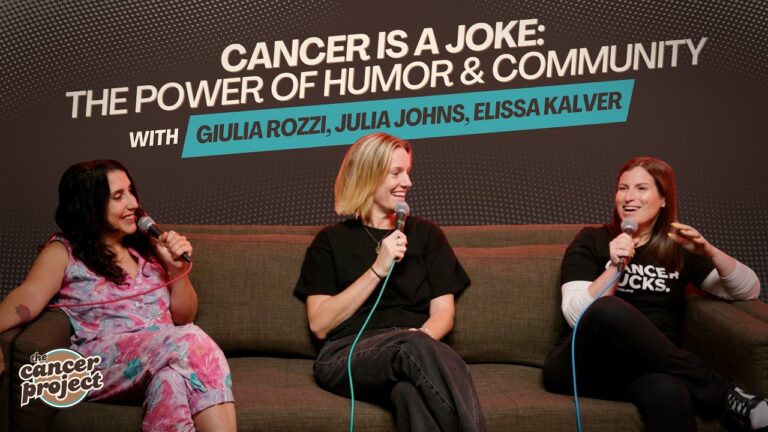
Julia Johns started out as a seventh-grade teacher in Charlotte before moving to New York to chase comedy. She built a career as a stand-up comedian, writer, and actor, and she now creates The Littlest Late Show, a talk show-style comedy experience starring kids. In this episode she joins host David Raubach to talk about that unlikely path, from class clown in Cincinnati to the stage.
In 2022, Julia was diagnosed with hormone positive, HER2 negative breast cancer. She shares how her diagnosis changed from stage zero on the phone to a mastectomy and a lymph node involvement after surgery, how she learned a whole new vocabulary, and how she leaned on friends, family history, and her care team to get through it. She also explains why humor was part of her process from the very first Instagram post.
Julia describes writing cancer jokes a month after her diagnosis, performing bald during chemotherapy, and eventually building her one-woman show, A Tale of Two Titties. She is honest about the harder side too: the dark days, the strain of revisiting treatment on stage, and what survivorship really looks like with hormone blocking medication, early menopause, joint pain, brain fog, and the worry of recurrence.
She closes with advice for anyone newly diagnosed: ask for help, find a community, do the treatment, be kind to yourself, and look for the humor where you can. Julia also shares upcoming dates for The Littlest Late Show and her plans for a new version of her cancer show in Los Angeles.
What You’ll Learn in This Episode
- From teacher to comedian: How Julia left the classroom, moved to New York, and found her people in the comedy community.
- Diagnosis whiplash: What it was like to go from a stage zero call to a mastectomy recommendation within days, and then to a stage two result after surgery.
- Learning the language of cancer: How she sorted through paperwork, Google searches, and podcasts, with friends helping her make sense of it all.
- Humor from day one: Why she joked about her diagnosis right away, and how stand-up let her reclaim some control while she was still in treatment.
- Performing during chemo: Taking the stage bald after a chemotherapy round, and how audiences responded to her honesty.
- Building A Tale of Two Titties: How a small workshop show grew into a one-woman show, and why revisiting it later was harder than writing it.
- What survivorship really involves: Hormone blocking medication, early menopause, fertility decisions, brain fog, and the worry of recurrence that continue after treatment ends.
- The Littlest Late Show and advice for newly diagnosed people: Her kid-centered talk show, and her encouragement to find community, be kind to yourself, and find the humor.
Thank you, Julia, for reminding us that laughter, community, and joy can sit right alongside fear and grief.
Full Transcript
Read Full Transcript
Transcript generated from the episode’s audio. Speaker names are identified from the context of the conversation rather than from recorded speaker data, and automatic transcription may misspell names and terminology. Please refer to the video for the authoritative version.
David Raubach: I want to thank you for joining us on today’s episode of The Cancer Project podcast. We are really privileged to have Julia Johns with us. She has had a an interesting career path that does make perfect sense after you hear the whole story. She started out as a seventh-grade teacher in Charlotte, eventually left the classroom, moved to New York, jumped into comedy uh because I guess uh teaching middle school was not challenging enough. Needed a new challenge. Um so Julia built a career as a stand-up comedian, writer, and actor. She’s uh done work for MTV. Um her most recent creation is The Littlest Late Show, a talk show-style comedy experience for kids. Um but in 2022, Julia was diagnosed with breast cancer. She underwent mastectomy, chemotherapy, radiation. Um and because she is a comedian, she started turning the experience into material. Um those jokes eventually became her one-woman show, A Tale of Two Titties. Uh love getting to say that on a podcast, where she talks candidly and very funny about treatment. Um so Julia Johns, welcome to The Cancer Project.
Julia Johns: Thank you. Very happy to be here.
David Raubach: Yeah. So uh I So let’s just start with transitioning from seventh-grade teacher to comedian. Yes. Why Why did that happen?
Julia Johns: Um well, I think I never like I grew up in Cincinnati, Ohio, and was always like the class clown. I was funny, but never thought I could do anything with that. And I just thought And I also did love working with kids, and so and I wanted to be a teacher, and so I went to college for teaching, and then got a job in Charlotte um cuz they were desperate for teachers, this district. And so moved down, taught seventh grade for 2 years, and um I do love teaching, but there’s just so much other stuff uh that I didn’t like and I would talk to this friend, my friend Leah Rudick, who is a wonderful comedian and she was living in New York doing sketch comedy and it just sounded so fun and I was like I need to go do comedy and so I just left Charlotte and moved to New York and started doing stand-up.
David Raubach: wild. So this is in your 20s?
Julia Johns: Yes, I was teaching at 22, which now seems crazy and I really thought I like knew my you know, and uh and then I moved to New York at 24.
David Raubach: Okay. Yeah. Well, so what was your first like big show? And I don’t mean big show cuz I know that like it takes a while actually to get like an hour, but I’m When When did that give you like 2 minutes on stage instead of 1 minute? You’re like, “Oh my gosh.” What was my biggest
Julia Johns: Yeah, it was it was a, you know, a bar show uh that was my first I remember like I had it I like taped it and then a couple years later was watching it and was so embarrassed then like deleted, you know, completely got rid of that so nobody can ever see it. Um but yeah, that was I think maybe a 6-minute set. Yeah. Um and then I ran some of my own shows in New York. That’s always fun like with another comedian friend. Um we’d produce and host shows and I did a show at uh Bowery Ballroom and that was a really fun. That felt really Yeah.
David Raubach: Yeah. What was some of your early content? Like what were you What were you telling I mean I’m I’m assuming teaching but
Julia Johns: Uh first teaching stuff. I was Cincinnati Yeah, like some childhood stuff. Um I was nannying in New York so it was some nannying stories and yeah, I guess that was mostly it or like silly observational stuff.
David Raubach: Yeah. So So you’re there, you’re doing comedy. Was it just kind of I don’t want to say smooth sailing cuz it’s never smooth sailing in comedy, but was it like no looking back at that point? You just kind of were like, “This is what I’m meant to do. I finally found my calling.” Or was there a point where you questioned it?
Julia Johns: Uh there’s always There’s times I questioned it. There still are cuz it’s like it’s not, you know, it can uh it’s it’s not very financially lucrative for most. But it was definitely like I There was no looking back, and like I have an aunt who was a teacher for her whole life and her whole career. And I remember when I started doing comedy, and every once in a while be like, “Do you ever think you’ll go back to teaching?” You know, that she’d ask that. And it really more than that it just felt like I found my people. Like I lived in Charlotte for 2 years and like didn’t meet any friends, and then in New York the comedy people it was just these funny weirdos, and so I just that’s where my whole community started. And now my friends out here are mostly friends who have moved from New York. So yeah, it was kind of just once I was with creative people and just in the creative worlds, uh I didn’t want to leave it.
David Raubach: So uh one of the important things in comedy is timing. Mhm. And uh you had a point where you had to make a decision to move from New York to LA, and your timing was impeccable. Yes. So talk about that transition.
Julia Johns: I moved out of New York February 2020. And the plan was then I moved packed up a whole car and drove back to Cincinnati, and I was going to like hang out for a month before the plan was I was going to then buy a car and drive it to LA, and then of course a couple weeks um well Yeah, I mean February, yeah, February 2020 COVID was basically Yeah, it was I think I had a flight or something March. Anyway, COVID happened, and so then I stayed, and then the poor this girl had moved from Arizona into my room in my apartment in New York, and so here she just she got some random job and just wanted to live in the big city, and she moved in, and then just was stuck paying a lot of money to sit in this apartment, and meanwhile I escaped.
Julia Johns: So yeah, I got out of New York right before COVID. Yeah, and then so then I was in Cincinnati, and then I got a house sitting opportunity in LA from people I used to work for, and so my transition was pretty great to then come out here. Yeah. Live for free.
David Raubach: months in Cincinnati, you’re a stand-up comedian, you thrive off of engagement with other people. Yes. probably tough.
Julia Johns: Um you know what? I had a pretty nice COVID. I I have four nieces, and the fourth one like had just been born, and so there was like a lot of niece time, a lot of family time. I was doing some stand-up cuz then they were doing like outdoor shows, and so I was hanging with the Cincinnati comedians. Um but Oh, and I was I had some an illustration gig where I was doing this comic strip, and so it was a very busy. I was still like working and a lot of family time, and it was like relaxing, so Yeah. Yeah, nice little Yeah, it was a slow transition. I did start feeling like I was regressing, and so when I got the opportunity to come to LA, it was like, yes, yeah, I need to get out of my parents’ house.
David Raubach: so you get out to LA. Yes. What’s What’s the first thing that you are doing when you get out to LA?
Julia Johns: The first thing I did was hug some friends because we were living through COVID, we hadn’t seen each other, and that was like when people were first able to like go to You were I think you could get tested, and so you’d get tested and go hang out with people. Um so, the first thing I did was hug some friends. And I got a job nannying, and um I guess still wasn’t I was getting work your way in I mean, I know you’d been up in New York, so well, and that was like my plan was cuz I was leaving New York, I wanted to do less stand-up and more writing and acting. And but I had all these connections in LA, and like so if COVID didn’t happen, my plan was still to just like, you know, I’d been doing all these shows right up until I I my little like farewell to New York show, a bunch of shows.
Julia Johns: And so the plan was then just to come out in LA and just keep doing stand-up. But then with the pandemic, it was like, oh, it’s nice to like have my nights free and not have the stress of, you know, before a show. And then getting to LA and I had other former stand-up friends who had stopped doing stand-up. And so then we were just hanging out with each other. And so it was like a nice break, you know, to not have to do that. And so then when the world kind of started opening up again, I was kind of like, I don’t really want to do it anymore. So, yeah.
David Raubach: Yeah, yeah. That was a weird time for all of us, I think. I still think back. And it was They were like two They were waves of COVID, too, right? So it was like, oh, it’s finally over. Everything’s opening. But oh, just kidding. Now we’re all back. Yeah, now it’s even worse than last time. And then everybody just felt crazy. Like it was just Yeah, weird times. Well, and the And there was the whole like People dying, too. There was Yeah, that that was That was like the downside of COVID. There was And then the whole mask thing. Like to this day, I Like I’ll never forget going into Walmart or wherever, Lowe’s, Home Depot, and the variety of masks. Like you know, going to a museum. Just all of these artistic styles of what could you put on your face?
Julia Johns: I recently I was like cleaning out a bunch of stuff and I found some of my old ones. And like yeah, I like ordered cute ones online. Like what my god. I was like I think I can throw these away now.
David Raubach: Yeah, yeah, you get your custom masks. People were Like people would wrap, you know, a pair of joggers around their face. I’m like, I don’t know if that’s going to do anything. I don’t I don’t know that that’s protecting you from COVID. So March of 2022, so you’re out here. You’ve been out here for a couple years. Mhm. Um you go back to do some stand-up in Cincinnati. I think I’ve got this timeline right. So you go back. Um was diagnosed before Before you went back? Went back. Yeah, but then you still went back to go do the show.
Julia Johns: Yes. Yes. Um And this is at Go Bananas.
Julia Johns: Yes. That was I My friend Katie Hannigan, another great stand-up, um she was headlining Go Bananas that particular weekend. Um I think it was May May 2022, and she in like March reached out to me and was like, “Do you want to come to Cincinnati and open for me for this these shows?” And so even though I hadn’t really been doing stand-up, I was like, “Yeah, I’ll do that. That’s going to be fun. Like I’ll write some new stuff.” So I was like, “Okay, great.” And then a month later was diagnosed with breast cancer. And So then I was like, “Do you mind if I, you know, try some cancer jokes?” And she was like, “Of course. Like, yeah, do whatever.” And so then like half my set was And it’s crazy now to think that was just, you know, I’d just been diagnosed and had just been talking about the treatment and I knew that I had to get surgery. That was up first for me. And so that was that first time just getting on stage talking about it. And it was um
David Raubach: That’s wild. Yeah. So go So go back to the diagnosis itself cuz this is like I mean, this upends your life, right? Like you’re you’ve been Julia the teacher, Julia the comedian, Yeah. Julia the writer. Mhm. Now you’re Julia the cancer patient. cancer patient. a slightly different ring to it. Um What are you What are you What’s going through your head at that point? How are you kind of just processing? Um
Julia Johns: Yeah, I did I had been in LA for a year and a half. And um was substitute teaching. And that’s when I got the call. Um And this was of course after the, you know, um appointments and mammogram, biopsies, and then got the call that I had cancer. And just had to go back and keep teaching. And um Yeah, I guess it was My diagnosis was um hormone positive, HER2 negative invasive ductal carcinoma. And it kind of it also like gradually got worse for me like just the diagnosis. Cuz when I got the call, they said stage zero. Yeah. And then I would maybe just I would just need a lumpectomy. And so it’s tough to hear, but I was like, “Okay, that feels manageable.” And then when I went in a couple days later to meet with the breast surgeon, and she said it’s stage one or and they said non-invasive on the phone and now she’s saying stage one invasive and I’d need a mastectomy.
Julia Johns: And I’m kind of like, “What?” And then that thing happens where it’s just like wah wah wah wah and they keep going and you’re you know Yeah. and uh then um and then after the surgery it had spread to a lymph node, so then it’s like stage two. But basically just between that call and that visit was just like, “Oh, okay.” gone up one stage. Yeah. Yeah. Yeah. Plans changed. Yeah. But it still felt I felt felt good with my team of doctors. I was with Kaiser at the time and I what I liked about Kaiser is it’s just this whole team. They just figure it all out for you and um and yeah. So that was the diagnosis.
David Raubach: Was there So So talk about like just learning this whole new vocabulary, too. Cuz there’s like you’re getting hit with terms and words and drugs and Yeah.
Julia Johns: Yeah. Like it’s just yeah. It’s I I was trying to that yeah, I would try to read stuff, you know, they send you home with all these all this paperwork. I had a stack of paperwork. I invited a couple friends over just to kind of go through it with me to make it feel a little less overwhelming. Um I would Google things. I tried to like listen to podcasts about cancer and then sometimes it just wouldn’t be what I was looking for and I was just like, “How do I What information am I supposed to know about this?” And um yeah, you definitely learn a lot more about cancer, you know, I didn’t know there were so many different types of breast cancer. Yeah. And um or even just like knowing what cancer is, you know? I had to do a little research What’s actually happening in my body? Yeah. Yeah.
David Raubach: What uh had you known other people that had cancer? Like what was your
Julia Johns: Yeah, it does run in my family. So I have a lot of great aunts who had breast cancer who also lived, you know, were diagnosed in their 50s, lived to to be 80, and that was years ago. So that helped me to think, you know, like I’ve got this. If you know, decades ago, they were fine. Um and then my my aunt Pat, my mom’s sister, had ovarian cancer that spread, and she’s still being treated, and she’s a badass, and she’s in her late 70s and is still getting infusions and doing whatever is needed to fight this. Um and her daughter, my cousin, had breast cancer like a year or two before I was diagnosed. Um my dad had prostate cancer. So and I have genetic mutations. So it’s interesting. Some people are, you know, it’s there’s nobody in my family. I have no family history. Came out of nowhere. I was kind of like, yeah, I’m going to get Yeah. Yeah. Yeah.
David Raubach: Would were you immediately thinking I’m going to incorporate humor into this whole process? Or did that kind of gradually happen over time?
Julia Johns: Um you know what’s funny is sort of yeah, cuz I think even in my first when I decided I was going to share it and be public with it, and I shared an Instagram post to like let people know. And um cuz it’s also, you know, when you’re in comedy, you have Now I have the huge cancer community, but you have this huge comedy community. So it’s like I need to just let everybody know at once. And um I think in the caption I had made a joke about, you know, I’m going to have surgery, whatever, and then I’m going to get some huge cans. You know, and then people commenting making jokes about that. And then as it kind of went on, it was like, no, it isn’t, you know, people would still kind of make jokes like that. And I’m like, no, actually I’m very sensitive about it now, okay? Like I don’t want new boobs. Um so I guess yeah, I was incorporating humor right from the start. And then, you know, a month after the diagnosis doing a stand-up set. So,
David Raubach: And so, that stand-up set, you incorporated the the some cancer jokes into the set. Yeah. Was that I’m just trying to think like your mindset at that time. It just had to be like this surreal like out-of-body experience cuz you you’ve normally up on stage. I mean, you’re you’re used to talking about things that you’re experiencing. Yeah. But then to be like, “Hey, I have this potentially like life and death Yeah. illness. I’m let’s talk about that.”
Julia Johns: Yeah, and it felt and it’s been almost like easier in a way to write about it because it is just my personal story. And then I had and then I like find jokes you know, and then I kind of like expand on a joke or an idea that I come up with. Um and it definitely feels like yeah, the stuff I was saying that I used to do just silly observational humor or like stuff about my childhood. Now just feels like who gives a Like it’s just I can’t talk about that stuff when I’m just you know, I’m just going to talk about cancer. And then I think I even this is crazy of me that for that show for that you know, featuring 20-minute set that I had, I made buttons that said like check your titties and I drew little boobs on them because I remember one of the things I said on stage, I was just like, “So, I just got diagnosed with cancer.” And then I was like, “And if you feel bad, I am selling merch after the show.” So, like I remember now I’m like, “I can’t believe I like made merch for like the first time.” I just But um but people gave me money for that merch. They didn’t feel bad. Yeah.
David Raubach: As you mentioned, being being a comedian is a not-for-profit endeavor. So, that’s you know, it’s you got to pay the bills somehow.
Julia Johns: Yeah, you got to pay the bills somehow.
David Raubach: Do you think like were you kind of watching the audience to see cuz you know, we’ve been talking about cancer as a joke which like that people know going in like, “Hey, this is going to be a cancer stand-up. Like this is what we’re going to be talking about. It’s probably going to be a lot of people that have cancer.” Right. This audience was like it caught them off guard, right? Like Yes. Yeah. Oh my gosh, where is this about to head? Yeah. Yeah.
Julia Johns: And that this one it actually wasn’t that because it was more like I think I did the first I did like 10 minutes of normal stuff and so then they kind of got to know me. So then when I was like, “Oh, I have cancer.” It was kind of like, “Oh my god.” But then they were already like you know, sort of rooting for me or like invested in me, I guess. But there was a time where I did my show because then I had done it um I was like work shopping it and so it’s like a tale of two titties and so it’s like people come to that, they know what they’re getting. But then I did it in Cincinnati as part of a show cuz the person running it was like, “Oh, you can like you can headline and do a tale of two titties basically do basically like a 20-minute version of my show.” Yeah.
Julia Johns: And it was an outdoor show which is can be rough for comedians cuz like you can’ the street and I’m getting too distracted and I’m like coming and it just feels it’s like it it’s bad enough to bomb but it’s like whatever at this point. But to bomb when you’re telling your vulnerable cancer story I was like going to jump off this roof real slow. Like it was
David Raubach: Oh my gosh, to bomb about cancer. That is yeah, that’s uh okay. Yeah, that that would be rough. Uh so tell talk talk a tale of two titties and how that Mhm. kind of evolved from some of these earlier stand-up
Julia Johns: sort of evolved from that first little set cuz I was like this feels good and um and then I think I did a set um I’m trying to remember I uh Oh, well, during chemo, so I went back to Cincinnati to do chemo. Um I did like my first round in LA and then went to Cincinnati and there’s this comedy and beer festival every summer in Cincinnati. It sadly doesn’t happen anymore. No. But um so during 2022 it happened so it was in August and so it was after my like third round of chemo. I’m like completely bald and I performed there like it was the day that I had received chemo and as you know, they give you steroids and so I was still feeling I wasn’t feeling the effects yet. I was like Yeah. And I have like a picture of me I was like promoting the show that night like come watch.
Julia Johns: And so that was me just doing like cancer material and it just it felt really like empowering so like be on stage with a bald head and talk about this and I didn’t care you know, if people were uncomfortable they can leave but like people stayed and liked it and so that was encouraging. And then I don’t really remember when I decided like I think I wanted to a whole show cuz it was kind of as like the treatment went on it’s like surgery then chemo and it’s like okay, now I have this stuff to write about chemo and then radiation. And so I um I think it was like February 2023 So, I finished radiation the end of 2022. So, I was finished with active treatment and then I think I did the first a tale of two titties in February um at the Pack Theater at Broadwater Theater and uh so I was just I was this really small black box theater friends came to support. It was like very loose work shopping. I had notes and stuff, but it just like felt incredible and they were so encouraging. And so I’ve just been like building it since then.
David Raubach: Yeah, so there you’re going through this treatment. You’re you’re putting this image out on stage. Were there times where they maybe the image out on stage didn’t necessarily entirely reflect your mental mood? Um Like were there some kind of just dark times going through treatment?
Julia Johns: Yeah, for sure. Yeah. Um definitely. And I think I feel like something when I would perform it, I’m able to just get out of the dark mood I guess or maybe I was never in it. I maybe I just didn’t happen to be in a dark mood on like the day that I was perform performing each time I guess. Um It kind of it was almost harder like later like the most recent version of the show that I did so much time had passed since treatment that it was weird to like revisit it all. And so then it’s like, do I want to keep doing this? Cuz it’s just puts me right back in it. But it was weird cuz when I was in it and when I was writing and talking about it it felt good because I was just doing that you know jokes and I’m getting laughs and so that’s like you know for a comedian getting laughs is like I’m fine now. Yeah.
David Raubach: What I mean do you So I’m curious. So like you said you it’s been what three or four years since your last treatment? Yeah. I mean obviously there’s scans and all kinds of still doctor visits. It kind of never ends but was there a point where you were like, you know what? I just kind of want to go back to being Julia the comedian instead of Julia the cancer patient or Julia the cancer survivor?
Julia Johns: Definitely. I think that’s what um Yeah, probably a little over a year ago and that’s when I started the new my new endeavor with the Littlest Late Show was like kind of putting it to rest for a little bit or it’s also like it was just so hard you know, I didn’t really know like what I wanted with it. Like I love performing it. I took out on like a little East Coast tour and to like six different cities and I drove around and like but it’s all me, you know, it was me doing all the promoting, booking the venues, trying to sell tickets and it’s just like so hard to sell tickets and so it’s just kind of like well, what am I doing, you know? Um so I it’s still there and I still now I’m feeling like motivated again to um to just change some things and add things and Yeah. little bit of Cancer Is a Joke is kind of this way to like use it as a mechanism to give back. Like there’s a charitable component to it. Just with we got this.
David Raubach: So talk about the Littlest Late Show cuz I think it’s an amazing idea.
Julia Johns: Oh, thanks.
David Raubach: Um I love it. I have five Yeah, how old are you? So I have seven, five, four, two and a baby.
Julia Johns: Oh my goodness. Um yeah, it’s wild at the house. So Well, if you ever bring them to LA, I’ll put them on the stage. They can be guests.
David Raubach: the What’s funny about that? So we were just at a family reunion and it’s it was the first family reunion since the patriarch of the family passed away and so a lot so there was an open mic campfire session and they actually had a microphone and it was an opportunity for people to come up and talk about like the memories of this patriarch of the family and my five-year-old beelined it towards that microphone and I was like, oh my gosh, like she never met this person. I have no idea what’s about to happen. Like I have to grab her. I like was running down. I was like, what are you doing? And she was like, oh, I want to talk about, you know, Spike the Tyrannosaurus Rex the toy. I was like, “Uh, maybe not the it’s not the time.” So, yes, she would love to come be on the show.
Julia Johns: Maybe they would have loved it. They would have loved it. I don’t know.
David Raubach: Yeah, you know, talking about dying, you need a little humor, yeah.
Julia Johns: Yeah, she can talk about that on the show.
David Raubach: Out of the mouths of babes. So, what’s the premise for the show?
Julia Johns: Um, so the premise is it is like a talk show, late-night talk show, and kids are the guests. Um, I started doing this actually when I was in Cincinnati during the pandemic with my nieces who were the older three were four, four, and six at the time. Um, and just making videos with them, and then I started doing a little talk show in my parents’ basement. And um, and then it was, you know, on a talk show that how the an actor would have a clip from a movie. So, then I did one where my little niece Penny, who was obsessed with worms at the time. And so, I filmed her with worms, and then I edited that together. So, then in our talk show it was like, “Oh, you have a clip from your worm show.” And so, then I was like trying to figure out what to you know, I what I could do with that.
Julia Johns: And then um, decided to try doing a live show. And so, uh a year ago, September actually was the first one um, at Lyric Hyperion. So, I booked a couple of you know, and I’ve got um, friends that have kids. And so, I booked some friends’ kids. And then before the show, I meet with them and film a little video to be their clip, whatever they want it to be. And um,
David Raubach: But, the kids come out for the live show, too.
Julia Johns: Yes. Yeah, so then the kid is the guest, and then they come on. And then we just like on a talk show, we say, “Oh, you brought a clip. Let’s look at your clip.” And then everybody watches the clip together. And then we talk about that, or we talk about whatever else. And then we’ve had a guest, um this kid Calvin, who is eight and likes to cook. And so, he came on as for the cooking segment and like made a smoothie on one. And he made salsa verde last time. Uh, and then we have like music at the end and some audience interaction stuff. And it’s just Yeah, good wholesome family entertainment.
David Raubach: Yeah. I did see a clip of the one with you with the yo-yo. Oh, yeah. Which I’m very impressed by your yo-yo skills. I was like, is that is that AI? Is she actually spinning that yo-yo around her head, under her legs? So, what would what would you tell Julia you’re you go back in time, Julia who’s sitting there in the room finding out that she has cancer. What what are you today telling that person? Mhm. Mhm.
Julia Johns: Um I’d say You know, I think that Julia did a pretty good She did a pretty good job. Um I Yeah, there’s I don’t know. What would I tell her? Uh maybe I’d give her a heads-up that it doesn’t just end after treatment. That survivorship is a whole thing. I definitely did not know that at the beginning. Um and uh Yeah, I don’t know. I found my I found a little cancer community right away that was super helpful. Um
David Raubach: You would tell her you’re going to make a whole stand-up out of this.
Julia Johns: I guess that Yeah, okay. I guess that.
David Raubach: Yeah, you’re going to make a whole one-woman show out of this. this now, but there’s going to be yeah, an entire yeah. Yeah.
David Raubach: So, So, you brought up survivorship. I I do think that’s a good question. I do want to touch on that. So, what is what is missing with that handoff from you’re a patient, you’re going through treatment to survivorship?
Julia Johns: Um I get I feel like one of the things was somebody at the beginning was just like um you know, they made it She made it So, my first oncologist was just kind of like, “You’re This is We’re going to It’s going to be cured. Like, you’re going to be fine. We’re going to do this. We’re going to be really aggressive. You’re going to be cured.” So, it really just made it seem like, “Oh, it’s just this little blip. Yeah. And then it’s done. Yeah. Um so maybe even I don’t know. I’m saying this at like uh having survivors like and now I’m like, well, maybe I’ll I’ll be a part of that or something to like talk to newly diagnosed people and but at the same time you don’t want to scare them. You don’t want to you know, So Yeah, I don’t know. Maybe just a little bit of like with the diagnosis with the treatment be like and here’s some, you know, for afterwards. Yeah. Here’s some resources for
David Raubach: What should what should people know about Mhm. just obvious. Like an obvious thing would be like, oh, well, you’ve got to go do a follow-up scan. Like Yeah. People know that. But what’s something that’s maybe not obvious?
Julia Johns: like medications that you’re on, you know, I’m still I’m on um since mine was hormone positive, I’m on hormone blocking medication so it put me into early onset menopause. Then I also because I’m at high risk for ovarian cancer, I got my ovaries removed. Um also even just that, you know, I froze my eggs um because that was covered by insurance uh before chemo. Thank you, Kaiser. But thank you, Kaiser. Um but now it’s like I don’t think I’m going to have kids, you know, that’s for women who, you know, women and fertility issues or choosing whether or not to have kids, you know, that’s a whole that gets more complicated. Um And then the medication that I’m on and the side effects from that just, you know, um menopause side effects and like joint pain and stuff like that. So then it just kind of then it just kind of makes you feel like you’re just aging quicker.
Julia Johns: Yeah. Um and I’m already, you know, so it’s like this midlife crisis plus just feeling like a more rapidly aging. And just the, you know, the worry of uh recurrence and um feeling um I guess I mean also a good thing is like being a part of the cancer community, but it is just um you you know, you get to know a lot of people with cancer who pass away. I’ve like made and lost friends now since being diagnosed, so that’s definitely a rough part. Um and I still have I’ve, you know, brain fog from chemo and uh yeah.
David Raubach: Did your hair come back the way that it looked before?
Julia Johns: Uh yeah, my hair came I didn’t get My hair is so straight that I did not get chemo curls.
David Raubach: Okay, yeah. I mean I’ve I’ve seen a lot of like that it’ll come back a different color.
Julia Johns: Yeah, so mine came back I think it was like slightly darker. I mean I’ve since lightened it, but um yeah, the texture and everything I think was pretty much the same. I couldn’t tell.
David Raubach: Um so what is just to kind of to close out and I do appreciate that we’ve had an audience this whole time. So this is it’s a very supportive class happening next door. so trippy cuz it just sounds like It’s like a zombie attack. Yes. Yeah, so I meant to ask I meant to actually ask you guys earlier who would be most likely to survive a zombie attack. So that would that would be you or Since they’re not here, I’m going Exactly. Um so just a just a message like you know, I’m sure you’ve encountered people or you’ll go to this show and you’ll do some you’ll do stand up and inevitably you’ll get a message on Instagram or somebody will will say, “Hey, I’ve just been diagnosed.” What are you telling that person?
Julia Johns: Um I definitely anybody that reaches out I would say I’m here for you. Please like I give me a call if you want. And I there were some people that um friends had connected me with when I was first diagnosed and I’m so grateful for that to have somebody who went through it talk to me and then now once I’ve gone through it, I feel like I want to be that for other people and I have been that for a couple other people and um, I would also tell them Um, to uh, do whatever treatment you need to do. You know, I think some people just choose not to. I would so I would encourage people to fight and do treatment. Um, and I would also tell them to Um, be kind to themselves, take care of themselves and not I mean, it’s easier said than done of course like be positive, but so much of it is a positive mindset that’s very helpful. Um, and I would encourage them to find the humor in it.
David Raubach: Yeah, I love that. Well, thank you for coming on today. When is your uh, when’s your next show? When’s the next Littlest Late Show? If people want to come see you.
Julia Johns: Uh, the next Littlest Late Show is September 19th and October 24th at 3:30 p.m. at Lyric Hyperion and um, the Instagram is The Littlest Late Show. And And I would encourage people to follow that. There are some really funny clips on there. Yeah, yeah, yeah, follow that and stay tuned cuz I think I’m going to do a tale of two cities in December in Los Angeles.
David Raubach: Oh, that’s amazing. I can’t wait.
Julia Johns: With new material. With some new material. With some new material.
David Raubach: Yep, I love it. Thank you so much, Julia. Really appreciate it.
Julia Johns: Hell yeah, glad to be here.
David Raubach: The Cancer Project podcast is made possible by the Oklahoma Proton Center. A state-of-the-art cancer center where precision in treatment meets real compassion in care. We’re grateful for their support and for you for spending this time with us. If you’d like to learn more about the Oklahoma Proton Center, you can visit their website at the link below. And if something you heard today resonated, we’d love for you to stick with us. You can subscribe to the podcast and follow along on our socials linked below for more conversations like this, honest stories, thoughtful perspectives, and the kind of support people don’t always know where to find, but do truly need. At the end of the day, this podcast isn’t just about cancer. It’s about what it means to be human inside of it, and how we keep living, connecting, and moving forward together. We hope you leave each episode feeling a little bit more informed, a little bit more supported, and a lot less alone.