In The News: James Van Der Beek and Rising Colorectal Cancer Rates
Episode Summary
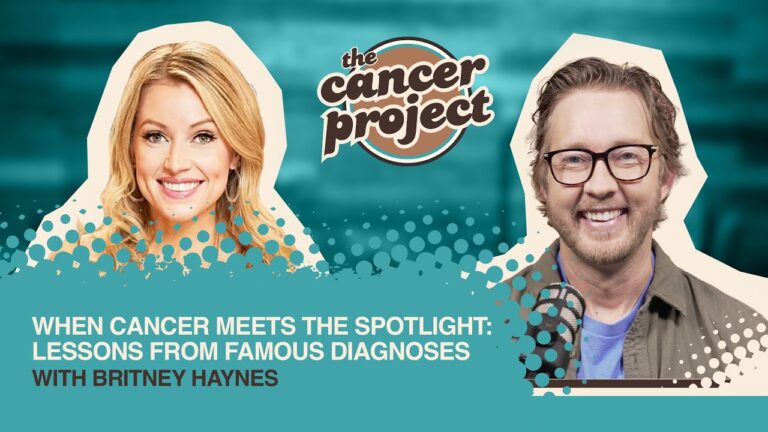
In this episode of The Cancer Project podcast, host David Raubach is joined by returning panelist Britney Haynes to examine the life, diagnosis, and passing of actor James Van Der Beek, who died on February 11th from stage three colorectal cancer at the age of 46. Known to audiences from Dawson’s Creek and Varsity Blues, Van Der Beek had been a self-described health freak who practiced sauna therapy, red light therapy, hyperbaric oxygen treatment, and ate an organic diet, making his diagnosis a striking reminder that cancer can strike even those who appear to be doing everything right.
Van Der Beek’s cancer was first detected after he noticed changes in his bowel movements, prompting him to get a colonoscopy at age 46, just one year above the current screening guideline of 45 for average-risk individuals. David and Britney unpack the critical importance of heeding even subtle gastrointestinal symptoms, and discuss the array of screening options now available beyond the traditional colonoscopy, including blood biomarker tests (with roughly 55 to 65% sensitivity at lower cancer stages) and at-home stool testing kits such as Cologuard. Van Der Beek became a vocal public advocate for proactive screening and not waiting for symptoms to become severe before seeking evaluation.
A central theme of the conversation is the alarming rise in colorectal cancer incidence among younger Americans. David cites data showing 154,000 new diagnoses and approximately 53,000 deaths annually in the U.S., with colorectal cancer ranking as the second leading cause of cancer death. Most striking is that while colorectal cancer incidence is declining in older adults, it has been rising roughly 1 to 2% per year in people under 50 since 2005, and is now appearing in adults as young as their twenties. The pair explore four leading theories for this trend: ultra-processed and high-fat Western diets that cause gut inflammation and accelerate cellular aging (one study found young adults with colorectal cancer are biologically 15 years older than their chronological age), alcohol consumption and obesity, strenuous long-distance running, and the pervasive presence of microplastics in food and drinking water.
The episode also addresses the financial devastation cancer can bring, even for successful public figures. After Van Der Beek’s death, his family disclosed severe financial hardship from treatment costs and launched a GoFundMe that raised approximately $2.5 million. Britney notes that this sparked a wider public conversation about why cancer care is so expensive, why many alternative and integrative therapies remain uncovered by insurance, and what that means for patients with fewer resources than Van Der Beek had. David draws a parallel to patients he has encountered at the Oklahoma Proton Center who face similar financial and health burdens without the same access to resources.
The episode closes on a note of hard-won resilience drawn from Van Der Beek’s own words. In December 2025, just weeks before his passing, he described his cancer journey as “requiring more patience, more discipline, more strength than I knew I had.” David and Britney reflect on what his story teaches about early screening, lifestyle awareness, the limits of current medicine, and the deeply human capacity to find meaning and strength inside an unimaginable diagnosis. Britney’s own experience with a family member’s cancer diagnosis gives the conversation added personal weight as the episode draws to a close.
What You’ll Learn in This Episode
- Stage Three Colorectal Cancer: James Van Der Beek was diagnosed at this more advanced stage at age 46, requiring both surgery and chemotherapy as initial treatment.
- Colorectal Cancer Screening Guidelines: Average-risk individuals are advised to begin screening at age 45; Van Der Beek was just one year above this threshold when symptoms prompted his colonoscopy.
- Blood Biomarker Tests: A newer, less-invasive screening option exists that detects cancer through a blood draw, though it is only 55 to 65% accurate at lower cancer stages and a positive result still leads to a colonoscopy.
- Cologuard and At-Home Stool Testing: Non-invasive stool sample tests provide another alternative to colonoscopy, allowing patients to collect and mail samples for analysis without a clinic visit.
- Rising Incidence in Young Adults: Colorectal cancer rates in people under 50 have been increasing approximately 1 to 2% per year since 2005, with cases now appearing in adults in their teens and twenties.
- Ultra-Processed Foods and Gut Inflammation: A Western diet high in prepackaged foods and refined grains is suspected to agitate gut bacteria, drive chronic inflammation, and accelerate cellular aging, with one study showing affected young adults are biologically 15 years older than their actual age.
- Microplastics as a Carcinogen: Tiny plastic particles found in drinking water, food, and cookware are increasingly detected in the GI tracts of colorectal cancer patients; they can disrupt cellular replication and act as carcinogens.
- Alcohol, Obesity, and Cancer Risk: Both alcohol consumption and obesity are modifiable risk factors linked to colorectal cancer through shared mechanisms of inflammation, disrupted biochemical repair processes, and cellular mutation.
- Alternative and Integrative Treatments: Van Der Beek was widely speculated to have pursued holistic and international alternative therapies after his cancer recurred, raising important questions about integrating such approaches with evidence-based medicine.
- Financial Burden of Cancer Care: Van Der Beek’s family disclosed major financial hardship after his death, with a GoFundMe raising roughly $2.5 million, spotlighting the enormous out-of-pocket cost of cancer treatment, especially alternative therapies not covered by insurance.
- 90% Survival Rate When Caught Early: Colorectal cancer detected at stage one or stage two carries a 90% survival rate, making early screening a potentially life-saving intervention.
- Gut Microbiome Changes: Research consistently shows altered gut bacteria profiles in colorectal cancer patients compared to healthy individuals, suggesting the microbiome plays a key role in cancer development and progression.
James Van Der Beek’s passing at 46 is a sobering reminder that colorectal cancer does not discriminate by age, fitness level, or lifestyle. His own words, “Sometimes the things we think will break us end up revealing how strong we really are”, speak not only to his personal journey but to everyone navigating a cancer diagnosis. The most actionable takeaway from this episode is simple: know your screening guidelines, listen to your body even when symptoms seem minor, and advocate for your own health. As Van Der Beek himself urged, don’t wait for symptoms to lead the charge. If something feels off, talk to your physician, get screened, and give yourself the best possible chance at catching cancer early, when treatment options are broadest and survival rates are highest.
Full Transcript
Read Full Transcript
Transcript generated from the episode’s audio. Speaker names are identified from the context of the conversation rather than from recorded speaker data, and automatic transcription may misspell names and terminology. Please refer to the video for the authoritative version.
David Raubach: I want to thank you for joining us on today’s episode of the Cancer Project podcast. We are joined by Britney Haynes, who is becoming a regular on the podcast. Britney, thank you for coming back.
Britney Haynes: Thanks for having me. Appreciate it.
David Raubach: We are going to talk today about an unfortunate tragedy that occurred recently with the passing of James Vanderbeek. But we also want to dive into his journey with cancer and what we can learn about colorectal cancer, increasing incidence rates, screening, treatment, etc. So Britney, thank you for joining us.
Britney Haynes: Thanks for having me. Excited to be back.
David Raubach: So Dawson’s Creek, yes. Were you a Dawson’s Creek fan?
Britney Haynes: I was slightly too young, just ever so slightly too young to have missed the boat on Dawson’s Creek. Now, I was aware of it because I got my little teeny bopper magazines and James Vanderbeek was all over those, but I was not one to actually tune in. What about you?
David Raubach: Yeah, I think that people forget what a heartthrob he was. Yeah. In the 90s between Dawson’s Creek and then Varsity Blues. So, I have my Dawson’s Creek trauma that I’ll talk about. So, I went to a small private high school in Tulsa and on Wednesdays the girls at the high school would get together and have Dawson’s Creek watch parties in the ’90s. And then they would come in on Thursday and they would talk about the episode and assess all of the different relationships. But they would, I felt like they were trying to recreate Dawson’s Creek at the high school and I read an article recently, or I saw an article recently, and it said the title of the article was what Dawson’s Creek taught us about love, and I didn’t watch Dawson’s Creek so I didn’t learn about love in high school, and so I felt very excluded or ostracized. I was out of the club. I didn’t know how to fit into the Dawson’s Creek culture at high school.
Britney Haynes: I mean, what were you doing? Just tune in, David. The blueprint.
David Raubach: I mean, playing chess and fantasy football and all the nerdy things. I did go out for football my senior year, in part because of Varsity Blues.
Britney Haynes: How did that work out for you?
David Raubach: Just like Varsity Blues.
Britney Haynes: Yeah. They should have made a movie about it. Yeah.
David Raubach: So, I don’t, I was actually, I didn’t play tackle football until my senior year, and then I played one year and I didn’t get hurt.
Britney Haynes: Well, look, you saved that brain for some good use.
David Raubach: Yeah. Yeah. Yeah. Exactly.
David Raubach: So, James Vanderbeek, unfortunately, he did pass away on February 11th, so just recently, of colorectal cancer. And I’ve got a few notes just on his diagnosis and how that came about here. So, he was diagnosed with stage three colorectal cancer, which is a little bit more progressed. So, stage one and stage two tends to be less serious. Stage three, stage four is a lot more serious. So, he had to go through relatively serious treatment, surgery and chemotherapy. And so, he was diagnosed at the age of 46. And his cancer was actually discovered because of a noticeable change in his bowel movements, which then triggered him getting a colonoscopy. So, have you had any colon cancer screening?
Britney Haynes: So current guidelines state that if you are of average risk, so if you have no family history, if you’re not experiencing any symptoms, you have no history of polyps or anything like that, the guidance is 45 years of age and above to get the screenings. So, I, being an average risk person, I don’t have family history, I’m not experiencing any symptoms, I would not qualify currently.
David Raubach: If you were not old enough to watch Dawson’s Creek, then you probably…
Britney Haynes: I could do that now.
David Raubach: Exactly. Or not old enough yet to qualify for a colonoscopy, or be recommended one.
Britney Haynes: Even though he was one year above the guideline, what they would suggest, which is 45, he was experiencing symptoms, which is why he actually went in and got his colonoscopy. But he very much was an advocate for the message of not necessarily just letting it be symptomatic. Follow those guidelines. You know, get screened regularly, because the earlier you know that you’re screened, the earlier if you have something, it’s caught, the more options you’re going to have, the better the survivorship is going to be. And also, just because the symptoms can be very, very subtle. You know, they’re very easily passed off as just, like, oh, he even said, like, was it my coffee? Was it something I’m putting in my coffee? You know, whatever the case may be, it’s really easy to just disregard those symptoms or think that they come from other causes. So, he was very much an advocate for not necessarily letting the symptoms kind of lead the charge, but instead to really just be on top of your health, managing your health, and if you are due, according to the guidelines, for screening, to go and get that screening done.
David Raubach: Well, and the screening itself, like a colonoscopy, is not a fun experience. I mean, that’s not, you’re not just looking to go do that, right?
Britney Haynes: Right. There are actually a lot of less invasive types of screening that exist now, though. And one that he did, in fact, specifically talk about was a blood test, and it’s done, I can’t remember the name of the company right now. Do you know what I’m talking about? Patrick Dempsey is one of their spokespeople now, actually, who I guess had a family history, and now is an advocate for this blood, it’s a blood biomarker test that you can have done. It’s not as good at finding those lower stage cancers. It was only about 55 to 65% accurate. I was like perusing this website, I was like, “Oh, a blood draw, that’s easy.” It still stipulates that you should be 45. And it was only 55 to 65% accurate, it said, if it was on the lower stages of the cancer. So, definitely, it’s better at detecting something that’s higher risk. And a positive result of that would just lead you to getting the colonoscopy. So, these are just kind of things to consider. But if you’re curious about it, you’re curious about what your options are, that option does exist. If a colonoscopy feels a little too aggressive for you, you do have…
David Raubach: Have you seen the Cologuard commercials?
Britney Haynes: Yes, that’s another one, that is another option, that’s out there.
David Raubach: It always, this is like an aside, but it, I’ve always been fascinated by how toilet paper companies and stool cancer test companies figure out how to market their product.
Britney Haynes: Yes.
David Raubach: In a way that doesn’t cause you to turn away from the TV. And Cologuard does a good job of it.
Britney Haynes: Yeah. Yeah. It’s a little, I mean, listen, it’s a little odd to think about mailing off your stool samples. It’s a little bit taboo, but I have to say, I’m listening and I’m paying attention, because I’m alarmed by all of these news articles that are coming out talking about the increase in incidence in younger people, and how most cancers, we’re seeing a reduction in overall death occurrence, and colorectal cancer is going the opposite way. And why are we seeing it now in such younger populations? It’s alarming to me. So, I’m willing to look up the stool sample collection kit.
David Raubach: Well, and how would you like to be the person that works at the company that has to receive, and who are these people?
Britney Haynes: Yeah. Why isn’t that on my TikTok?
David Raubach: Yeah. Yeah. Mom, Dad, I got a new job. I mean, here’s what it is.
Britney Haynes: But aren’t we fortunate, though, that someone is, and that this option is available, and that we do have this as a potential solution.
David Raubach: So let’s talk about the incidence rate. You brought that up.
Britney Haynes: So 154,000 Americans are diagnosed each year. There’s about 53,000 deaths annually. I can’t remember if we mentioned this already, but it’s the second leading cause of cancer death in the United States. One in 23 men and one in 25 women will be diagnosed with some form of colorectal cancer, which is, it’s multiple cancers. So colon cancer, rectal cancer, anal cancers. There is a 90% survival rate when caught early. So we’re talking about stage one or stage two. Now, James Vanderbeek was stage three when he was diagnosed and, as you mentioned, it’s rising fastest in people under 50, right? Which is alarming. I mean, that’s very scary. And they’re still, as far as I knew, looking at research and things, we don’t really know any causality. They’re kind of lending it towards a culmination of factors that includes like lifestyle choices, diet, those kind of things, but there’s nothing that we can really pinpoint right now to target and say, “Oh, this is definitely causing the increase.” So that’s kind of scary.
David Raubach: So about 10% of cases occur in people under 50, but this incidence rate is increasing 1 to 2% a year. And I think you told me that it had been increasing since like 2005.
Britney Haynes: Since 2005, average of 1% a year since 2005. So it’s very alarming.
David Raubach: What are some things that you’ve read or seen about the increasing incidence rate of colorectal cancer? Is there stuff that you’ve come across?
Britney Haynes: Well, it just, you know, like everything, it is so difficult to prove causality in almost any, you know, medical, any disease, any cancer. It’s really, really hard to say this one specific thing, but they are kind of saying that they believe it to be just a culmination of things that include diet and exercise, that includes different foods, additives. And of course these are all theoretical, like we don’t have any real tangible data at this point to tell us why this is occurring, but this is the speculation that is, you know, being done across the physicians who are specialized in that area.
Britney Haynes: I would say one thing about James Vanderbeek in particular, he was only 46 years old, and as a 46-year-old he thought that he was in, like, the best shape of his life.
David Raubach: Yeah.
Britney Haynes: He is one of, how would you, how would you say it, necessarily? He was into all of the holistic kind of stuff prior to his cancer diagnosis. He was doing the saunas and the red light therapy. He was very, he was one of these very picky people about his diet and eating organic and doing all the right things. And he said that when he was diagnosed he was in the best cardiovascular shape of his life, very, very fit, very active, very healthy. So, not at all kind of a red flag, necessarily, when we talk about why are these cases going up.
David Raubach: Well, he would be the outlier to that, right? He’s under 50, very, very healthy, thinks he’s doing all the right things, and then he is still diagnosed with stage three colorectal cancer at 46.
Britney Haynes: So, I think that it just goes to show that, yes, like, we can theorize, we can speculate on all these things and it’s not going to necessarily perfectly fit every single person or diagnosis. There are things in play that we don’t know about, or that we’re not in control of, right, that factor into these diagnoses.
David Raubach: No, I’m glad you brought that up because, as you mentioned, he was very much a health freak. I mean he was a self-described health freak. Hyperbaric oxygen treatment, I think, was another one that he was into.
David Raubach: So I wrote down a couple of notes here on theories around the increased incidence rate of colorectal cancer in the younger population. So we’re talking about 50 and younger. And actually one of the areas that we’ve seen a really big increase is in the age 15 to 39, which, you almost didn’t see people under the age of 39 get colorectal cancer 40, 50, 60 years ago, and now it’s even presenting with people in their 20s.
David Raubach: So diet and ultra-processed foods. So a primary driver suspected by researchers is a Western diet high in prepackaged foods, refined grains and fried foods. And I think this is important because you can’t just say, well, what’s the cause? You also have to say, how is it actually happening? What’s the process by which an ultra-processed food or a fried food would cause colorectal cancer? So, going on here, these ultra-processed foods can agitate bacteria in the GI tract, the gastrointestinal tract, resulting in inflammation and accelerated cellular aging. One study found that young adults who develop colorectal cancer are on average biologically 15 years older than their chronological age.
Britney Haynes: That’s interesting.
Britney Haynes: And one of the things that we know with cancer is that cancer is a breakdown in the body’s immune system and a breakdown in the ability to recognize the fact that cells are mutating. Maybe the immune system over time, the natural killer cells, the NK cells, and the T-cells that go in and either repair mutations or cause cell death when there are mutations, that system can become weakened. And so if you have inflammation, inflammation causes cell mutations. And if you have increased inflammation, you’re going to have more cell mutations, and more cell mutations over time, there’s more of a likelihood that you’re going to have a mutation that doesn’t get repaired, or there’s more of a likelihood that you’re just going to break down, wear down, overwhelm your body’s immune system over time. So yes, diet’s super important, but specifically diet’s important because these different foods cause this inflammation in your gut, which actually, literally, is causing you to age faster.
David Raubach: Gotcha. That makes sense. Whenever you put it in terms of what the actual mechanism of that is, that makes sense. So it’s not necessarily this one specific food or eating this one specific time. It’s more about kind of your gut health overall developing this inflammation over a sustained period of time.
Britney Haynes: Yeah. And aging.
David Raubach: So then, Britney, how are you choosing to eat healthy? You know, how are you reducing, how are you choosing to not have your gut age 15 years faster?
Britney Haynes: I do attempt at least a vegetable a day. I mean, I’m working on it. It’s a New Year’s goal every year, you know? I’m trying. I’m trying my best.
David Raubach: It’s okay to have the same New Year’s goal every year.
Britney Haynes: Yeah. Every year. It’s just the same one on repeat.
David Raubach: Just going to be a little, what is your go, what’s your go-to vegetable? What is your life-changing…?
Britney Haynes: I mean, I always make them so that they’re presented to my kids and then I like force them to eat them and then I myself will like incorporate a few bites myself. I can’t say I love it. I’m not going to sit here and be like, I just love healthy food, it’s so amazing.
David Raubach: You’re just, asparagus and broccoli and…
Britney Haynes: Yeah, I would fully eat like a dumpster if I had no conscience about it. I do somewhat have a conscience about it. So, I will, you know, make better choices, but is that what I want to do? No.
David Raubach: Definitely. Well, maybe what we’re learning today, you might try to do two vegetables a day.
Britney Haynes: Maybe. Let’s go out on a limb.
David Raubach: Have your New Year’s goal go through April instead of through February.
Britney Haynes: So, yeah, something like that. You know, I’m always trying a little, but I don’t know. And I see a lot about, and I’m terrible about loving like a protein shake. And I see that those a lot being touted as sort of like really bad for you, really bad for your gut. I hope that’s not true because I do love the convenience of a protein shake, but I see a lot of speculation online about, you know, these like concentrated protein items that are really, really popular right now. You know, are they really good for our gut? I don’t know. I hope so.
David Raubach: But I think that the thing to think about is just kind of a rule of thumb, is how processed is the food.
Britney Haynes: Yeah.
David Raubach: So generally speaking, more processed is worse than less processed.
Britney Haynes: Yeah, definitely.
David Raubach: So okay, so then the next one here, and this one is relatively obvious, but again we’re trying to figure out why is cancer incidence going up, and specifically colorectal in younger populations. So alcohol consumption and obesity, very modifiable risk factors. Obesity has been correlated with a whole litany of cancers. And part of, again, there’s kind of similar mechanisms where obesity can cause inflammation. It causes, it can trigger cell mutations. It interrupts your body’s natural biochemical processes of healing and repairing cells. The same thing happens with alcohol. How did you do a dry January?
Britney Haynes: I mean I very rarely drink anyway. So…
David Raubach: Okay.
Britney Haynes: I’m dry most months.
David Raubach: Yeah. And just a little bit of an aside again here. So there’s been some kind of changes in guidelines as it relates to alcohol and cancer risk. So you know there was this school of thought that maybe one glass of wine a day or a couple glasses a week was not even bad for you, might actually, there might actually be some health benefits to you. And then over the last few years, some different studies have come out and suggested that there’s no benefit to alcohol whatsoever. Like that one glass of alcohol is going to have a negative effect on you. It’s all relative. Obviously, 10 glasses is worse than one glass. But then Dr. Oz, in a recent kind of changes to FDA guidelines, at his press conference talking about them, suggested that, well you know, maybe one to two glasses of alcohol every now and again is actually a good thing.
Britney Haynes: Well, if you dig into the weeds of why he said that, part of the reason that he was saying that is that for many people, alcohol tends to be a part of a social experience.
David Raubach: Mhm.
Britney Haynes: And so if it’s part of that, so if there’s this relationship between having a good community and cancer risk, another way to think about that is that if you don’t get out, if you don’t get interact with people, if you’re not, if you don’t have a good support system, if you don’t have a good social circle, you actually are at a higher risk of cancer. But the reason for that is stress, and stress-inducing, probably sedentary, to some point, obesity.
David Raubach: Yeah.
Britney Haynes: So it’s not necessarily that the alcohol itself, per se, a glass or two a week is good for you, but it’s that the benefits of socializing outweigh the negative impact of that one glass of alcohol.
David Raubach: So anyways, that makes sense. And I’m wondering, because I know that you have quite a few runners in your family, you’re a little bit of a runner yourself at times, dare we say.
Britney Haynes: You’ve been, I try to. Yeah. When my needs allow, I try to get out once or twice a week. You know, I’ve got some cousins that I think you know that are superstar runners, but very fast. I’m not on that level.
David Raubach: But on the other end of obesity, you have these ultramarathoners, long-distance marathon runners, and they have said that there is potentially, and they can’t, they haven’t explained it so far, but this link between like early onset colorectal cancers and this very long distance, very strenuous running, and it was specific to long distance running. And could that have some, could that tie in in some way to the inflammation, the gut inflammation and the aging that you kind of talked about with the processed foods and it’s aging your gut? Is it that same kind of mechanism potentially at play with these long-distance runners that are causing them to have an increase in incidence of colorectal cancer and in precancerous polyps and things on their colonoscopies?
Britney Haynes: Well, so there, and I’m, you keep talking about the gut. One thing, one common thread that has tended to show up when there’s been analysis of gut bacteria for people that have come down with colorectal cancer is that there’s just changes in that bacteria, the gut bacteria which does serve a beneficial purpose. There are, there can be genetic changes, or it just looks different than it does in somebody who does not have colorectal cancer. So there’s obviously a correlation there.
David Raubach: So the last one I’m going to bring up for cause, and then we’ll circle back and talk about James Vanderbeek’s treatment, is, there’s a theory that microplastics are actually part of what’s triggering this increase in colorectal cancer. And so, whenever you drink, how do you consume your water, Britney? Do you drink it out of a faucet? Do you have purified water?
Britney Haynes: Why do I feel like you’re always trying to get me in trouble? Every question is just stepping, I’m stepping in something. I’m scared to answer.
David Raubach: We’re using you as a case study.
Britney Haynes: Yeah, exactly. How do I get my water primarily? Yeah, I do like filtered water out of the fridge. You know, pretty normal process. The only time I do bottled is when I’m doing my liquid IV, which I like to do after a workout. And the liquid IV has to be shaken. So, it’s really difficult to get that proper mixture, you know, if it’s not in the single-use plastic.
David Raubach: So you’re shaking it up real good and getting that liquid IV in the water and getting all the microplastics kind of mixed up in the water, too.
Britney Haynes: If it could fully dissolve, that would be great.
David Raubach: Yeah. One big…
Britney Haynes: Exactly.
David Raubach: So, yes. Microplastics are extremely tiny plastic particles that exist pretty much everywhere. There’s been a massive increase, as you can imagine, in microplastics just present in our drinking water, in our food, in cookware. It’s everywhere. And you’re seeing it in, when we’re looking at the contents of people’s stomachs, again, after they’ve gotten colorectal cancer, scientists have noticed an increase in the presence of microplastics. And these tiny little plastic particles actually can go in and they can be carcinogenic, meaning they can literally go in and cause mutations, because they go in and they disrupt the cell’s replication process, and then that can lead to cancer. And so thinking about limiting exposure to microplastics, and we won’t dive into the details here, there’s plenty of research out there. Google it. How can I avoid exposure to microplastics? Drinking water out of a water bottle is one way to do it. Don’t cook with plastic cookware, that’s another way to do it. One recommendation I’ve seen frequently is don’t reheat food in plastic containers. Yeah, because that can cause breakoff of these microplastic particles into the food. So just another thing to be thinking about in terms of prevention.
David Raubach: So we’ve got: limit alcohol. Run, but don’t run too much or too far. Diet, limit processed foods, at least one vegetable a day, the Britney Haynes diet. And then, yes, avoid microplastics.
David Raubach: So then circling back, what are some of the things that stood out to you as it relates to James Vanderbeek’s treatment and what he went through over a few years?
Britney Haynes: As it relates to his treatment, it is mostly speculative, because he was very private about his treatment. He didn’t speak publicly about what he did when he had done these things. The only thing that he said himself, out of his own mouth, was that if there’s something out there, he’s probably tried it. And it’s a very broad statement. However, it was heavily speculated, I think, just because of kind of the lifestyle stuff that we talked about that he had done earlier, as well as some things that were shared by his wife, or by him, over the years. It was widely speculated that he was definitely trying holistic and alternative therapies.
Britney Haynes: It’s unclear if that was in conjunction with standard therapy, or if that was in lieu of standard therapy. We don’t really know, because he was never very forthcoming with those details. But it is widely speculated that he was doing those things, maybe in addition to, but definitely was trying everything. Supposedly, friends said that he even went out of the country to try a couple of things, but we don’t, like I said, we don’t know those details. It’s all speculative, but some suggestions, anyway, out there, that he was trying kind of alternative medicine treatments.
David Raubach: And one thing, you know, it’s, I think you bring up a good point with the holistic or alternative treatments. You know, it’s important, and this is something we learn from these kind of prominent cancer cases, is that it’s important to be your own advocate.
Britney Haynes: Yeah.
David Raubach: But it’s also important to weigh being your own advocate with the medical science and literature that exists.
Britney Haynes: Right.
David Raubach: And finding that right balance between pursuing alternative treatments, off-label treatments, whatever they may be, right, with also saying, okay, well, we understand that there are treatments out there that have been proven to be effective for this particular cancer, right? So, and it is important, I think, with him, we should mention that initially, when he was first diagnosed, he did actually have surgery and chemotherapy. Okay? And so when he started pursuing these alternative treatments is when the cancer came back. And the cancer actually came back, I believe, more than once. And I don’t, again, as you mentioned, he was private about the whole entire journey. So we don’t know, did it come back and it was just kind of always there, and they were trying to keep it in remission? Or did it come back, and then it went away, and then it came back and went? We don’t know all of those details, necessarily.
Britney Haynes: Mhm.
David Raubach: One thing that I do want to bring up, too, is just a couple quotes here. So this is from James Vanderbeek. He said, “As soon as I heard the news, I thought this is going to be the best thing that ever happened to me. I had this little voice in my head that said, you’re going to make changes in your life that you would never ever make if you didn’t have this extreme of a diagnosis.” But then he also said, in terms of just talking about, he described it as the gift that cancer gave him, “It’s been a longer journey than I ever thought it would be. It’s required more of me, more patience, more discipline, more strength than I knew I had. I knew I was strong. I didn’t know I was this strong.” And he said that in December of 2025, just a few weeks before he passed. So just talk a little bit about the mindset of going through cancer treatment, and these quotes that James Vanderbeek had.
Britney Haynes: Yeah, I definitely think that it’s super sad, obviously, that he has passed, and it’s really disheartening to see someone who was so healthy, so young, who presumably had access to very, very good treatment, and was able to explore, I think, so many types of treatments, potentially even on a global level, to still, unfortunately, pass away from this kind of out-of-nowhere cancer diagnosis. It’s just a really sad situation in general.
Britney Haynes: I will say that after the fact there’s been a bigger conversation that kind of opened once he passed, because his family came out and said that they were basically going through financial hardship now because of all of this cancer treatment cost. And they had started a GoFundMe page, which I think ultimately raised somewhere around $2.5 million, the last that I saw of it. But that kind of led to a bigger conversation, which was, why is cancer treatment so expensive? You know, why is someone who was this huge, very, very successful actor, who has had a very successful career, and at the end of the day was still indebted to trying to cure his cancer, trying to live?
Britney Haynes: That also kind of opened up some people to suggesting the alternative medicine theory with him, only because those treatments are typically not covered by your insurance, right? So the fact that they had to pour so much money into his treatment, was he doing a lot? That sort of led some people to speculate or theorize that he had done a lot of the alternative stuff, just because those are typically cash-pay only and would require, you know, tons and tons of money. But I do think that it’s a useful conversation, to talk about what insurance covers, why those things are covered, versus alternative medicine, why those treatments may not be covered by your insurance, and generally, health care costs in the United States, which I think is a whole other can of worms that we can potentially go into.
Britney Haynes: But these are all topics that have come up heavily in his recent passing, is sort of like, what is this bigger picture of cancer care in the United States, and the financial burden that it has on patients, because he’s just, I think, representative of almost like the best-case scenario you could have as a cancer patient, right? Just in his flexibility with his work, with his lifestyle, you know, seemingly a great career, well-paid career, very fit, very young, very healthy, and then still suffering all of these consequences, ultimately losing his life at the end of it. I think it just poses a lot of questions, especially for people who maybe may not have as many resources, as many options.
David Raubach: Yeah. And, you know, we talk to patients at the Oklahoma Proton Center that maybe don’t have all of the same resources that James Vanderbeek had, or aren’t coming into a cancer diagnosis at the same point in their life. Maybe they’re older. Maybe they have had some previous health issues that have prevented them from being as healthy as James Vanderbeek was. And so it is worth noting that cancer, unfortunately, is one of those diseases that can impact anybody at any point in time, and despite pursuing every possible treatment. I think there’s some school of thought out there that, oh well, maybe there’s got to be this magic bullet for cancer, and I just have to find it. And unfortunately we don’t have that yet.
David Raubach: We’re getting better at treating cancer. People are living longer. They’re having fewer side effects. Proton therapy is a big part of that. There’s plenty of other treatments that are part of that. Cancer detection has gotten better. We’re detecting cancer at an earlier stage. But we’re still not there yet, right? It’s not all the way there in terms of being able to say, you’ve been diagnosed with cancer, and we know for sure that we’re going to be able to treat this and you’re going to be fine. We can say, in many instances, we’re going to probably be able to treat this, but unfortunately, there’s still those sad stories out there, like James Vanderbeek.
David Raubach: Just in conclusion, I want to read this quote that I thought was really good, and kind of applicable, both for this case with James Vanderbeek, but just life in general. “Sometimes the things we think will break us end up revealing how strong we really are.” I’m going to read that again. So, “sometimes the things we think will break us end up revealing how strong we really are.” And I think James Vanderbeek said that. I know you’ve talked about that a little bit with the journey that you went through with a cancer diagnosis for your daughter. So just wrap us up today. What should we learn? What should we know? What should be the takeaways here? What are the bullet points? And how do you want to close us out, Britney?
Britney Haynes: What are the takeaways? I think that the takeaway, certainly, what he would want to emphasize, is that he did really find that going through this journey, through everything that he went through, he spoke at length about how it led him to living better, a more intentional, concentrated life on his family and the things that really matter to him. And I think that he certainly accomplished that, and that that was a really beautiful message, kind of of hope, even in the face of everything that he was going through. And ultimately, you know, him losing the battle to cancer, he still was able, through the duration, to find really beautiful moments and a lot of strength inside of himself that, you know, he will leave that with his family. And I think that that’s a really nice, although I do still say terrible, story.
David Raubach: Horrible story. It’s tragic.
Britney Haynes: Yeah. And there’s too many stories like that. We didn’t mention Katherine O’Hara, who just recently passed. And that may be a discussion for another episode, but she had, I believe, anal cancer. And didn’t die directly of that, but of a side effect from that cancer. So yeah, there’s just a lot of sad stories out there.
David Raubach: But I appreciate your time, Britney. This was great.
Britney Haynes: Oh, the last thing is screening. Screening is super important.
David Raubach: Screening is super important. Yes, big advocate for that.
Britney Haynes: Know what your guidelines are, know when you should maybe look outside of the guidelines. Do you have a family history? Are you experiencing symptoms? And his message was very clear, that even if the symptom is subtle, even if you think maybe it could be nothing, take it seriously, talk about it with your physician, be your own advocate, that sort of thing. So I think that that would be his final message.
David Raubach: Well, I thank you for your time, Britney. We’ll look forward to talking to you again soon. And I’m going to send you, on behalf of the Cancer Project, a Cancer Project mug or tumbler that you can put your liquid IV in, so you can stop using plastic water bottles.
Britney Haynes: Okay. Thank you.
David Raubach: And therefore reduce your lifetime risk of colon cancer. So, I mean, that’s, that would be one step.
Britney Haynes: Yes. Thank you.
David Raubach: Yeah. Well, thank you, Britney.
Britney Haynes: Thanks.
David Raubach: The Cancer Project podcast is made possible by the Oklahoma Proton Center, a state-of-the-art cancer center where precision and treatment meets real compassion in care. We’re grateful for their support, and for you, for spending this time with us. If you’d like to learn more about the Oklahoma Proton Center, you can visit their website at the link below. And if something you heard today resonated, we’d love for you to stick with us. You can subscribe to the podcast and follow along on our socials, linked below, for more conversations like this. Honest stories, thoughtful perspectives, and the kind of support people don’t always know where to find, but do truly need. At the end of the day, this podcast isn’t just about cancer. It’s about what it means to be human inside of it, and how we keep living, connecting, and moving forward together. We hope you leave each episode feeling a little bit more informed, a little bit more supported, and a lot less alone.
Join us at The Cancer Project
Get weekly stories, research updates, and ways to get involved.