
Breaking Bad Case Study: Walter White’s Diagnosis and Morality with Britney Haynes

Breaking Bad Case Study: Walter White’s Diagnosis and Morality with Britney Haynes
← All EpisodesEpisode Summary
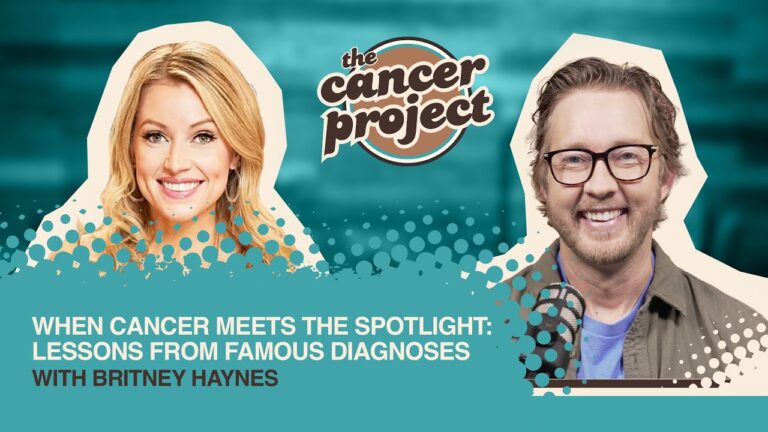
In this episode, host David Raubach is joined by returning guest Britney Haynes — a massive Breaking Bad fan and cancer advocate who has personally navigated her daughter’s cancer diagnosis — for a deep case study of Walter White’s lung cancer storyline in the acclaimed TV series Breaking Bad. The conversation explores the medical accuracy of Walt’s diagnosis (Stage 3A non-small cell lung cancer), the emotional moment he receives the news, and how the show’s writers crafted a medically credible and emotionally resonant catalyst for the entire series.
Britney and David break down the real oncology behind Walt’s diagnosis — why non-small cell lung cancer grows more slowly yet is often caught late, what “unresectable” means and how the cancer’s spread to his mediastinum shaped his treatment path, and how the doctor’s prognosis of roughly two years aligns with real-world survival statistics. They also explore Walt’s initial refusal to pursue treatment, drawing parallels to the financial toxicity that countless real cancer patients face — the weight of insurance coverage gaps, pre-existing condition barriers in the pre-Affordable Care Act era, and the impossible calculus of not wanting to burden a family that already includes a son with disabilities and a pregnant wife. The episode also examines how Hank’s drug raid ride-along planted the seed for Walt’s fateful decision to cook meth, and how his pride and shame around accepting financial help from family or former business partners at Gray Matter Technologies drove his choices.
Watching Breaking Bad through a cancer lens transforms the show’s moral complexity into something far more relatable. As Britney reflects, understanding what Walt was financially and emotionally up against — terminal diagnosis, staggering treatment costs, dread of becoming a burden — makes his “breaking bad” moment far less abstract. This episode is a must-listen for anyone touched by cancer who has wrestled with the collision of a devastating diagnosis and the brutal financial realities of the American healthcare system.
What You’ll Learn in This Episode
- Walter White’s Stage 3A non-small cell lung cancer diagnosis
- Financial toxicity and the cost of cancer treatment
- Pre-Affordable Care Act insurance barriers and lifetime caps
- Refusing treatment and the burden of being a cancer patient
- The emotional shock of receiving a terminal diagnosis
- Gray Matter Technologies and Walt’s moral breaking point
- How the cancer storyline drives Breaking Bad’s entire plot
- Real-world parallels for cancer patients and families
The Cancer Project podcast is made possible by the Oklahoma Proton Center, a state-of-the-art cancer center where precision and treatment meets real compassion in care. We’re grateful for their support and for you for spending this time with us. If you’d like to learn more about the Oklahoma Proton Center, you can visit their website at the link below. And if something you heard today resonated, we’d love for you to stick with us. You can subscribe to the podcast and follow along on our socials linked below for more conversations like this. Honest stories, thoughtful perspectives, and the kind of support people don’t always know where to find, but do truly need. At the end of the day, this podcast isn’t just about cancer. It’s about what it means to be human inside of it and how we keep living, connecting, and moving forward together. We hope you leave each episode feeling a little bit more informed, a little bit more supported, and a lot less alone.
Full Transcript
Read Full Transcript
David Raubach: I want to thank you for joining us today on the Cancer Project podcast. We have Britney Haynes back with us and we are going to talk about one of the most iconic TV shows of all time, Breaking Bad. Many of you have probably seen it. Um, and one of the very important story arcs of that show is Walter White’s cancer diagnosis. So, we’re going to talk about the details of that. What do we know about his cancer diagnosis and how did it impact him and the decisions that he makes on the show? So, Britney, yes. Welcome. Thank you for having me. You’re a Breaking Bad fan. Massive Breaking Bad fan.
Britney Haynes: I think I’ve seen the series all the way through four times. Okay. Yeah. Did you So, did you watch it as it was coming out season by season? I did not. I think when I started watching it, there were already maybe three or four seasons out. Okay. So, I was like late to the game. Yeah. But then I binged everything and then stayed current and then have since gone back and re-watched the entire series. So, I was one of those unique individuals that actually started with Better Call Saul. So, I missed I missed Breaking Bad coming out. I mean, everybody was watching it. I felt very out of the loop socially.
David Raubach: And then uh then people were watching Better Call Saul and were like, “This show’s amazing.” So, I started watching that and I said, “Oh, well, I should watch the sequel.” Y and so then I watched Breaking Bad. Incredible show. Incredible show. It the first time that I watched it, I was actually in the Big Brother jury house and we had I was there for about 3 weeks and it was at this gorgeous mansion in Beverly Hills that had its own little theater room. And so I was like, I think I’m going to start this show. Everybody had been like I had heard a lot about it before I went into the
Britney Haynes: Big Brother house, but I hadn’t watched it. And I was like, I think I’m gonna I think I’m going to watch Breaking Bad. And so I would sit in that theater room and just roll through the episodes in complete darkness fully immersed. Like obviously I couldn’t have my phone. I was in the jury house. So I was locked in. So if people want to know what goes on behind the scenes at Big Brother, it’s actually contestants are just streaming Breaking Bad. I was watching Breaking Back. You were breaking Yeah. So no scandal there. We couldn’t uh stream anything live, but they had like the DVD set. Yeah. And so I just went
Britney Haynes: through the entire series up to current at that point. I don’t remember. It was somewhere like three or four seasons. So at the time you’re watching it, uh what are you thinking as you’re watching the show? Like I like I mean I like I’m I mean one of the things I thought was like this show’s incredibly violent for one. It is incredibly violent, but I was so impressed by I don’t know whenever it comes to Vince Gilligan, who is the writer creator of that show. Anything that he does is so different than any it’s the way that it’s filmed. It’s the way that it’s written. The storyline, it’s so smart. It’s
Britney Haynes: very It’s very much like cerebral, but also I think relatable to everyone. But from the cancer lens, I hadn’t in my own life like really personally been affected by cancer. So that part of the story and not that it didn’t resonate because it is really the catalyst for the entire rest of the show, but I didn’t have any like personal draw. So I don’t know that I really paid that much attention to these very particular details, staging and whatnot. it would be back later on the rewatches that it was like that particular part of the story line was a little bit more poignant and really um I had a greater understanding at that point
Britney Haynes: of why a person would potentially make these decisions on the very first watch pass through when I had no real like personal connection to cancer it was like oh okay well he got cancer and made these really crazy decisions like it didn’t make a lot of sense so going back through the lens after it had like impacted my life. It made so much more sense and it kind of gave me a greater understanding of why he would feel compelled to make these crazy choices. Well, and what was interesting is I was working in oncology by the time the that I started watching the show. So, I I when I watched it, the
David Raubach: everything was out and I don’t remember what year Yeah. the show first came out. I think in 2008, 2007, 2008. Um, so this is probably like, you know, 2015, 2016. I’m watching it. And so I had worked in oncology for five or six years. And so I was fixated on that. And I mean that honestly, that’s probably a big reason why I even went back and watched it was because of this cancer narrative that’s so such an important part of the story arc for Walter and and other characters in the show. And it I mean you it literally lead like the first episode 20 minutes in that’s like what you’re almost leading
David Raubach: off with is like this is this is what happens and this is what causes him to break bad. So uh I do I’m going to ask you do you have a a Breaking Bad moment. That’s a I mean that’s that became like a viral thing to talk about was like okay well what’s your breaking bad? Right. Right. No I don’t know that you’re willing to talk about on camera. Yeah of course. Well, I’ve spoken before about my own daughter’s cancer diagnosis. I didn’t end up making meth, but I very much could understand how when faced with this very devastating diagnosis, especially in Walter’s case, he was willing to kind of
Britney Haynes: self-sacrifice in a sense in order to make his family whole in his absence. And it gave me a greater understanding for that kind of desperate feeling. But I never dabbled into making drugs myself. Well, you weren’t a chemist. That’s true. I wouldn’t have been able to make you didn’t have the technical skills required. Yeah. So, and I wouldn’t know what to source, you know, it too many barriers for me, but it w it did allow me to kind of understand like what he was going through. What he was going through. Yeah. So, um, the reason that Breaking Bad, part of the reason we’re talking about the episode today, I don’t
David Raubach: know if you’ve seen this, but the fi the finale of Breaking Bad has been the highest rated TV show, like individual TV show episode on IMDb since it came out. So, since 2013, it’s had a perfect score, 10 out of 10. And just recently, it lost its perfect score. It dropped to a 9.9. And so then uh it dropped low enough that there was an episode, a Game of Thrones episode that surpassed it as the top rated TV episode of all time. So then what happened? A bunch of Breaking Bad super fans got on and started giving one out of 10 rankings to the Game of Thrones episode. I love
Britney Haynes: this. There’s some passionate individuals out there. that dropped the Game of Thrones episode back below Breaking Bad. So then the Game of Thrones fans got on and did the same thing to the Breaking Bad episode and so they both dropped below I believe it was an episode from six feet under. So basically they they sabotaged each other down to the point where they were suddenly second and third and neither of them were first. Yes. So this was why so this is why Breaking Bad’s been back in the news is because it lost its perfect score for the final episode. This could have been mediated. You know, I feel like we could have come to
Britney Haynes: the table and done some mediation and and resolved this. As someone who enjoys both of those programs and they were roughly same time period, like they existed. We were really living in some good TV. That was peak television. That was peak. That was pretty amazing. Yeah. It was not. I thought it was always Saved by the Bell in the ‘9s, but yeah, until then. Yeah, that’s when it had peaked previously. Yeah, that actually makes me very upset, though. What have we done? You know, it deserves to Mutually Assured Destruction, too. And I wonder which specific Game of Thrones episode it was. Probably the finale. Yeah, I don’t
David Raubach: think it was the finale actually. I’d have to look that up. Somebody easily, you could look this up online. Yeah, easily researchable. That’s super interesting though. Um, so let’s talk about Walter’s diagnosis in the show. So, do you recall the the kind of pivotal scene in the opener? What happens like how he finds out that he has cancer? Yeah, he’s working his second job. So, he’s a teacher, a chemistry teacher, and in addition is working assumably an hourly job at a car wash, which comes into play again later in the series. Um, also something you didn’t have, a car wash. Yes. A place to launder money. Yeah, exactly. Exactly.
Britney Haynes: Another another obstacle in my way. Um, and he collapses uh while he’s on the job and goes assumably, I guess, to the emergency room and through a series of tests. Eventually, well, he gets picked up by an ambulance, right? Yeah. Assumably then leads to his formal diagnosis that he is given. That is the beginning of the entire series. That moment really is the beginning of the entire series when he gets that diagnosis. So he and he’s diagnosed with stage 3A non small cell lung cancer. So there’s two common types of lung cancer. Small cell lung cancer, which is as the name implies, it’s the smaller cells inside of your
David Raubach: lungs that become malignant. Mhm. Small cell lung cancer tends to be more aggressive because you have these small cells, they divide quickly, they grow quickly. So small of the two, non small cell and small cell, small cell tends to be the more aggressive cancer. Non small cell lung cancer grows more slowly, but it because it grows more slowly, a lot of times there’s not side effects early on. And so by the time Walter’s diagnosed, he’s stage 3A, which is basically it means that the cancer is more aggressive and more advanced, but it’s not metastatic yet. But one thing the doctor does tell him at that uh meeting with the oncologist is the doctor
David Raubach: says it’s unresectable. So with an earlier stage lung cancer, treatment would often entail going in and doing surgery and cutting the cancer out. And then hopefully you can avoid chemotherapy and radiation at that point or maybe it’s less aggressive chemotherapy. Um but his cancer was unresectable. So it did spread. It probably was in uh an area called his mediainum, which is the area between your two lungs. It’s in lymph nodes there, which also makes it more challenging to treat. Um, and so he’s told at that, uh, I don’t know if it’s the initial meeting, but kind of through the process, he’s told that he’s going to have to do chemotherapy. It’s unresectable, and he’s
David Raubach: going to have to do this very aggressive chemotherapy. Um, and the other thing that I I recall from that first scene is that he’s being told that he has this cancer diagnosis. Um, and he’s fixated on the mustard stain. Yeah. He’s zoned out on the doctor’s lab coat. Mhm. So talk about that like cuz you’ve gone through this process with your daughter of going in and having these doctor’s visits and they’re telling you these shocking lifealtering things, right? And I think it actually is kind of common to just like you just go blank almost. Yeah. He’s so I think overwhelmed and getting this terrible news, this like lifealtering
Britney Haynes: news that he knows is going to impact his family and and frankly it’s just not doable in his mind. it’s not doable for his family what they’re already kind of dealing with and going through. And yeah, he just completely zones out and is like, “You have a you have a little mustard stain on your lab coat.” And the doctor’s just like, “I’m sorry, what?” But it’s like he’s almost hearing things out of body in that moment. Like he’s having such an out of body sort of experience whenever he’s getting this news and he’s just not even like really letting it, I think, sink in. Yeah. to resonate within him that this is
David Raubach: going to be something that he’s gonna have to figure out that he’s gonna have to endure and he’s almost just like ignoring it in that moment instead of really processing what that’s like. And one thing I mean this is speculative but I find it really interesting when write when they were writing this and they know that this is what’s going to be his Breaking Bad moment, his catalyst. they must have had to go through a series of creative decisions, right, in terms of what kind of cancer is Walt gonna have and knowing, you know, okay, what are those prognosis rates? And they they want to give him something probably terminal, but that
Britney Haynes: they can stretch out for the length of however long this show is going to go on and be kind of open-ended. I think it would be really interesting to know kind of how they arrived at that decision be and because they must have right done like a ton of due diligence, spoken to a lot of doctors and come to the conclusion that this particular diagnosis would make the most sense in the context of what they were trying to achieve. Well, and what would the dialogue look like as he’s getting diagnosed, as he’s being told that he has cancer? So, I think the doctor um gives him two years. He says, “Okay, well, you probably
David Raubach: have about two years with this diagnosis.” So about 85% of lung cancer diagnoses are non small cell lung cancer. I don’t have the exact percentages of the different stages stage one stage two stage three but stage three the fiveyear survival is is very low especially if it’s spread to the median stinum and it’s unresectable. So you’re talking about 15 20% potentially fiveyear survival. And so the doctor tells him you should expect to have about and this is with treatment you should expect to have about two years. But then at first he doesn’t want to do treatment. So talk about that just kind of the reality of I mean it’s his wife
Britney Haynes: that actually has to Skyler actually has to talk him into doing treatment. And I think that’s not uncommon in the for somebody that’s diagnosed with a serious disease to say I don’t want to go through what I’m being told I have to go through. And not only does he not want to go through it, I think for his own self, he doesn’t want to put his family through it. Yeah. You know, whenever he collapses and it leads to the diagnosis, he’s at his second job. His wife is pregnant. They have an older dis a son with disabilities. And I think that he’s thinking about all the financial implications that are going to come from him
Britney Haynes: doing treatment and then realistically being the sole provider in the household, time off of work, you know, potentially giving up one and or both jobs so that he can go through this intensive treatment in addition to also feeling terrible and, you know, not feeling great for the amount of time that he does have left. I feel like that’s a very realistic kind of attitude and mindset towards looking at the very treacherous path ahead and thinking is it worth putting my family through what it’s going to take for me inevitably to to leave anyways and and then would I be a bigger burden on them at that point. So I mean I I
Britney Haynes: feel like it’s very relatable for how patients would feel sitting in those shoes and getting that diagnosis. I I can completely understand that mindset because it is a lot that he’s up against to know that he’s terminal anyhow and then to realize that it’s going to cost so much put so much of a burden on his family as well. So one of the barriers to him deciding to get treatment is the financial element. So he’s thinking what is this going to cost? Am I going to put my family in debt? There’s this financial toxicity component that’s so common with people who are diagnosed with cancer. And there’s a moment where they’re having a family
David Raubach: meeting and Skyler’s there and his brother-in-law Hank’s there and Hank makes kind of this general offer like, “Hey, you know, we’ll don’t you worry, we’ll get you anything you need. We’ll help cover the cost of treatment if you need it.” And that’s very humiliating for Walter, right? just to have his brother-in-law who he doesn’t necessarily fully respect uh saying, “Well, I’m going to actually help you pay for your treatment.” So, talk about that and just kind of the impact that finances can have on decision- making with a serious ailment, especially something like cancer. I feel again that that’s just a plot point that is so relatable. I mean, not even just in terms
Britney Haynes: of getting into treatment, but even to getting diagnosed. So many people will be willing to overlook symptoms or things that have been kind of nagging that they’re hoping will just go away because of the financial burden of going in getting the testing done, getting the imaging done. That’s a very real problem. I mean, that’s something that people really go through and a and a cancer diagnosis is never convenient. You know, you may have many things going on in your life that you would much rather give your attention to. And so I feel again it’s just very very relatable for anybody who’s ever sat there had the diagnosis. He kind of represents the average middle
Britney Haynes: class patient, right? He’s a teacher. You assume that he’s probably on some sort of teacher health insurance teacher health insurance plan. But he and you also get the sense that they are kind of aware of what medical treatments in general can entail because they do have the son the older son who is disabled and so they’re already I’m sure focused have been focused for many years at that point on getting his needs taken care of and he just doesn’t want to prioritize himself in that way and doesn’t want to be a burden to his family in that way especially knowing that he’s terminal and that ultimately it’ll be a bigger burden for them
Britney Haynes: once he’s gone even than it is on him. And I just I don’t know for me that resonates so much because I feel that that is so realistic for what people have to go through whenever they get a cancer diagnosis is what is this going to cost? And it’s really something that isn’t even unique to oncology care and medicine. I mean, you hear about it all the time. People go to the emergency room and they have no idea if they’re going to leave with a $200 bill, a $2,000 bill. There is no upfront invoice that you get and you get to say, “Oh, I’ll take this.” And you know, it’s it’s very gray
Britney Haynes: what it’s going to look like at the end of the day. And then will insurance even approve it? Will they not approve it? And that can be the difference in 80% of what you owe or you know what I mean, what they cover versus you footing the entire 100% of the bill. Pre-authorizations, it’s all very muddy. And I think that his mindset at that time is just I I don’t want to do this to my family. I don’t want them to have to consider this. At the time Skylar offers to go get a job, she’s well pregnant at that point. She’s like, well, we can, you know, we can do this. She wants
Britney Haynes: him to get treatment, you know, and she’s like, I’ll I’ll go back to work. I we’ll figure this out. And I think that he’s looking at what sacrifices his family, everyone around him would have to make in order for him to go through that and he just doesn’t think it’s worth it. Yeah. Yeah. Which is understandable if you’re told that you’re terminal, that you have two years, the last thing that you want to do is leave your family in debt, right? That’s not a great way to think about going out. Um, you know, it’s it’s it’s interesting that you said uh that there’s this gray area with medical bills. Yeah. Yeah,
David Raubach: cuz I’d never thought about the fact that the company uh it’s called Grey Matter is Gray Matter, right? Um that obviously steps in to help pay uh or offers to step in and and help pay for some of the treatment. And that’s kind of part of this like story arc that convinces him to, you know, there’s a lot of resentment because of what happened with Grey Matter. But I wonder if there was like some subtlety to the name of that company where it’s like this is almost picturesque or imagery of the fact that there’s a lot of gray area with something like a cancer diagnosis. There’s a lot of unknowns. There’s
Britney Haynes: a lot of things that are just not black and white. You want them to be black and white, but they’re not. And that those are the things that you’re so frustrated about is is the gray areas or the gray matter so to speak. I don’t know if we just came up with that but well and to extrapolate it even further gray being your radiation dose. Yeah, that’s true. Yes. And then gray the name of the company is Gray Matter and you could probably speak better than I could towards what they were what Gray Matter was doing as a corporation. We kind of know that the story is that he was a
David Raubach: founding partner of this company Gray Matter. He left assumably because he maybe had a romantic interest. Yeah. And it wasn’t reciprocated. So he decided just to leave and pursue teaching instead. Then in his absence, the company grows to being this billion dollar organization or whatever. And he’s left behind still teaching high school chemistry while his former partners in the business are multi multi multi-millionaires, very very wealthy. Um, what was the do you know what the company was actually doing? Yeah, I don’t recall the like intricacies of the science that they were I don’t know if it was fusion or some Yeah, I just remember like a whiteboard and some numbers and algorithms.
David Raubach: We could probably look that up. But it’s super interesting if you know just as it ties to radiation specifically because knowing your gray is knowing the amount of radiation that is being absorbed into your body and the company being called gray matter. I don’t know is there a I’m going to I’m going to uh you know what do we have uh large language chat models for if we can’t just look like right here on the spot. So what does curious what does gray matter on Breaking Bad what are they actually doing? What are what are they? Cuz I do not actually remember the science. Mhm. I just remember the flashback
Britney Haynes: scenes. He was like much younger where it showed them all kind of working in the lab together. And it obviously whatever they were doing was revolutionary because the company blew up and you know became huge huge huge but at the time that he left they were very still a very small almost startup operation. So what what I’m curious what the plot line was that they So I I and this is not a plug for one large language model over the other, but I plugged it into chat GPT and it’s just been spinning, but I may be out of tokens. I don’t know. Uh I don’t think I’ve used mine today. Okay. Yeah.
David Raubach: Well, there Yeah. So then we we’ll go to we’ll go to Claude. So Gray Matter Technologies, uh it’s a biochemical technology that Walt co-founded. Uh, and so we talked about him selling his share early on. Uh, and let’s see here. Well, I wanted to ask what they did. Yeah, I’ll ask Shaji. What do they do? That’s the that’s the story about how they left or why he left, right? Oh, it’s it’s deliberately vague. Oh, it is. Okay. Okay. Well, that’s why we don’t remember. So, yes. Thank you, Claude. Gray Matter Technologies is deliberately vague. So, we won’t speculate on what they what they’re up to. Uh, but I
David Raubach: will say you mentioned that uh gray is the unit of measurement for radiation treatment. So, when a patient comes in to get radiation treatment, like at the Oklahoma Proton Center, they’re prescribed a dose of radiation, right? And so, you can think of this as like taking a dose of Tylenol. So, you can take 200 milligrams or 400 milligrams or 1,000 milligs. Well, that same principle applies in the sense that we’re prescribing an amount of radiation that’s measured in these units called gray. Um, and a patient is going to receive that dose over their full course of treatment. So, as an example, a patient might get 40 treatments for prostate cancer and receive
David Raubach: two gray of radiation per treatment. And so, that’s 80 gray total dose. And, and that’s going to vary patient to patient. take that as like the specifics for a person, what they should be getting for prostate cancer, but um there’s different amounts of radiation that are needed to kill different types of cancer cells. And so even before his cancer diagnosis, he’s grappling with the fact that he sold his shares for $5,000. Yes. In a company that is now worth a billion dollars. Billions of dollars. I mean, have you ever had that happen, Britney? No. But I have to imagine I might consider that my breaking bad moment.
David Raubach: Yeah. Yeah, that would be the break. Yeah. Yeah, that might be it. I think he does have a dual breaking bad moment. I think he does. It’s realizing exactly how much that company is worth and the cancer. So, so can you imagine just gra just grappling with that alone counting those dollars every single day? Just Yeah. Wow. So speaking of counting dollars, one thing that people uh I think now today forget is just what the insurance environment in 2008 looked like. So, this is pre-afffordable Care Act. And I know that there’s a lot of strong opinions, pro and con, on the Affordable Care Act, but one of
David Raubach: the things that’s important to remember is that the reality was a lot of insurance plans had lifetime caps on coverage and a lot of insurance plans had restrictions related to pre-existing conditions. Right? So, what what both of those mean? So lifetime cap meant you might have great coverage and you’re getting everything covered for a period of time and then you hit a million dollars of total health care expenditure over 5 years, 6 years, 10 years, which can happen with chemotherapy drugs. Oh yeah, absolutely. And then you no longer have coverage. You’re literally kicked off your insurance plan. And because you have a pre-existing condition, cancer, you are very limited in your
David Raubach: ability to go get a different insurance plan. And so that was the reality for a lot of people diagnosed with cancer pre-affordable care act going into effect around 2012 2013 is that they would either run up against this issue with pre-existing conditions or run up against this issue with a lifetime cap. And that absolutely could have been something that Walter’s thinking about, right? Especially if they they have uh this kid who is special needs. They’ve probably had a lot of lifetime health insurance expenditures already. Um he’s got this teacher health plan, which probably that insurance was pretty good, but it’s very possible that he’s looking at this possibility of losing his insurance.
David Raubach: and he’s certainly looking at probably losing his insurance uh if he if he has to quit working, which is also a reality. Not being able to access insurance um because of this pre-existing condition. Absolutely. And I think that that is something that people should really consider. I know, you know, we don’t have to get into the weeds on health insurance and and all the drama around it, but simply put, if you were to sit, if you were to find yourself in a doctor’s office today, tomorrow, and be given a similar diagnosis, if you knew with absolute certainty, oh, I can make this work. I can handle this. We’ll figure this out. Let’s
Britney Haynes: move into treatment. That is a huge privilege because there are so so many people if not the majority who sit there and do have to ask themselves questions like this. What will happen to my job? What will happen to my health insurance? What does my insurance cover? What are they not going to cover? How am I going to make this work with child care? How am I going to make this work with, you know, if you’re taking care of young children? We’ve treated many patients here at the Oklahoma Prodon Center that were young mothers, single moms being diagnosed with breast cancer and how do I now, you know, make this work into my lifestyle that’s
Britney Haynes: already challenging. Maybe bills are already a challenge and they really have to look towards other resources that can help assist them through treatment. So simply put, if you find yourself in a situation where you get this terrible news and you think, “Oh, it’s okay. I got this.” That is such a privilege. So many people really have to analyze these decisions really, really carefully and see if it’s even possible for them to go through it. Well, and the and the G getting through treatment while also working element is is I think they do a good job in the showing just the the severity of the side effects for the treatment that he’s going through.
David Raubach: I mean, he’s going through this very aggressive chemo chemo treatment. He’s losing his hair. He’s losing weight. He’s nauseous. Um, so he like he’s going through it. And just I mean we have patients that talk about going through similar chemotherapy regimens and they get to the point where their big win for the day is getting up and walking to the kitchen. Absolutely. Like that’s it. Like can I just even get to the kitchen and back to my bed and I’ll have accomplished my goal for the day. Right. It is very very tough treatment to get through. And of course I always because it’s my own personal passion but I
Britney Haynes: always take it back to pedes pediatric cancer. If you have luckily for me I was already planning to stay home with my daughter. So I was very easily able to slip into the role of okay I’m going to be a full-time at home caregiver for her as she goes through the treatment. It’s no problem that I have to go spend a week in the hospital for her chemo infusion to be administered those type of things. If you are a a typical family where both parents work and both parents need to work for the financial well-being of the family, what position does that leave you in? One parent is now going to have to quit
Britney Haynes: their job and be a full-time caregiver uh to the child going through treatment because it’s not even just yourself, it’s your child. and watching them go through the discomfort in addition to the financial obligations of the family. That is a very realistic situation that happens every day. Every day that they have to make these lifealtering really decisions for whatever the best case scenario is for their kid. But I mean this happens all the time and it’s weighs very very heavily on them of course. And so that added stress in addition to already the stress of just your child is going through cancer treatment which is unimaginable in and of itself. Now also think about
Britney Haynes: the other children care for example if your kid had been in daycare they can’t safely it’s not ideal to continue to send them you know to child care so that you can go to work. What do what do you do if you’re a single parent? These are all very realistic scenarios. And I think that that’s kind of something that maybe I glossed over the first time I watched Breaking Bath. Like, oh yeah, well, he just wanted to do a bad thing. It really puts it in a new lens when you really think about what the family, what their lifestyle was like and what they were grappling with and trying to come to terms with
Britney Haynes: in terms of just continuing to live the life the way that they had been living it. and why that kind of led to his Breaking Bad moment. Well, so let’s talk about that. Um, so the the gray matter, this gray theme, there’s also this double meaning uh or of it’s the name of the company, but it’s also representative of of some of these decisions that he starts to make, right, that where it’s like kind of a gray area. Is this right or wrong? Can I just It’s morally gray. It’s morally gray. Yeah. Early on, I’m not there. It starts to become a little more black and white as the show goes along.
Britney Haynes: It does, you know, early on when he’s first making that decision to get into the meth business. Uhhuh. Just walk us through that. Like put your put yourself Britney in the mind of Walter White and maybe what he’s thinking and just kind of walk us through those like those early episodes where he talks to Jesse and kind of starts making these decisions. Well, as you may recall, he goes on a ride along with Hank. Yeah. And watches Hank do a meth bust. Yeah. And he kind of see that actually, I think, is like puts the idea in his mind because at the end of at
Britney Haynes: the end of it, they seize a whole bunch of money and he’s like, “What?” Yeah. This like one little operation that was, you know, in my neighborhood or maybe an adjacent neighborhood, they were making all of this money just making me math. Of course, he has this genius chemistry background and he thinks, “Wait a second, I could probably make better meth than them.” Yeah. And would it really lead to all of this money? And I think without that Hank ride along, maybe the idea never really presents itself in his mind. But he goes on that ride along and it serves as like an inspiration to him because he sees how much how lucrative,
Britney Haynes: right, that it could potentially be. And without the cancer diagnosis, I don’t think he acts on that ever. You know, he doesn’t need the money. He just continues teaching chemistry. Interesting right along. Yep. Just an interesting ride along. when he’s presented with the financial toxicity that is associated with this type of a diagnosis, he says, “Well, I think I know a way to make a whole bunch of money and I happen to also have this skill set and I happen to also know this kid from my class back in the day who I think may or may not know something about it as well.” And it’s sort of how comes together. Yeah.
Britney Haynes: Um, but basically the ride along also serves a huge purpose here as being sort of his inspiration to be the answer really to the big problem which is how am I going to afford this? But initially he’s not like I’m going to be like the drug lord over the entire Southwest control drug distribution even coming from Mexico and work with me like that’s like initially that’s not the plan. No. And it’s very much like his like a startup company. He’s like, you know, I’ll just make a little here and then once I’ve made enough money, he’s not planning to do it long term, right? He’s like, this is temporary solution.
Britney Haynes: I’ll be able to pay for everything. I won’t leave them with this financial burden, you know, and I won’t have to take handouts because he’s very averse to the idea of relying on the generosity of anybody else within his family or the gray matter executives. Um, and so he’s like, “This is a way that I can take care of it myself and it’ll be an in-n-out job. I’ll just have to sell, you know, x number of batches and we’ll be good and then I’ll just life will resume.” I don’t think that he realizes at that time that it’ll be such a thrill to him and that he will Well, we’re gonna get to that
David Raubach: because yeah, by the by season five, he’s maybe more doing it because he likes it and not necessarily because of the money. It turns out I do think that one thing that’s interesting to me is that he doesn’t tell Jesse why he’s doing it, right? He That’s true. So that I think that that’s always struck me as a really interesting element because it And I don’t, you know, he there’s kind of it’s not necessarily directly addressed in the show, like there’s not just like a long Walt monologue of here’s why I didn’t tell you. Obviously, they touch on it and Jesse starts to recognize that he’s sick and then ultimately
David Raubach: confronts him. um talk about that because again you’ve you’ve kind of gone through this experience with your daughter being diagnosed with cancer and there’s there’s probably like times where you want to talk about it and there’s times where you just want people to treat you normal and so you think I don’t want people to know what I’m going through and I think too it can be so personality specific as well and part of sort of his personality is like I said he doesn’t want to rely ly on maybe the kindness of strangers or the assistance from family members. He he’s prideful, right? He he’s very prideful in enough in his own mind
Britney Haynes: and body. And so he doesn’t want anyone to feel bad for him. He doesn’t want them to I don’t think that he was intentionally keeping it from Jesse because, oh, it’ll make him sad or anything like that. They didn’t really have this emotional bond. I think that that’s his pride. He doesn’t want to be pied. He doesn’t, you know, want him to feel sorry for him. He wants to be respected as the chemist cook in the situation and that’s it. He doesn’t want to give him any more information. And I think that that just speaks to a certain personality type and really that’s kind of realistic, too. I mean, you treat some people
Britney Haynes: who want to talk about it and want to advocate and they are very passionate about it and then you treat other people who would rather get it taken care of, get in and out and not really ever talk about it again. And both are okay. You know, I think that it’s whatever feels good to you. It’s a personal thing. It’s a personal decision. And I think that he happens to be from the side that’s like keeps it very buttoned up. He doesn’t want anyone to feel sorry for him. He really feels that that weakness is not something that he wants to show. Well, and I you say weakness. I Walt also wants to
David Raubach: project he wants to project authority. Yes. And he wants to project authority to Jesse because Jesse was his student, right? And they have this teacher student relationship. And I think that’s that to me is an interesting dynamic because that’s something that people who are diagnosed with cancer have to deal with where they’re in some setting where they want to project power or influence or authority and not and and maybe it it could just be at a job or it could be at home or it could be with family, it could be with friends and suddenly you’re losing that as you’re getting sicker and sicker going through chemotherapy and you’re you are
Britney Haynes: are physically not where you used to be. You’re mentally not where you used to be. And so he doesn’t want that. He doesn’t he doesn’t want to show that vulnerability and especially with a punk like Jesse. Right. Yeah. So and so I I think that that’s relatable too. You know some people may not want to be vulnerable and cancer treatment will make you very very vulnerable. you will be, you know, really beat up, beat down in your spirit as well and showing up to the appointments and putting on a gown and doing all just the necessary. It’s invasive. It’s invasive. Humiliating. Yes. And so I think that that
Britney Haynes: kind of just shows that he is this sort of a brisk personality type that doesn’t like to be seen in that kind of vulnerable way. So let’s fast forward to season two. So season two, so he’s told in season one that he’s probably terminal, that he’s got two years to live, but then in season two, he goes back, he’s done chemotherapy, he goes for follow-up scans, and his cancer is in remission. And we think as the viewer that this should be an exciting moment. This this should be something to celebrate. But instead, you have Walt going into the bathroom uh and and punching the towel dispenser in the bathroom, and it’s not the
David Raubach: reaction that you would expect. What What did What were you thinking as you watched that scene? Or maybe especially as you watched it back the second and third time. What’s going on there? I think it’s very clear that he realizes in that moment that he’s now too far down the road to completely pull back. also probably on his mind is like I’ve I somewhat enjoy this and if I’m in remission and I no longer am faced with this looming threat of the financial burden and all that what what am I doing it for? He kind of as as he started to enjoy it, it became like a good excuse for him to keep
Britney Haynes: up. It was his justification for every every uh immoral decision that he made. he could justify it in the back of his mind is I’m doing good for my family is is I’m terminal and so therefore this justifies me doing whatever. Yeah. Uh there’s that and then there’s a little bit of the element of the feeling like he was slighted with the situation with gray matter. Um but certainly most of it is I’m terminal. I’m diagnosed with cancer. I have to take care of my family. The uh end justifies the means of everything that’s happening. But now the end looks a lot different. Yeah. And now
David Raubach: if you take away the justification, then he’s just the bad guy who’s doing it when he doesn’t need to unnecessarily. And he’s almost disappointed, right? In that moment, he feels a little bit of disappointment because he’s like, I’m too far in. Itml;ve already done not I don’t want to spoil anything for anybody, but I’ve already done the serious action of season 1, and I can’t take that back. I can’t rewind that. We’re we’re a spoiler podcast. you can spoil anything and everything. He’s already had to take a life, right? Which was not a decision that he even arrived at lightly and he kind of reserved
Britney Haynes: it for the worst case scenario. In the end, he did have to actually take a life. Well, this is I think a but it was the life of a drug dealer. It was. So in his head who was going to kill him, right? So in his head it’s self-defense. Yes. But again, it’s taking away his justification and his need to continue. And he’s kind of built it up at this point enough where he’s like realizing that he can be kind of a kingpin. He can be kind of respected in a way that in his old life, he kept facing obstacles and rejection. He’s kind of thriving as a
Britney Haynes: drug dealer. And he’s like, people respect him. I don’t really want to stop. He’s no longer having to work a night shift at the car wash, right? Um we’re borderline about to buy a car wash. Exactly. Yeah. So, so he So, talk through because he doesn’t like he finds out that he’s in remission, but he doesn’t necessarily go and tell everybody. Yeah. So, kind of talk through that like that’s always felt like that was interesting like that. Again, that should be something that is celebrated, but he’s not Yeah. And another thing that I mean I specifically remember is that when he went in to get that
Britney Haynes: he was expecting it to be bad news because his cough had returned really severely and so he really thought that he was going to go in and they were going to say you’ve progressed this is bad you know very short time frame so he is completely taken back with the good news but also Hank and Marie went to that appointment with him and so you see them in the background when he gets the good news and the they Skyler’s there as well and they kind of erupt in just happiness. Like they’re so happy. This is great news. This is amazing. And he’s the only one sitting in there in that room who’s
Britney Haynes: like, “Is it though?” You know, he’s he really like takes pause. And that’s really important to the story line, too, is that Hank is so supportive. I mean, for him to take the time to go to this appointment with him, it really means Yeah. His Walt’s health means a lot to Hank, you know, and it’s interesting because Hank, you know, they kind of have this lovehate relationship, especially early on, but Hank is he really seems to care about Walt. Like there’s some like genuiness to it and his entire family, right? Like he’s very involved with Walt’s children and he he doesn’t have children of his own. And so I think that
Britney Haynes: they see them as kind of an extension of their f really they are their family, but very very close. And Hank wants to be there for the big moments to celebrate with them and to help. And that all plays in such a way that is so this is what I’m talking about about just the masterful writing. Like the way that that relationship kind of plays out long term is crazy. I could never come up with it. This is why I don’t do screenplay writing. But it just it’s so it’s such a little thing. Don’t sell yourself short, Britney. There’s always there’s Yeah, there could be a hidden talent in there.
David Raubach: But it it’s a tiny seed. Yeah. That when you look back at the end of the series or at least at Hank’s end is like, “Wow, that’s crazy. He was he was there for this at the appointment.” At the appointment that you you care about somebody if you were at their cancer followup appointment. Yeah. That’s the inner circle. So, uh we go the next few seasons assuming that his cancer is gone. So yeah, at least he’s in remission. He’s he’s in remission. Yeah. And I that’s a good point. We should we should clarify that there is a there is a clinical difference between in remission, which
David Raubach: maybe means that the c there may be still evidence of the cancer, but it’s not continuing to spread and grow, right? There’s not evidence of metastasis um versus there’s literally no evidence of the cancer. It’s gone because I think he said specifically it shrunk 80%. Yeah. Right. So there was So we’ve got it under control. Under control. You’re no longer terminal, as best as we can tell. There’s a point in I can’t remember if it’s season 3 or season 4 where uh he’s going for a follow-up scan and there’s this big white uh image blob on the scan and it again it’s like he’s almost
David Raubach: wishing that it is cancer and then they’re like, “Well, no, it’s not cancer. That’s just scarring from the treatments that you’ve gone through.” and there’s like this disappointment like so um so let’s so we’ll we’ll kind of skip ahead um because he obviously he really he really breaks bad I think so he breaks bad initially but then he takes it to a whole another level when he decides that he’s going to continue dealing meth and and going bigger and bigger and partnering with Gus and after he finds out he’s in remission like he no longer has this like justifiable reason to continue doing what he’s doing, but he wants to
Britney Haynes: keep going. And then again, masterfully, he always, I feel like, steps into one decision after the next with still being able to in his own mind be the good guy. Yeah. Each individual decision like it’s presented justifying even so he’s like, I’m only going to cook it, right? That’s all I’m doing. Whatever happen whenever he goes and gets the huge lab and everything, it’s like I have nothing to do. I’m not customerf facing you know whatever happens with distribution all I’m doing is cooking and that is sort of the barrier where he finds himself in his own mind on you know the good guy side like he’s like this is it’s
Britney Haynes: very clear what my responsibilities here are this is the best case scenario I clock in I clock out just like a regular job underneath this wash commercial washing machine I don’t have to know what what Gus and his henchmen are doing who they’re partnering with who killing and that’s kind of what he needed. I’m an employee. Yes. Exactly. And he needed that in his own mind to be able to continue, right? Because he had been faced with so many of these situations where he did things that maybe he didn’t really want to have to do. And so he thinks, “Oh, this is the answer.” And then that ends up
David Raubach: being not the answer. Um, obviously he has to event murder his temporary partner. Do you remember that part of the series? It was crazy. Well, so talk us through that. Remind us of how that plays out. He has this other partner who is this really, really smart kind of right-hand man to him that’s going to cook in this like super factory. And then they kind of deduce that what they’re doing is training that guy to be Walt’s replacement because he’s become so volatile and he has his up and down relationships have become so volatile that they are just looking to replace him. So, they have found this guy who they’re like, “If Walt can
Britney Haynes: teach him a few times how to do this, we won’t need him anymore.” But Walt realizes that that’s the angle. And he has to send Jesse to do it. But he sends Jesse to off that guy essentially. And it was a little bit of a test of loyalty for Jesse, though. It was. And it’s it was so I mean, the writing on the show, it was so good because you really liked that guy, too. Like here was a guy who again he was just going to do his clock in clock out. He seemed very na always so nice to Walt and so happy to be there. He’s not involved in this high.
Britney Haynes: He may be oblivious to the whole thing. Right. Totally. Like he might have been like no you cannot fire him. I must have him. You know he’s not really given that opportunity. He’s not privy to what the higherups, the executives are thinking. So, I mean, Walt just finds himself, as much as he doesn’t want to be involved in these maybe from the beginning, these really tough decisions and having to do these things that don’t align with his character by nature of the business that he’s in, he continuously finds himself in situ situations that he has to do these things. And I think that that’s interesting. It’s interesting to me that he makes
David Raubach: that decision and and how that’s kind of different than the decision-making in the first episode. Because in the first episode he gets diagnosed with cancer and he he almost resigns himself to the fact that this is the end. Like this is how I go out. I don’t even want to do treatment. He gets talked into treatment but even then he’s like I’m terminal. So it’s and and he’s really at that point fighting more for his family and his kids, not for himself, right? Um but then now he’s presented with another potentially terminal situation and says I am going to fight this which is a totally different response than he had when he
David Raubach: diagnosed with cancer and given a terminal sentence at that point. Right. So that’s part of I think this kind of like evolution of him and his decision-m and his morality. Yeah. is that now he’s become consumed with himself and wants to fight for himself to save his life to the point he’s willing to take somebody else’s life that he works with. Right. It’s so true. And through the course of the series, he also because the whole catalyst in the beginning, right, is money. I just need to make money to cover my medical bills. Once I have that amount of money, I’m good. He makes a ton of money and then
Britney Haynes: he’ll lose he’ll lose it. Like inevitably it’ll it’ll be stolen. Things happen throughout the course of the series. He makes it and he as happens when you’re involved in the criminal underworld. Sure does. Money comes, money goes. Also can’t always trust in investing in cryptocurrency as well or the stock market. You’re going to take some and lose some. Money comes, money goes. And then that will always be his justification. Once he’s lost the money, it becomes very present in his mind of like this is why I did all of this. If I don’t have the money, I have nothing. And so then it becomes a starting over. I have to remake
Britney Haynes: that money. I have to remake that money because at the end of the day, what his real objective is or was in the beginning, I want to leave money to my family. I want in my absence for them to be financially secure. And so, he’s sort of chasing his tail the entire series trying to and at times they have a bunch of money and it, you know, if he would have croaked right then everybody would have been fine. But that those will be the times that his health is at its best and he has more more time to make terrible decisions and lose all the money. Yeah. Well, there’s a pride element of
David Raubach: like he’s getting better at his job, too. Like he just kind of he he the product is better, his distribution is better, the manufacturing process gets more efficient. So, let’s go to season five. M um he is well first of all one of the best seasons of television I think of all time. So good. Um and maybe the best and only I guess the Game of Thrones fans might argue with that. Not the best, second best, but um maybe splitting hairs. Splitting hairs. Yeah, we can agree. They’re both great. But uh he his cancer comes back. Um, and he does actually, it’s interesting because he approaches it
David Raubach: a little bit different. He actually makes a decision to go through treatment and he’s at this cabin getting chemo. So, just talk a little bit about his mindset and decision-m at that point and like what’s going on? Why does he respond so differently at at that point to the cancer coming back? It goes full circle back to his original objective. At that point, he has lost all of his money except for one barrel. He has a barrel full of money. The rest of them are still in the desert. He realizes that he is not going to be able to secure the family financially. He can’t rely if he dies. He can’t rely on anybody.
Britney Haynes: No one is honest enough. Turns out his his criminal buddies, he can’t trust them. Trustworthy. No one is honest enough to really give up that money. they’re going to take. He sees that he sees that they’re going to take it for themselves and not give it to his family. His family is not going to have this secure financial future, which was his original objective. That was the whole goal. So, I believe it’s it’s never directly addressed in the show, but I believe that he is willing to do chemotherapy because he sees it as I just need to do this long enough to where I can make sure that this is going
Britney Haynes: to go to my family. At this point, his relationship with his family is so bad. I mean, his son will not talk to him. You know, he has a terrible relationship with everyone. and they’ve kind of seen him now as a monster. Well, he’s been found out. He’s been found out. Skyler knows. She thinks that he’s a monster. None of them want him to live, frankly. But he goes all the way back to the original objective and is like, “That’s fine. You can hate me. Maybe I am a monster, but my goal he wants to I feel that he wants to be able to say with finality, I did
Britney Haynes: this for you.” you know, whether that selfish motive on his deathbed to say on his deathbed, I did this for you. I may be a terrible person, but ultimately at my core, I did it because I love you. Yep. I mean, that’s his that’s what he really wants to be able to say. And so, he’s willing to extend whatever time he may have enough that he is able to deliver that and and for them to have that when he’s gone. What’s interesting though is that right towards the end when he’s uh one of his last conversations with Skyler, he confesses that he did a lot of what he did because he
David Raubach: liked it and because he was good at it. Both things can be true that. Yes. He always was able to rely on in his own mind the justification. Yeah. He had the justification the whole time even though the the real truth, the real ugliness of it is that he did enjoy it and that it was selfish. Even at the end of the day, him being so desperate to get the money to them can be seen as selfish because he still wants them to have to have some positive association, right? Like he can’t just die the monster who did these terrible things. He wants them to have some loyalty
Britney Haynes: to him almost or or some gratitude for what he went through for their well-being. But it’s it is selfish. It is. Um, and ultimately he dies. Uh, he gets shot. Spoiler alert. No, he doesn’t. He collapses. He collapses. He w The police are on their way. Sirens are going off and he’s walking past the lab. He’s in the lab and he just collapses. He doesn’t get shot. I think maybe he Oh, you’re right. He was shot, but he lives long enough with the bullet wound to go walk through the lab one last time. Well, what I was going to say was is I think I think the the imagery there is intended
Britney Haynes: there’s a little bit of twofold imagery there. It’s supposed to because he gets shot in the chest. You’re right. He does. He sustains a bullet once. Yeah. And so it’s I think it’s supposed to in a sense represent him succumbing to his cancer. like the bullet is kind of figurative of there’s this thing inside me that ultimately becomes fatal and he doesn’t die right away from the bullet wound. He lives a little bit longer. So I think there’s some but but also the reason that he gets shot is because of all these decisions that he has made. And so there’s like this convergence of uh an external uh reason that he
Britney Haynes: dies um but also coupled with this weak state that he’s in physically and he’s shot in the chest in the lungs. Um, and so I think that, you know, I think there’s Vince Gilligan. I think that was intentional. Yeah, I think so, too. Like he could have got shot in the head and died immediately. He could have died in a car wreck. And he did go into that final episode. He went into that very, very dangerous situation knowing that that was a possibility, but being okay with it because he knew that like even if I die tonight, my objective has been taken care of. He got back. He was able
Britney Haynes: to secure everything. I don’t know if you remember, it was one of the great parts where they where they did the laser beams because he threatens essentially his original co-workers in gray matter to make sure that the family is financially secure and he was able to pull that off and so then he had kind of resigned himself to his fate and he was okay with the suicide mission at that point which it ultimately was. Yeah. And so that, you know, at the end you’re left with this need to try to assess him as a character. And certainly like if you watch the season start to finish, you grow to dislike him over
David Raubach: the course of the season and that’s intentional. Mhm. But then given some distance from the show and just thinking back and compressing the story arc, he’s diagnosed with cancer. It goes into remission. The cancer comes back. In between, he’s making all of these decisions. Each decision leads to a worse decision. Mhm. But he didn’t set out to do that. He becomes this uh monster towards the end, but then also towards the end he’s still trying to fulfill fulf as you mentioned fulfill the original purpose of why he set out to sell drugs, which is to take care of his family. Um, how do you look back kind of big picture just
Britney Haynes: at him as a character and extrapolate that to what we think about kind of as a as a as being representative of what somebody goes through being diagnosed with cancer. Yeah. and like his played out big picture, grandiose, but it’s also again it’s this microcosm of what each individual person who’s diagnosed with cancer has to go through mentally and physically, right? That that is the catalyst. And he it’s really a snowball effect because you have to think back to season 1, episode one. If you told that Walt who’s working at the car wash, right, who’s working this hourly job at the car wash for a few extra bucks for his
Britney Haynes: family, if you told him everything that would happen, you can’t see that aligning with that season 1 episode one guy that he would go, “Okay, this sounds worthwhile.” Because he’s so far removed from who he becomes like through the course of the journey. You can’t imagine that he would go, “Okay, yeah, that sounds good. Sign me up.” you know, obviously not, but it happened so gradually and the progression of it was so slow that he it he really wakes up to a side of himself that he didn’t know that he had, but also he is just almost a completely different person. Yeah. That experience sort of awakens this dark side within
Britney Haynes: him that he really didn’t even know that he had, but it was so gratifying once he tapped into it. you know that that is what becomes his character on the show. But I think that so yeah, obviously most people aren’t going to start a meth empire when they receive this terrible diagnosis. But I do think and hide $80 million in barrels in the desert and Yeah. But if you just bare bones it down and look at the situation, the predicament that he was in, I do feel like it’s just a very relatable Yeah. mindset to be in. Like I think that his origin story is so relatable for anybody who’s ever had
Britney Haynes: a cancer diagnosis to just think, “How do I how can I make this as burden-free on my family as possible? How can I get through this as quickly and easily as possible?” I think that that’s a very realistic mindset. Now, the meth part is not so approachable, but I I really like the part the meth part initially was just I need to make a few extra bucks to help my family. Like it wasn’t he wasn’t setting out to hurt anybody or kill anybody. Exactly. I actually I actually hope that the takeaway and actually I do want to mention this. So, um there was a a study that came out and it looked
David Raubach: at the criminality rate for people after they had been diagnosed with cancer. And what it found was is there was a 14% increase in the incidence rate of criminal behavior. Everything else normalized for people after a a cancer diagnosis. And so I think it’s and and sometimes that’s just again people trying to make ends meet. Yeah. Absolutely. Uh, it’s not quote unquote criminal behavior isn’t it doesn’t have to be something catastrophic or violent or mass murder. It could just be stealing $1,000. But it’s like, okay, well, I’m doing that to survive or to to help my family survive. And I hope that the takeaway that people have from our conversation today
David Raubach: and if you go back and watch Breaking Bad, especially those early episodes uh in in season 1 is is that people begin to understand the reality of what somebody who has been diagnosed with cancer is going through mentally, right, and is potentially going through financially because what he went through is the reality for a lot of people. Yeah, absolutely. And I think that the ups and the downs and the the wins and the losses, they just take their toll mentally, even in the best case scenario. And you might find yourself thinking a way that doesn’t align with who you were before your cancer diagnosis. Maybe you’re considering things that you would have never
Britney Haynes: considered doing or thinking of before because you do find yourself in that position. I I just think that that’s very relatable. I want to tell you a story about Yeah. One of my friends, I had a friend who passed actually of lung cancer. Okay. She was very funny and she would be very amused by me telling this story. Yeah. But I remember towards the very end of her journey, uh, she had been through, oh my gosh, so much treatment. You know, she had tried everything. She had done clinical trials at MD Anderson. They unfortunately weren’t very effective, but she was able to get some some time where she was sort of
Britney Haynes: wrestling with this. Anyway, at the towards the end of her journey, um she had the entire time she was in treatment, she hadn’t had a drink. And a drink was something that she used to really enjoy before her diagnosis. And I remember her telling me this one day. She said that she had decided, you know what? I’m going to have a drink. I haven’t had a drink now in years, and I’m going to enjoy myself a drink. And she took herself to the store, and she got the ingredients to go home and and make herself, you know, a drink. And as she was standing in line, it was a long line. There were like seven
Britney Haynes: people ahead of her in line. And then the register goes down. And the line over, somebody was having like an issue. Like they were having to call someone over and she said, “I don’t have time for this.” And she got her ingredients and she walked straight out the door. She stole. Yeah. Yeah. And I was dying. Like I thought this was so funny. But that was her breaking point. She was like, “You know what? I owe I owe it to myself to have a drink. I think I’m just going to I’m just going to walk right out. She was like, I just waited on them to chase me and arrest me. They
Britney Haynes: didn’t. Yeah. And honestly, if they had the funniest story and they if the police had caught her and pulled her over and she was like, I have a terminal cancer diagnosis and the register went down, I think uh most people would say or the store manager would say that drinks on us. That drinks on us. Absolutely. And she would she would laugh about me sharing this story. to be clear, this isn’t something that, you know, would be offensive to her that I’m telling. Um, but that was so her personality, too. Like, she was just a really really funny funny person. And she was like, “Yeah, you know what?
Britney Haynes: I don’t feel like standing here for another 20 minutes to wait on you to get this register back up. I’m on limited time.” She just walked right up. And so, to be clear, you’re not encouraging theft. I’m not encouraging petty theft. Yeah. It’s just a this is a this is a a funny anecdote of something that happened. I am making that hopefully makes the reality of going through cancer a little bit clear especially for people that have not gone through cancer. Correct. This is this is this is what you go through. I cosign on her theft. Like I would fully back. You would have
David Raubach: paid her bail. Absolutely. You would have paid her bail. I would have too. Um well this is great. This is a great conversation. Thank you. Yeah. Thanks for having me. We our our one big takeaway is that you and I both need to get on IMDb and give a 10 out of 10 rating 100% through the final episode as does everyone else, every listener. We will not rest. Yeah, exactly. Please do that. But also um just think about again for people that have been diagnosed what it means to go through something like that, right? um and the reality of what they’re going to face financially, physically, emotionally, relationally, uh
David Raubach: mentally. Um so, thank you with your background and your experience and you as a Breaking Bad fan coming out. Hardcore Breaking Bad fan. That’s what I thought you meant by your experience. You just knew that I was obsessed with this. Exactly. Yeah. Help helping us uh navigate this this topic today. So, thank you, Britney. Yeah. Thanks for having me. The Cancer Project podcast is made possible by the Oklahoma Proton Center, a state-of-the-art cancer center where precision and treatment meets real compassion in care. We’re grateful for their support and for you for spending this time with us. If you’d like to learn more about the Oklahoma Proton Center, you can visit their
David Raubach: website at the link below. And if something you heard today resonated, we’d love for you to stick with us. You can subscribe to the podcast and follow along on our socials linked below for more conversations like this. Honest stories, thoughtful perspectives, and the kind of support people don’t always know where to find, but do truly need. At the end of the day, this podcast isn’t just about cancer. It’s about what it means to be human inside of it and how we keep living, connecting, and moving forward together. We hope you leave each episode feeling a little bit more informed, a little bit more supported, and a lot less alone.
Join us at The Cancer Project
Get weekly stories, research updates, and ways to get involved.